Text, Meaning & Explanation
जय गणेश गिरिजा सुवन, मंगल मूल सुजान।
कहत अयोध्यादास तुम, देहु अभय वरदान॥
Roman Hindijaya ganesha girijaa suvana, mamgala moola sujaana|
kahata ayodhyaadaasa tuma, dehu abhaya varadaana||jaya gaṇeśa girijā suvana, maṃgala mūla sujāna|
kahata ayodhyādāsa tuma, dehu abhaya varadāna||
Meaning
The poet greets Ganesha, child of Girija, and asks him to grant fearlessness.
Explanation
The opening is addressed to Ganesha, not Shiva: an auspicious invocation should not be mislabelled as a Shiva verse.
जय गिरिजा पति दीन दयाला।
सदा करत सन्तन प्रतिपाला॥
Roman Hindijaya girijaa pati deena dayaalaa|
sadaa karata santana pratipaalaa||jaya girijā pati dīna dayālā|
sadā karata santana pratipālā||
Meaning
Praise to Shiva, Parvati’s husband, compassionate toward the vulnerable and guardian of the devoted.
Explanation
Compassion and protection are theological praises; the poem speaks in the devotional voice.
भाल चन्द्रमा सोहत नीके।
कानन कुण्डल नागफनी के॥
Roman Hindibhaala chandramaa sohata neeke|
kaanana kundala naagaphanee ke||bhāla candramā sohata nīke|
kānana kuṇḍala nāgaphanī ke||
Meaning
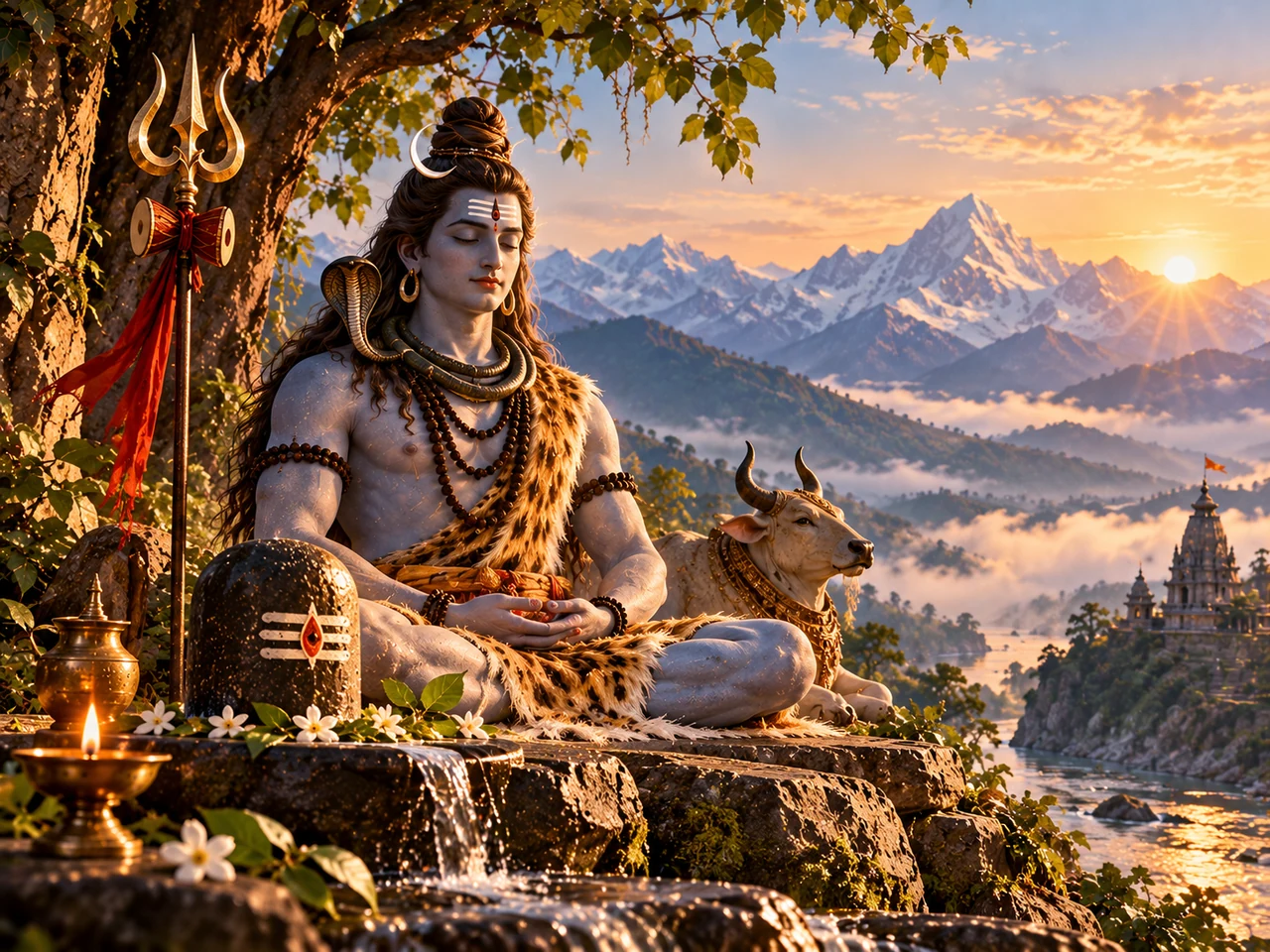
The moon shines on Shiva’s forehead; his earrings evoke the hood of a serpent.
Explanation
Moon and serpent motifs belong to Shiva iconography; poetic ornament varies across depictions.
अंग गौर शिर गंग बहाये।
मुण्डमाल तन क्षार लगाए॥
Roman Hindiamga gaura shira gamga bahaaye|
mundamaala tana kshaara lagaae||aṃga gaura śira gaṃga bahāye|
muṇḍamāla tana kṣāra lagāe||
Meaning
The Ganga flows from his head; ash and a skull-garland mark his austere form.
Explanation
Ganga, ash and skulls juxtapose life-giving water with impermanence and renunciation.
वस्त्र खाल बाघम्बर सोहे।
छवि को देखि नाग मन मोहे॥
Roman Hindivastra khaala baaghambara sohe|
chhavi ko dekhi naaga mana mohe||vastra khāla bāghambara sohe|
chavi ko dekhi nāga mana mohe||
Meaning
Your tiger-skin garment and captivating form enchant the mind.
Explanation
The selected witness reads naga mana rather than naga muni. Its spelling is retained without claiming that the two readings have identical grammatical interpretation.
मैना मातु की हवे दुलारी।
बाम अंग सोहत छवि न्यारी॥
Roman Hindimainaa maatu kee have dulaaree|
baama amga sohata chhavi nyaaree||mainā mātu kī have dulārī|
bāma aṃga sohata chavi nyārī||
Meaning
Parvati, beloved daughter of Maina, appears beautifully at Shiva’s left side.
Explanation
The poem locates Parvati beside Shiva, emphasizing their relationship without erasing distinct Shakta viewpoints.
कर त्रिशूल सोहत छवि भारी।
करत सदा शत्रुन क्षयकारी॥
Roman Hindikara trishoola sohata chhavi bhaaree|
karata sadaa shatruna kshayakaaree||kara triśūla sohata chavi bhārī|
karata sadā śatruna kṣayakārī||
Meaning
The trident in Shiva’s hand signifies his power against destructive adversaries.
Explanation
Read the battle language through the hymn’s mythic register, not as a command to attack real people.
नन्दि गणेश सोहै तहँ कैसे।
सागर मध्य कमल हैं जैसे॥
Roman Hindinandi ganesha sohai taham̐ kaise|
saagara madhya kamala haim jaise||nandi gaṇeśa sohai taham̐ kaise|
sāgara madhya kamala haiṃ jaise||
Meaning
Nandi and Ganesha grace Shiva’s assembly like lotuses on water.
Explanation
The image of lotuses is a poetic comparison; do not force a literal historical setting.
कार्तिक श्याम और गणराऊ।
या छवि को कहि जात न काऊ॥
Roman Hindikaartika shyaama aura ganaraaoo|
yaa chhavi ko kahi jaata na kaaoo||kārtika śyāma aura gaṇarāū|
yā chavi ko kahi jāta na kāū||
Meaning
The gathered divine family and attendants possess an indescribable beauty.
Explanation
“Shyam” and “ganrau” have interpretive uncertainties; avoid overconfident deity identification.
देवन जबहीं जाय पुकारा।
तब ही दुख प्रभु आप निवारा॥
Roman Hindidevana jabaheem jaaya pukaaraa|
taba hee dukha prabhu aapa nivaaraa||devana jabahīṃ jāya pukārā|
taba hī dukha prabhu āpa nivārā||
Meaning
Whenever the gods cry out, Shiva responds to their distress.
Explanation
The transition from Shiva’s family to divine appeals begins a cycle of Puranic story summaries.
किया उपद्रव तारक भारी।
देवन सब मिलि तुमहिं जुहारी॥
Roman Hindikiyaa upadrava taaraka bhaaree|
devana saba mili tumahim juhaaree||kiyā upadrava tāraka bhārī|
devana saba mili tumahiṃ juhārī||
Meaning
As Taraka troubled the worlds, the gods sought Shiva’s help.
Explanation
Taraka is associated with Kartikeya in Shaiva myth; narrative details differ among tellings.
तुरत षडानन आप पठायउ।
लवनिमेष महँ मारि गिरायउ॥
Roman Hinditurata shadaanana aapa pathaayau|
lavanimesha maham̐ maari giraayau||turata ṣaḍānana āpa paṭhāyau|
lavanimeṣa maham̐ māri girāyau||
Meaning
Shiva sent six-faced Kartikeya, who overcame the demon.
Explanation
“Shadanan” literally means six-faced; it is a conventional epithet of Skanda/Kartikeya.
आप जलंधर असुर संहारा।
सुयश तुम्हार विदित संसारा॥
Roman Hindiaapa jalamdhara asura samhaaraa|
suyasha tumhaara vidita samsaaraa||āpa jalaṃdhara asura saṃhārā|
suyaśa tumhāra vidita saṃsārā||
Meaning
The hymn celebrates Shiva’s victory over the demon Jalandhara.
Explanation
The Jalandhara episode belongs to Puranic narrative; it should not be flattened into historical reporting.
त्रिपुरासुर सन युद्ध मचाई।
सबहिं कृपा कर लीन बचाई॥
Roman Hinditripuraasura sana yuddha machaaee|
sabahim kripaa kara leena bachaaee||tripurāsura sana yuddha macāī|
sabahiṃ kṛpā kara līna bacāī||
Meaning
Shiva defeats Tripurasura and brings deliverance to those in peril.
Explanation
Tripura stories have multiple textual forms and moral readings; the concise lyric cannot adjudicate them.
किया तपहिं भागीरथ भारी।
पुरब प्रतिज्ञा तासु पुरारी॥
Roman Hindikiyaa tapahim bhaageeratha bhaaree|
puraba pratijnaa taasu puraaree||kiyā tapahiṃ bhāgīratha bhārī|
puraba pratijñā tāsu purārī||
Meaning
Bhagiratha’s austerity is answered by Shiva, associated with the descent of Ganga.
Explanation
Bhagiratha’s effort and Shiva’s reception of Ganga illustrate restraint and compassionate mediation.
दानिन महँ तुम सम कोउ नाहीं।
सेवक स्तुति करत सदाहीं॥
Roman Hindidaanina maham̐ tuma sama kou naaheem|
sevaka stuti karata sadaaheem||dānina maham̐ tuma sama kou nāhīṃ|
sevaka stuti karata sadāhīṃ||
Meaning
The singer finds Shiva unmatched in generosity and praises him continually.
Explanation
The boast of unmatched generosity is devotional hyperbole, not a comparative measurable claim.
वेद माहि महिमा तुम गाई।
अकथ अनादि भेद नहिं पाई॥
Roman Hindiveda maahi mahimaa tuma gaaee|
akatha anaadi bheda nahim paaee||veda māhi mahimā tuma gāī|
akatha anādi bheda nahiṃ pāī||
Meaning
Even Vedic praises cannot exhaust Shiva’s beginningless mystery.
Explanation
“Beyond words” tempers literal descriptions of divine form elsewhere in the same poem.
प्रकटी उदधि मंथन में ज्वाला।
जरत सुरासुर भए विहाला॥
Roman Hindiprakatee udadhi mamthana mem jwala|
jarata suraasura bhae vihaalaa||prakaṭī udadhi maṃthana meṃ jvālā|
jarata surāsura bhae vihālā||
Meaning
The ocean-churning brings forth a terrifying blaze of poison, troubling gods and asuras.
Explanation
The poison motif comes from Samudra Manthana: gods and asuras share the crisis.
कीन्ही दया तहं करी सहाई।
नीलकण्ठ तब नाम कहाई॥
Roman Hindikeenhee dayaa taham karee sahaaee|
neelakantha taba naama kahaaee||kīnhī dayā tahaṃ karī sahāī|
nīlakaṇṭha taba nāma kahāī||
Meaning
Shiva protects them and comes to be called Nilakantha, the blue-throated one.
Explanation
Nilakantha signifies the blue throat; it is a religious image of bearing danger for others.
पूजन रामचन्द्र जब कीन्हा।
जीत के लंक विभीषण दीन्हा॥
Roman Hindipoojana raamachandra jaba keenhaa|
jeeta ke lamka vibheeshana deenhaa||pūjana rāmacandra jaba kīnhā|
jīta ke laṃka vibhīṣaṇa dīnhā||
Meaning
Rama’s worship of Shiva is connected in the hymn with victory and Vibhishana’s accession.
Explanation
Shiva–Rama worship stories vary by region and devotional text; refrain from declaring one version universally canonical.
सहस कमल में हो रहे धारी।
कीन्ह परीक्षा तबहिं पुरारी॥
Roman Hindisahasa kamala mem ho rahe dhaaree|
keenha pareekshaa tabahim puraaree||sahasa kamala meṃ ho rahe dhārī|
kīnha parīkṣā tabahiṃ purārī||
Meaning
The deity is shown testing a devotee during a thousand-lotus offering.
Explanation
The thousand-lotus test is a separate devotional legend alluded to in just two lines.
एक कमल प्रभु राखेउ जोई।
कमल नयन पूजन चहं सोई॥
Roman Hindieka kamala prabhu raakheu joee|
kamala nayana poojana chaham soee||eka kamala prabhu rākheu joī|
kamala nayana pūjana cahaṃ soī||
Meaning
The lotus-eyed worshipper is ready to offer his own eye in place of a missing lotus.
Explanation
The “lotus-eye” symbolism links bodily sacrifice to radical devotion, not a model for self-harm.
कठिन भक्ति देखी प्रभु शंकर।
भए प्रसन्न दिए इच्छित वर॥
Roman Hindikathina bhakti dekhee prabhu shamkara|
bhae prasanna die ichchhita vara||kaṭhina bhakti dekhī prabhu śaṃkara|
bhae prasanna die icchita vara||
Meaning
Shiva, moved by unwavering devotion, grants the desired boon.
Explanation
Grace crowns steadfastness; the story should not promise a material boon from any fixed performance.
जय जय जय अनन्त अविनाशी।
करत कृपा सब के घटवासी॥
Roman Hindijaya jaya jaya ananta avinaashee|
karata kripaa saba ke ghatavaasee||jaya jaya jaya ananta avināśī|
karata kṛpā saba ke ghaṭavāsī||
Meaning
The eternal Shiva is praised as present in every heart and compassionate to all.
Explanation
“Ghatvasi” suggests indwelling presence; metaphysical interpretations vary among Shaiva schools.
दुष्ट सकल नित मोहि सतावै।
भ्रमत रहौं मोहि चैन न आवै॥
Roman Hindidushta sakala nita mohi sataavai|
bhramata rahaum mohi chaina na aavai||duṣṭa sakala nita mohi satāvai|
bhramata rahauṃ mohi caina na āvai||
Meaning
The devotee confesses being harassed and unable to find inner peace.
Explanation
The poem turns inward to the devotee’s lived fear; pain is acknowledged rather than denied.
त्राहि त्राहि मैं नाथ पुकारो।
येहि अवसर मोहि आन उबारो॥
Roman Hinditraahi traahi maim naatha pukaaro|
yehi avasara mohi aana ubaaro||trāhi trāhi maiṃ nātha pukāro|
yehi avasara mohi āna ubāro||
Meaning
A desperate plea asks Shiva to arrive and rescue the suffering devotee.
Explanation
The repeated “trahi” is an urgent cry for refuge; it is not a medical or emergency response plan.
लै त्रिशूल शत्रुन को मारो।
संकट ते मोहि आन उबारो॥
Roman Hindilai trishoola shatruna ko maaro|
samkata te mohi aana ubaaro||lai triśūla śatruna ko māro|
saṃkaṭa te mohi āna ubāro||
Meaning
Shiva is asked to defeat threats and bring relief from danger.
Explanation
The trident is mythological battle language; compassionate practice does not require aggression.
मात-पिता भ्राता सब होई।
संकट में पूछत नहिं कोई॥
Roman Hindimaata-pitaa bhraataa saba hoee|
samkata mem poochhata nahim koee||māta-pitā bhrātā saba hoī|
saṃkaṭa meṃ pūchata nahiṃ koī||
Meaning
In hardship, the supplicant feels abandoned even by relatives.
Explanation
The verse portrays isolation during crisis, not a universal accusation against every family.
स्वामी एक है आस तुम्हारी।
आय हरहु मम संकट भारी॥
Roman Hindisvaamee eka hai aasa tumhaaree|
aaya harahu mama samkata bhaaree||svāmī eka hai āsa tumhārī|
āya harahu mama saṃkaṭa bhārī||
Meaning
The devotee declares that Shiva alone remains the final refuge.
Explanation
The language of surrender works alongside, rather than replaces, human support and responsible action.
धन निर्धन को देत सदा हीं।
जो कोई जांचे सो फल पाहीं॥
Roman Hindidhana nirdhana ko deta sadaa heem|
jo koee jaamche so phala paaheem||dhana nirdhana ko deta sadā hīṃ|
jo koī jāṃce so phala pāhīṃ||
Meaning
The hymn celebrates generosity toward the poor and hope for those who ask.
Explanation
Promises of wealth express hope; they are not financial advice or guaranteed results.
अस्तुति केहि विधि करैं तुम्हारी।
क्षमहु नाथ अब चूक हमारी॥
Roman Hindiastuti kehi vidhi karaim tumhaaree|
kshamahu naatha aba chooka hamaaree||astuti kehi vidhi karaiṃ tumhārī|
kṣamahu nātha aba cūka hamārī||
Meaning
Feeling unable to praise adequately, the devotee asks forgiveness for errors.
Explanation
The poet’s humility invites reflective self-correction rather than shame.
शंकर हो संकट के नाशन।
मंगल कारण विघ्न विनाशन॥
Roman Hindishamkara ho samkata ke naashana|
mamgala kaarana vighna vinaashana||śaṃkara ho saṃkaṭa ke nāśana|
maṃgala kāraṇa vighna vināśana||
Meaning
Shankara is invoked as remover of trouble, source of auspiciousness, and dispeller of obstacles.
Explanation
“Shankara” means one who brings auspiciousness; the line is a compact name-based theology.
योगी यति मुनि ध्यान लगावैं।
शारद नारद शीश नवावैं॥
Roman Hindiyogee yati muni dhyaana lagaavaim|
shaarada naarada sheesha navaavaim||yogī yati muni dhyāna lagāvaiṃ|
śārada nārada śīśa navāvaiṃ||
Meaning
Yogis meditate on Shiva; Narada and Saraswati bow in reverence.
Explanation
Yogi, yati and muni name overlapping ascetic/meditative types, not a single modern institution.
नमो नमो जय नमः शिवाय।
सुर ब्रह्मादिक पार न पाय॥
Roman Hindinamo namo jaya namah shivaaya|
sura brahmaadika paara na paaya||namo namo jaya namaḥ śivāya|
sura brahmādika pāra na pāya||
Meaning
The singer salutes Shiva whose greatness exceeds even the gods’ understanding.
Explanation
Namah Shivaya is a revered Shaiva formula; this passage is public praise, not secret initiation teaching.
जो यह पाठ करे मन लाई।
ता पर होत है शम्भु सहाई॥
Roman Hindijo yaha paatha kare mana laaee|
taa para hota hai shambhu sahaaee||jo yaha pāṭha kare mana lāī|
tā para hota hai śambhu sahāī||
Meaning
The hymn promises Shiva’s help to one who recites with attention.
Explanation
Devotional assistance should not be converted into a claim of guaranteed rescue or cure.
ऋनियां जो कोई हो अधिकारी।
पाठ करे सो पावन हारी॥
Roman Hindiriniyaam jo koee ho adhikaaree|
paatha kare so paavana haaree||ṛniyāṃ jo koī ho adhikārī|
pāṭha kare so pāvana hārī||
Meaning
The verses express hope that those burdened by debt may find release.
Explanation
Debt relief belongs to the hymn’s prayer language; avoid replacing financial obligations with chanting.
पुत्र होन कर इच्छा जोई।
निश्चय शिव प्रसाद तेहि होई॥
Roman Hindiputra hona kara ichchhaa joee|
nishchaya shiva prasaada tehi hoee||putra hona kara icchā joī|
niścaya śiva prasāda tehi hoī||
Meaning
A childless devotee’s longing is placed in the care of Shiva’s grace.
Explanation
The son-preference reflects a historical social wish; ShivGoraksh does not endorse gender preference or fertility guarantees.
पण्डित त्रयोदशी को लावे।
ध्यान पूर्वक होम करावे॥
Roman Hindipandita trayodashee ko laave|
dhyaana poorvaka homa karaave||paṇḍita trayodaśī ko lāve|
dhyāna pūrvaka homa karāve||
Meaning
The text mentions inviting a priest for a fire offering on Trayodashi.
Explanation
A mention of priest and homa is descriptive, not a step-by-step ritual protocol or eligibility decision.
त्रयोदशी व्रत करै हमेशा।
ताके तन नहीं रहै कलेशा॥
Roman Hinditrayodashee vrata karai hameshaa|
taake tana naheem rahai kaleshaa||trayodaśī vrata karai hameśā|
tāke tana nahīṃ rahai kaleśā||
Meaning
The hymn connects regular Trayodashi observance with freedom from bodily affliction.
Explanation
No fasting plan is prescribed here; health needs and family traditions require personal judgment and competent advice.
धूप दीप नैवेद्य चढ़ावे।
शंकर सम्मुख पाठ सुनावे॥
Roman Hindidhoopa deepa naivedya carihaave|
shamkara sammukha paatha sunaave||dhūpa dīpa naivedya caṛhāve|
śaṃkara sammukha pāṭha sunāve||
Meaning
Incense, lamp, food offerings, and recitation are named as devotional acts.
Explanation
These offerings are represented as devotional imagery, with no specific procedural, initiatory or quantitative instructions.
जन्म जन्म के पाप नसावे।
अन्त धाम शिवपुर में पावे॥
Roman Hindijanma janma ke paapa nasaave|
anta dhaama shivapura mem paave||janma janma ke pāpa nasāve|
anta dhāma śivapura meṃ pāve||
Meaning
The devotee hopes for release from past wrongdoing and proximity to Shiva after death.
Explanation
Shivpur is a devotional image of Shiva’s realm; spiritual hopes should not be stated as independently proven outcomes.
कहैं अयोध्यादास आस तुम्हारी।
जानि सकल दुःख हरहु हमारी॥
Roman Hindikahaim ayodhyaadaasa aasa tumhaaree|
jaani sakala duhkha harahu hamaaree||kahaiṃ ayodhyādāsa āsa tumhārī|
jāni sakala duḥkha harahu hamārī||
Meaning
Ayodhyadas, named in the text, again asks Shiva to know and relieve his sorrows.
Explanation
The poet-name appears in the poem; its presence alone cannot establish the author’s dates or identity.
नित्त नेम उठि प्रातः ही, पाठ करो चालीसा।
तुम मेरी मनोकामना, पूर्ण करो जगदीश॥
Roman Hindinitta nema uthi praatah hee, paatha karo chaaleesaa|
tuma meree manokaamanaa, poorna karo jagadeesha||nitta nema uṭhi prātaḥ hī, pāṭha karo cālīsā|
tuma merī manokāmanā, pūrṇa karo jagadīśa||
Meaning
Daily recitation is framed as a request that Shiva fulfill heartfelt aspirations.
Explanation
Daily discipline is described as the poet’s vow, not a compulsory recitation schedule for every reader.
मगसिर छठि हेमन्त ऋतु, संवत चौसठ जान।
स्तुति चालीसा शिवहि, पूर्ण कीन कल्याण॥
Roman Hindimagasira chhathi hemanta ritu, samvata chausatha jaana|
stuti chaaleesaa shivahi, poorna keena kalyaana||magasira chaṭhi hemanta ṛtu, saṃvata causaṭha jāna|
stuti cālīsā śivahi, pūrṇa kīna kalyāṇa||
Meaning
A closing couplet mentions Margashirsha, winter, and a Samvat date; its dating needs textual review.
Explanation
The closing Samvat reading is inconsistent across online recensions; a 1607 CE date is not independently established.
Context & Usage
Context and edition
This is a separately versioned traditional-text presentation based on hindu-devotional-texts 0.8.0 under MIT. It is not identical to the earlier manuscript edition. It preserves the selected edition’s actual 44 reading units. Roman text is an orthographic IAST rendering of the supplied Devanagari, retaining written inherent vowels; spoken Hindi schwa deletion may differ. Independent linguistic and prosody review remains incomplete.
Usage notes
Read as devotional poetry. No initiation, ritual qualification, guaranteed health, wealth or prescribed fire practice is conferred. For the traditional witnesses, names, narrative imagery and recitation claims remain the voice of that particular hymn.
Sources, Credits & Licensing
Founder-authorized educational edition. Independent textual and specialist review remains incomplete; this reading does not confer initiation or ritual authorization.
MIT License
Copyright (c) 2026 Ishank Gupta and contributors to hindu-devotional-texts
Permission is hereby granted, free of charge, to any person obtaining a copy
of this software and associated documentation files (the "Software"), to deal
in the Software without restriction, including without limitation the rights
to use, copy, modify, merge, publish, distribute, sublicense, and/or sell
copies of the Software, and to permit persons to whom the Software is
furnished to do so, subject to the following conditions:
The above copyright notice and this permission notice shall be included in all
copies or substantial portions of the Software.
THE SOFTWARE IS PROVIDED "AS IS", WITHOUT WARRANTY OF ANY KIND, EXPRESS OR
IMPLIED, INCLUDING BUT NOT LIMITED TO THE WARRANTIES OF MERCHANTABILITY,
FITNESS FOR A PARTICULAR PURPOSE AND NONINFRINGEMENT. IN NO EVENT SHALL THE
AUTHORS OR COPYRIGHT HOLDERS BE LIABLE FOR ANY CLAIM, DAMAGES OR OTHER
LIABILITY, WHETHER IN AN ACTION OF CONTRACT, TORT OR OTHERWISE, ARISING FROM,
OUT OF OR IN CONNECTION WITH THE SOFTWARE OR THE USE OR OTHER DEALINGS IN THE
SOFTWARE.
Separate MIT-licensed reading from hindu-devotional-texts 0.8.0; a separate edition from the earlier manuscript. Orthographic Roman rendering and bilingual meanings/explanations prepared by ShivGoraksh, with AI assistance. Spoken Hindi, prosody and independent scholarly review remain pending.
Text licence
Original Roman reading
The Roman reading recorded with this edition, retaining its spelling and word forms before the Easy Roman display conversion.
- Opening 1
jaya gaṇeśa girijā suvana, maṃgala mūla sujāna|
kahata ayodhyādāsa tuma, dehu abhaya varadāna||
- Chaupai 1
jaya girijā pati dīna dayālā|
sadā karata santana pratipālā||
- Chaupai 2
bhāla candramā sohata nīke|
kānana kuṇḍala nāgaphanī ke||
- Chaupai 3
aṃga gaura śira gaṃga bahāye|
muṇḍamāla tana kṣāra lagāe||
- Chaupai 4
vastra khāla bāghambara sohe|
chavi ko dekhi nāga mana mohe||
- Chaupai 5
mainā mātu kī have dulārī|
bāma aṃga sohata chavi nyārī||
- Chaupai 6
kara triśūla sohata chavi bhārī|
karata sadā śatruna kṣayakārī||
- Chaupai 7
nandi gaṇeśa sohai taham̐ kaise|
sāgara madhya kamala haiṃ jaise||
- Chaupai 8
kārtika śyāma aura gaṇarāū|
yā chavi ko kahi jāta na kāū||
- Chaupai 9
devana jabahīṃ jāya pukārā|
taba hī dukha prabhu āpa nivārā||
- Chaupai 10
kiyā upadrava tāraka bhārī|
devana saba mili tumahiṃ juhārī||
- Chaupai 11
turata ṣaḍānana āpa paṭhāyau|
lavanimeṣa maham̐ māri girāyau||
- Chaupai 12
āpa jalaṃdhara asura saṃhārā|
suyaśa tumhāra vidita saṃsārā||
- Chaupai 13
tripurāsura sana yuddha macāī|
sabahiṃ kṛpā kara līna bacāī||
- Chaupai 14
kiyā tapahiṃ bhāgīratha bhārī|
puraba pratijñā tāsu purārī||
- Chaupai 15
dānina maham̐ tuma sama kou nāhīṃ|
sevaka stuti karata sadāhīṃ||
- Chaupai 16
veda māhi mahimā tuma gāī|
akatha anādi bheda nahiṃ pāī||
- Chaupai 17
prakaṭī udadhi maṃthana meṃ jvālā|
jarata surāsura bhae vihālā||
- Chaupai 18
kīnhī dayā tahaṃ karī sahāī|
nīlakaṇṭha taba nāma kahāī||
- Chaupai 19
pūjana rāmacandra jaba kīnhā|
jīta ke laṃka vibhīṣaṇa dīnhā||
- Chaupai 20
sahasa kamala meṃ ho rahe dhārī|
kīnha parīkṣā tabahiṃ purārī||
- Chaupai 21
eka kamala prabhu rākheu joī|
kamala nayana pūjana cahaṃ soī||
- Chaupai 22
kaṭhina bhakti dekhī prabhu śaṃkara|
bhae prasanna die icchita vara||
- Chaupai 23
jaya jaya jaya ananta avināśī|
karata kṛpā saba ke ghaṭavāsī||
- Chaupai 24
duṣṭa sakala nita mohi satāvai|
bhramata rahauṃ mohi caina na āvai||
- Chaupai 25
trāhi trāhi maiṃ nātha pukāro|
yehi avasara mohi āna ubāro||
- Chaupai 26
lai triśūla śatruna ko māro|
saṃkaṭa te mohi āna ubāro||
- Chaupai 27
māta-pitā bhrātā saba hoī|
saṃkaṭa meṃ pūchata nahiṃ koī||
- Chaupai 28
svāmī eka hai āsa tumhārī|
āya harahu mama saṃkaṭa bhārī||
- Chaupai 29
dhana nirdhana ko deta sadā hīṃ|
jo koī jāṃce so phala pāhīṃ||
- Chaupai 30
astuti kehi vidhi karaiṃ tumhārī|
kṣamahu nātha aba cūka hamārī||
- Chaupai 31
śaṃkara ho saṃkaṭa ke nāśana|
maṃgala kāraṇa vighna vināśana||
- Chaupai 32
yogī yati muni dhyāna lagāvaiṃ|
śārada nārada śīśa navāvaiṃ||
- Chaupai 33
namo namo jaya namaḥ śivāya|
sura brahmādika pāra na pāya||
- Chaupai 34
jo yaha pāṭha kare mana lāī|
tā para hota hai śambhu sahāī||
- Chaupai 35
ṛniyāṃ jo koī ho adhikārī|
pāṭha kare so pāvana hārī||
- Chaupai 36
putra hona kara icchā joī|
niścaya śiva prasāda tehi hoī||
- Chaupai 37
paṇḍita trayodaśī ko lāve|
dhyāna pūrvaka homa karāve||
- Chaupai 38
trayodaśī vrata karai hameśā|
tāke tana nahīṃ rahai kaleśā||
- Chaupai 39
dhūpa dīpa naivedya caṛhāve|
śaṃkara sammukha pāṭha sunāve||
- Chaupai 40
janma janma ke pāpa nasāve|
anta dhāma śivapura meṃ pāve||
- Chaupai 41
kahaiṃ ayodhyādāsa āsa tumhārī|
jāni sakala duḥkha harahu hamārī||
- Closing 1
nitta nema uṭhi prātaḥ hī, pāṭha karo cālīsā|
tuma merī manokāmanā, pūrṇa karo jagadīśa||
- Closing 2
magasira chaṭhi hemanta ṛtu, saṃvata causaṭha jāna|
stuti cālīsā śivahi, pūrṇa kīna kalyāṇa||
- hindu-devotional-texts 0.8.0, text collection · Open source




Additional passage commentary
The poet greets Ganesha, child of Girija, and asks him to grant fearlessness. The opening is addressed to Ganesha, not Shiva: an auspicious invocation should not be mislabelled as a Shiva verse. Praise to Shiva, Parvati’s husband, compassionate toward the vulnerable and guardian of the devoted. Compassion and protection are theological praises; the poem speaks in the devotional voice. The moon shines on Shiva’s forehead; his earrings evoke the hood of a serpent. Moon and serpent motifs belong to Shiva iconography; poetic ornament varies across depictions. The Ganga flows from his head; ash and a skull-garland mark his austere form. Ganga, ash and skulls juxtapose life-giving water with impermanence and renunciation. Your tiger-skin garment and captivating form enchant the mind. The selected witness reads naga mana rather than naga muni. Its spelling is retained without claiming that the two readings have identical grammatical interpretation. Parvati, beloved daughter of Maina, appears beautifully at Shiva’s left side. The poem locates Parvati beside Shiva, emphasizing their relationship without erasing distinct Shakta viewpoints. The trident in Shiva’s hand signifies his power against destructive adversaries. Read the battle language through the hymn’s mythic register, not as a command to attack real people. Nandi and Ganesha grace Shiva’s assembly like lotuses on water. The image of lotuses is a poetic comparison; do not force a literal historical setting. The gathered divine family and attendants possess an indescribable beauty.
“Shyam” and “ganrau” have interpretive uncertainties; avoid overconfident deity identification. Whenever the gods cry out, Shiva responds to their distress. The transition from Shiva’s family to divine appeals begins a cycle of Puranic story summaries. As Taraka troubled the worlds, the gods sought Shiva’s help. Taraka is associated with Kartikeya in Shaiva myth; narrative details differ among tellings. Shiva sent six-faced Kartikeya, who overcame the demon.
“Shadanan” literally means six-faced; it is a conventional epithet of Skanda/Kartikeya. The hymn celebrates Shiva’s victory over the demon Jalandhara. The Jalandhara episode belongs to Puranic narrative; it should not be flattened into historical reporting. Shiva defeats Tripurasura and brings deliverance to those in peril. Tripura stories have multiple textual forms and moral readings; the concise lyric cannot adjudicate them. Bhagiratha’s austerity is answered by Shiva, associated with the descent of Ganga. Bhagiratha’s effort and Shiva’s reception of Ganga illustrate restraint and compassionate mediation. The singer finds Shiva unmatched in generosity and praises him continually. The boast of unmatched generosity is devotional hyperbole, not a comparative measurable claim. Even Vedic praises cannot exhaust Shiva’s beginningless mystery.
“Beyond words” tempers literal descriptions of divine form elsewhere in the same poem. The ocean-churning brings forth a terrifying blaze of poison, troubling gods and asuras. The poison motif comes from Samudra Manthana: gods and asuras share the crisis. Shiva protects them and comes to be called Nilakantha, the blue-throated one. Nilakantha signifies the blue throat; it is a religious image of bearing danger for others. Rama’s worship of Shiva is connected in the hymn with victory and Vibhishana’s accession. Shiva–Rama worship stories vary by region and devotional text; refrain from declaring one version universally canonical. The deity is shown testing a devotee during a thousand-lotus offering. The thousand-lotus test is a separate devotional legend alluded to in just two lines. The lotus-eyed worshipper is ready to offer his own eye in place of a missing lotus. The “lotus-eye” symbolism links bodily sacrifice to radical devotion, not a model for self-harm. Shiva, moved by unwavering devotion, grants the desired boon. Grace crowns steadfastness; the story should not promise a material boon from any fixed performance. The eternal Shiva is praised as present in every heart and compassionate to all.
“Ghatvasi” suggests indwelling presence; metaphysical interpretations vary among Shaiva schools. The devotee confesses being harassed and unable to find inner peace. The poem turns inward to the devotee’s lived fear; pain is acknowledged rather than denied. A desperate plea asks Shiva to arrive and rescue the suffering devotee. The repeated “trahi” is an urgent cry for refuge; it is not a medical or emergency response plan. Shiva is asked to defeat threats and bring relief from danger. The trident is mythological battle language; compassionate practice does not require aggression. In hardship, the supplicant feels abandoned even by relatives. The verse portrays isolation during crisis, not a universal accusation against every family. The devotee declares that Shiva alone remains the final refuge. The language of surrender works alongside, rather than replaces, human support and responsible action. The hymn celebrates generosity toward the poor and hope for those who ask. Promises of wealth express hope; they are not financial advice or guaranteed results. Feeling unable to praise adequately, the devotee asks forgiveness for errors. The poet’s humility invites reflective self-correction rather than shame. Shankara is invoked as remover of trouble, source of auspiciousness, and dispeller of obstacles.
“Shankara” means one who brings auspiciousness; the line is a compact name-based theology. Yogis meditate on Shiva; Narada and Saraswati bow in reverence. Yogi, yati and muni name overlapping ascetic/meditative types, not a single modern institution. The singer salutes Shiva whose greatness exceeds even the gods’ understanding. Namah Shivaya is a revered Shaiva formula; this passage is public praise, not secret initiation teaching. The hymn promises Shiva’s help to one who recites with attention. Devotional assistance should not be converted into a claim of guaranteed rescue or cure. The verses express hope that those burdened by debt may find release. Debt relief belongs to the hymn’s prayer language; avoid replacing financial obligations with chanting. A childless devotee’s longing is placed in the care of Shiva’s grace. The son-preference reflects a historical social wish; ShivGoraksh does not endorse gender preference or fertility guarantees. The text mentions inviting a priest for a fire offering on Trayodashi. A mention of priest and homa is descriptive, not a step-by-step ritual protocol or eligibility decision. The hymn connects regular Trayodashi observance with freedom from bodily affliction. No fasting plan is prescribed here; health needs and family traditions require personal judgment and competent advice. Incense, lamp, food offerings, and recitation are named as devotional acts. These offerings are represented as devotional imagery, with no specific procedural, initiatory or quantitative instructions. The devotee hopes for release from past wrongdoing and proximity to Shiva after death. Shivpur is a devotional image of Shiva’s realm; spiritual hopes should not be stated as independently proven outcomes. Ayodhyadas, named in the text, again asks Shiva to know and relieve his sorrows. The poet-name appears in the poem; its presence alone cannot establish the author’s dates or identity. Daily recitation is framed as a request that Shiva fulfill heartfelt aspirations. Daily discipline is described as the poet’s vow, not a compulsory recitation schedule for every reader. A closing couplet mentions Margashirsha, winter, and a Samvat date; its dating needs textual review. The closing Samvat reading is inconsistent across online recensions; a 1607 CE date is not independently established.