



Selected text: fixed Sanskrit Wikisource 16+1 witness. Number 17 is supplied for reader navigation, not printed in the selected source.
Closing benediction
Meaning: The final benediction says that one who recites this ten-faced Ravana-associated hymn at the end of Shiva worship, including Pradosha, receives lasting prosperity by Shiva’s grace. Explanation: This phalaśruti supplies the Ravana attribution within the transmitted text and uses elephants, horses and chariots as traditional prosperity imagery. It cannot independently prove Ravana’s historical authorship or guarantee wealth.
Why this hymn remains memorable
The Shiva Tandava Stotram is not simply a description of fierce movement. It creates its own soundscape with driving compounds, repeating consonants, the drumbeat of ḍamaḍ and the larger percussion of dhimid. It then makes a striking transition into ethical equanimity and a quiet longing to chant Shiva’s name. Both the cosmic and personal dimensions belong to the selected hymn. 1
Edition note: The 17 displayed units are 16 numbered main verses and one final benediction, unnumbered in this fixed source. This is a chosen witness, not a claim that every community uses 17 units. 12
Cosmic dance, iconography and sound
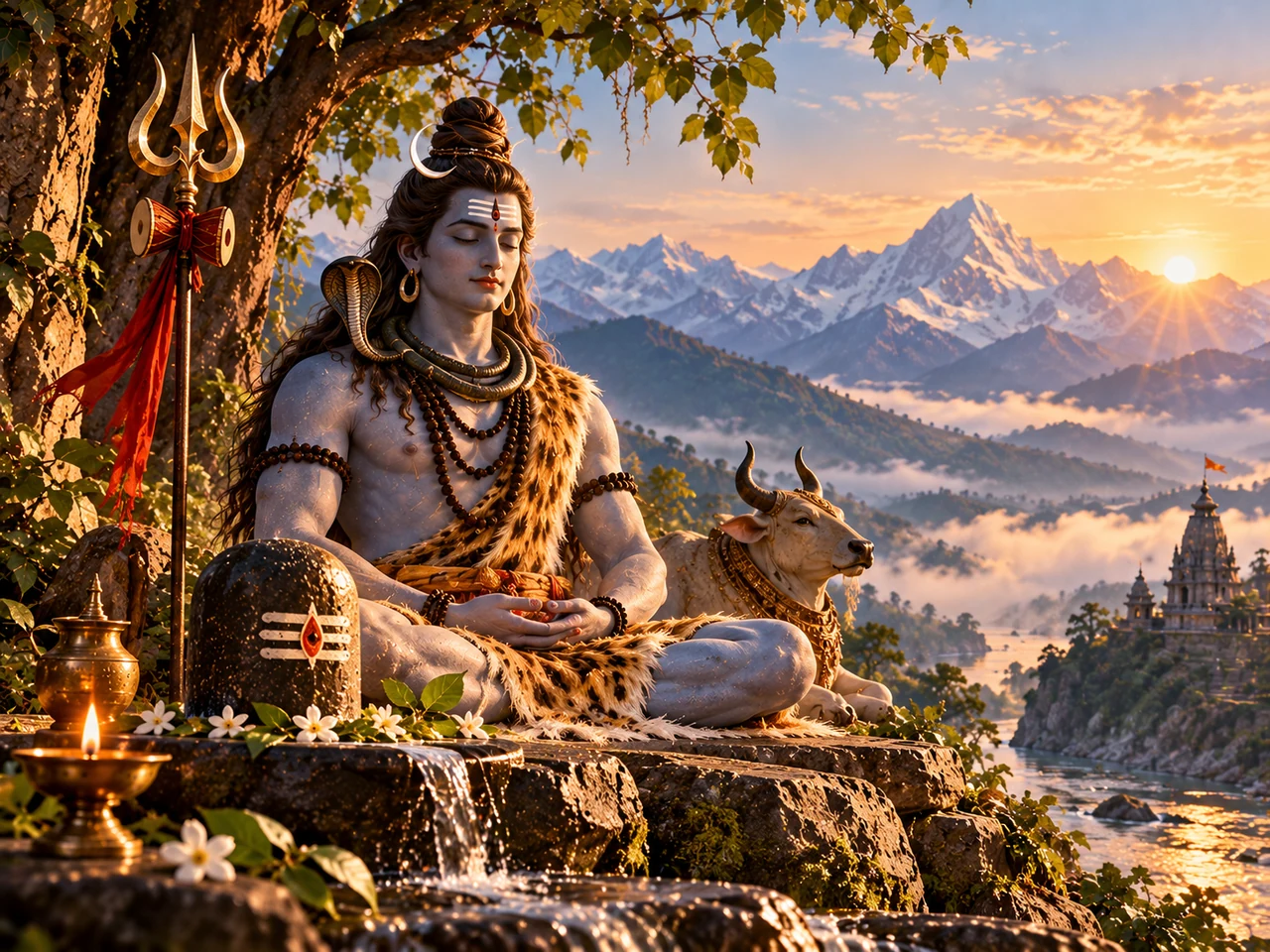
The opening images place the Ganga, snakes, forehead-fire, crescent moon and the damaru into a continuous rhythm. By verse 11 the drum-like dhimid-dhimid becomes almost audible. These are poetic images of Shiva’s movement, not a manual defining specific dance steps. 1
Chola-period Nataraja sculptures likewise use the damaru, flame, gesture of fearlessness and the figure of Apasmara to express creation, transformation, refuge and ignorance. Museum catalogues also describe a five-activity model of Shiva—creation, preservation, dissolution, concealment and grace. These artistic and theological associations illuminate the hymn without proving that it was composed at the same time as those bronzes. 56
Ravana: tradition versus historical authorship
The heading and final benediction identify this as a hymn associated with the ten-headed Ravana. That attribution matters to living devotional reception and the literary image of Ravana as an ardent Shiva worshipper. It does not, without independent dated evidence, verify the actual author or century of composition. We therefore say traditionally attributed to Ravana, not “historically written by Ravana.” 12
Why the 15-, 16- and 17-unit versions differ
A shorter Bṛhatstotraratnākara text begins with a verse that is number 2 here, and it lacks this edition’s challenging flower-imagery verse 14. Its conclusion also has alternative wording. Popular recitation editions may count only the principal hymn while another includes the final phalaśruti. This draft does not import one tradition’s missing verses into another. 12378
The wording of verse 5, the equanimity ending in verse 12, the compressed compounds in verses 14–15 and the benediction need deliberate Sanskrit-specialist collation. The meanings provided are original interpretive drafts, not substitute manuscript authority. 12
Understanding the final benediction responsibly
The closing reference to Pradosha and the imagery of chariots, elephants, horses and Lakshmi belongs to the language of traditional devotional reward. It should not be treated as proof of material gains, automatic spiritual attainments, or an exact, universally required worship procedure. This educational page offers no restricted initiation or ritual instructions. 1
Key terms and pronunciation
Jata:Jaṭā: matted hair of an ascetic. Damaru: hand drum. Tāṇḍava: a vigorous mode of Shiva’s dance. Digambara: sky-clad, a poetic ascetic epithet. Samabhāva: inward equipoise across changing circumstances. Phalaśruti: concluding verse describing traditional benefits of recitation. IAST letters such as ṭ, ḍ, ṇ, ś, ṣ and long ā mark Sanskrit distinctions that need review by a trained reader.
Frequently asked questions
What does the title mean?
“Shiva Tandava Stotram” means a hymn praising Shiva’s energetic dance. Its compact Sanskrit compounds imitate movement and percussion. Did Ravana compose it?
The hymn is traditionally attributed to Ravana, including in the transmitted heading and final benediction. Its historical composer and precise date are not established by those claims alone. How many verses are there?
This selected witness contains 16 main verses plus an unnumbered closing benediction, shown here as unit 17. Other editions use shorter sequences or different counting. Is this the same as the Nataraja icon?
Both celebrate Shiva’s dance, but this hymn and South Indian Chola Nataraja sculpture have distinct documentary histories. Similar imagery does not establish an identical origin. Does the hymn promise money or powers?
The final benediction uses traditional prosperity language. It is a devotional assurance, not an empirical guarantee or instruction for attaining powers. What is the role of Parvati?
The poem repeatedly invokes the daughter of the mountain alongside Shiva, notably in verses 3 and 7; cosmic power is accompanied by affection and compassion. Can I read the Roman script as an English translation?
No. The Roman text reproduces Sanskrit sounds through IAST; the meaning is provided afterward in separate English prose. Is it an initiatory mantra?
This page offers public educational reading of a stotra, not initiation or restricted ritual instructions. Why do two websites print different verses?
Different recensional and recitation traditions omit, add or rearrange verses. This edition names its witness and records differences without creating a synthetic text.
Additional passage commentary
Verse 1
Meaning: Shiva dances vigorously beneath his streaming locks, serpent garland and beating drum; may his dance bring auspiciousness. Explanation: The fierce movement is not merely violent: the hymn turns the drum’s audible rhythm and Ganga’s cleansing flow into a prayer for well-being.
Verse 2
Meaning: The heavenly river swirls in Shiva’s hair; flame flashes upon his forehead and the young crescent crowns him. May my love for him never cease. Explanation: Water, fire and moonlight share one divine form. The speaker moves from describing the spectacle to the personal wish for lasting devotion.
Verse 3
Meaning: May my heart rejoice in the sky-clad Shiva, whose mind delights with the daughter of the mountain and whose gracious glance withstands great hardship. Explanation: Parvati is not incidental to the imagery: her companionship and Shiva’s compassion temper the hymn’s fierceness. “Sky-clad” is an ascetic epithet, not a literal dress prescription. Pārvatī is not incidental to the imagery: her companionship and Shiva’s compassion temper the hymn’s fierceness. “Sky-clad” is an ascetic epithet, not a literal dress prescription.
Verse 4
Meaning: The glow of gems on the serpents in Shiva’s matted locks colors the directions; he is wrapped in the hide of a mighty elephant-like foe. May the sustainer of beings delight my mind. Explanation: The compound-packed language juxtaposes jewels, serpents and animal hide. It is iconographic praise, not a recommended handling of animals or ritual material.
Verse 5
Meaning: Even gods such as Indra bow so low that flower dust covers the base of Shiva’s feet. May the serpent-adorned, moon-crested lord grant enduring welfare. Explanation: The stanza reverses worldly hierarchy: powerful gods are pictured offering reverence. The printed variant between “jāṭa” and “jaṭā” in the hair compound merits separate collation.
Verse 6
Meaning: The fire of Shiva’s forehead consumed Kāma, yet the crescent still shines above his head. May this skull-bearing, river-haired radiance bless us. Explanation: Kāma is the desire-god of mythology; the image can also invite reflection on ungoverned craving. The hymn never makes compassion incompatible with ascetic fire.
Verse 7
Meaning: My devotion rests in the three-eyed Shiva whose blazing forehead defeated the arrows of Love and who is pictured as a playful artist adorning Parvati. My devotion rests in the three-eyed Shiva whose blazing forehead defeated the arrows of Love and who is pictured as a playful artist adorning Pārvatī. Explanation: The poet binds formidable ascetic power to domestic tenderness. The ornamenting motif is devotional imagination and should not be converted into an exclusive social ideal.
Verse 8
Meaning: Shiva’s dark throat resembles clouded new-moon night; he bears the celestial river, wears a hide and supports the world. May he bring prosperity. Explanation: The dark throat is traditionally connected to the poison-drinking Neelkantha account, though the verse itself uses a dense night-and-cloud simile.
Verse 9
Meaning: I worship Shiva, whose blue-dark throat shines like a lotus and who destroys Kāma, Tripura, bondage, Daksha’s sacrifice, the elephant foe, Andhaka and Death itself. Explanation: A chain of “-chid” compounds rapidly names different conquests. They are layered mythological episodes, not permission to treat actual opponents violently.
Verse 10
Meaning: I worship Shiva, the bee drawn to the sweet blossoms of auspiciousness, who ends Kāma, Tripura, worldly becoming, the sacrifice and terrifying adversaries. Explanation: The bee-and-flower image softens the repeated martial names. It is a poetic counterpart to the previous verse, not evidence of a separate event.
Verse 11
Meaning: Victory to Shiva: serpents whirl, his forehead-fire flashes and the auspicious beats of the mṛdaṅga set his fierce Tāṇḍava in motion. Explanation: Onomatopoeic “dhimid-dhimid” imitates percussion. The poem emphasizes an audible dance; it must not be confused with a technical choreography manual.
Verse 12
Meaning: When shall I worship Sadashiva with equal regard for stone and fine bedding, serpent and pearl necklace, costly jewel and clod, friend and foe, grass and lotus-eyed beauty, commoner and emperor? Explanation: This is the hymn’s sharp ethical turn toward equanimity. Equality of inward regard does not erase duties to resist harm or discern right conduct.
Verse 13
Meaning: When may I dwell beside the celestial river in a quiet grove, free from confused thought, hands joined above, repeating “Shiva” in contentment? Explanation: A personal yearning replaces the cosmic panorama. The description evokes contemplative solitude; it need not be read as an obligation to withdraw from society.
Verse 14
Meaning: May the radiant beauty of Shiva’s divine adornment, imagined through flowers and heavenly fragrance, bring delight to our minds by day and night. Explanation: This verse contains unusually compressed compounds and significant witness differences. Its exact ornament and radiance imagery requires Sanskrit-specialist review before any confident word-by-word gloss.
Verse 15
Meaning: May the voice glorifying Shiva—amid fiery radiance, spiritual attainments and auspicious celebratory sound—be victorious through the worlds. Explanation: The verse is textually difficult: “marriage-time sound,” eight siddhis and a left-eye image appear in competing interpretations. None establishes a ritual prescription or guaranteed power.
Verse 16
Meaning: The closing verse praises repeated reflection on this excellent hymn as a means of inner purification and deepened devotion to Shiva as teacher and lord. Explanation: This is the hymn’s internal assurance about devotional benefit; it is not empirical proof of purity, a mandatory repetition count or a special initiatory practice.