



About these reading aids

Easy Roman is a Devanagari-based Sanskrit reading aid. IAST preserves scholarly distinctions. Where no Roman text was supplied, IAST is derived automatically from the Devanagari; this is not a certified pronunciation guide. Vernacular songs retain their supplied word forms and spoken endings. Easy Roman simplifies unambiguous diacritics; their scholarly view retains the supplied Roman form rather than inventing Sanskrit pronunciation. Selected bija spellings are kept where unambiguous.

Stotra

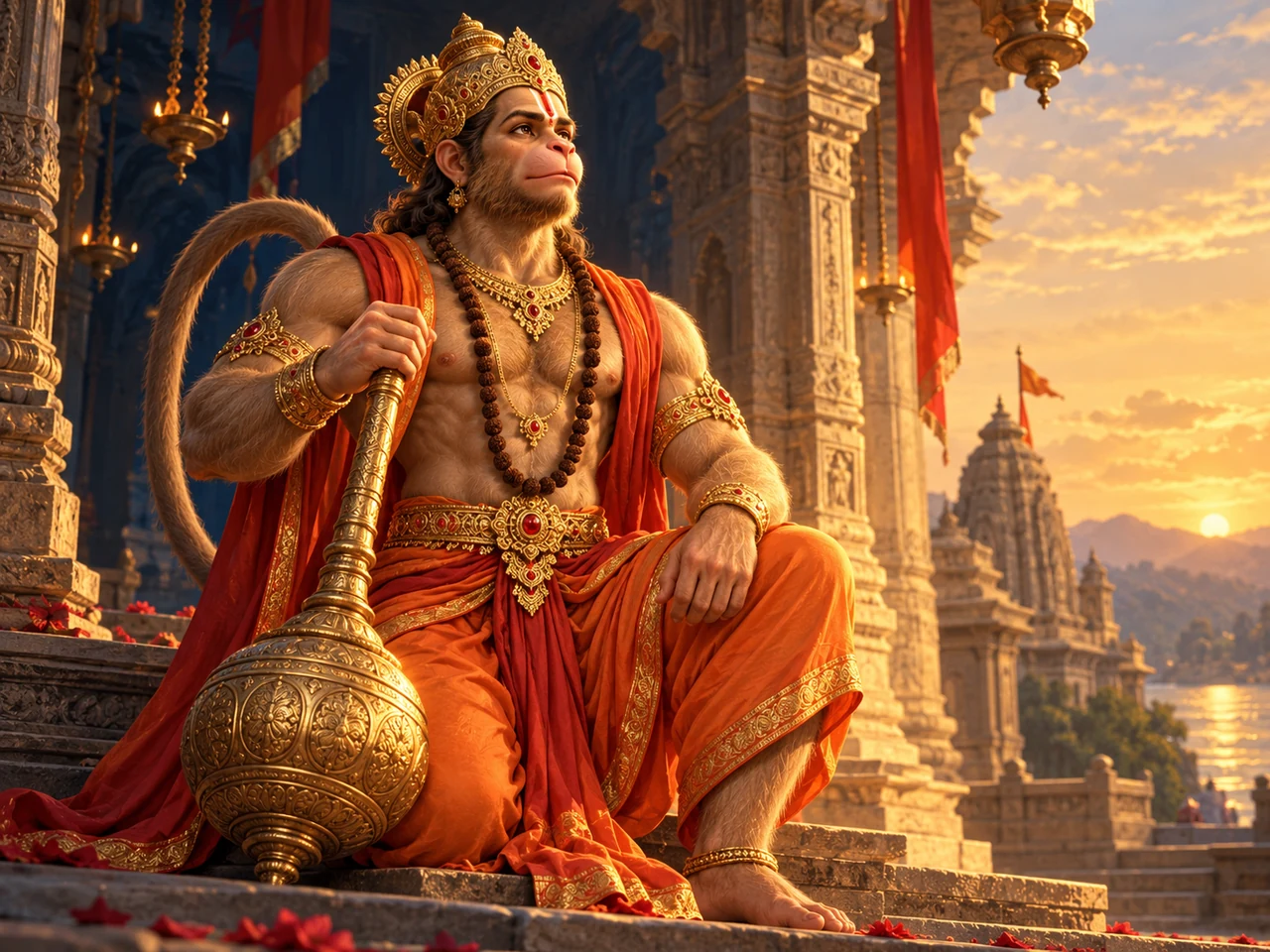
Sankat Mochan Hanuman Ashtak

Eight accounts of Hanuman helping others, followed by a direct prayer for courage and relief.

Reading settings

Settings are saved in this page’s URL and carried to adjacent chapters. Bookmark the URL to keep them. Devanagari keeps its dedicated reading font.

Reset settings

Text, Meaning & Explanation

1

बाल समय रबि भक्षि लियो तब तीनहुँ लोक भयो अँधियारो । ताहि सों त्रास भयो जग को यह संकट काहु सों जात न टारो । देवन आनि करी बिनती तब छाँड़ि दियो रबि कष्ट निवारो । को नहिं जानत है जगमें कपि संकटमोचन नाम तिहारो ॥ 1 ॥

Roman Transliteration

baala samaya rabi bhakshi liyo taba teenahum̐ loka bhayo am̐dhiyaaro | taahi som traasa bhayo jaga ko yaha samkata kaahu som jaata na taaro | devana aani karee binatee taba chhaam̐ḏi diyo rabi kashta nivaaro | ko nahim jaanata hai jagamem kapi samkatamochana naama tihaaro || 1 ||Bāl samay rabi bhakṣi liyo tab tīnhuṃ lok bhayo andhiyāro | Tāhi soṃ trās bhayo jag ko yah saṅkaṭ kāhu soṃ jāt na ṭāro | Devan āni karī bintī tab chāṃṛi diyo rabi kaṣṭ nivāro | ko nahiṃ jānat hai jagmeṃ kapi saṅkaṭmocan nām tihāro || 1 ||

Meaning

As a child you swallowed the sun; darkness gripped all three worlds and no one could remove the danger. When the gods appealed to you, you released the sun and ended their distress. Hanuman, everyone knows you as the one who releases people from trouble.

Explanation

In a poetic account, the sudden disappearance of the sun dramatizes how one creature’s action can threaten the whole world. The resolution begins when the gods petition rather than fight. This is devotional mythology, not a claim about an astronomical event. Note that rabi is the vernacular form of ravi, sun.

2

बालि की त्रास कपीस बसै गिरि जात महाप्रभु पंथ निहारो । चौंकि महा मुनि साप दियो तब चाहिय कौन बिचार बिचारो । कै द्विज रूप लिवाय महाप्रभु सो तुम दास के सोक निवारो । को नहिं जानत है जगमें कपि संकटमोचन नाम तिहारो ॥ 2 ॥

Roman Transliteration

baali kee traasa kapeesa basai giri jaata mahaaprabhu pamtha nihaaro | chaumki mahaa muni saapa diyo taba chaahiya kauna bichaara bichaaro | kai dvija roopa livaaya mahaaprabhu so tuma daasa ke soka nivaaro | ko nahim jaanata hai jagamem kapi samkatamochana naama tihaaro || 2 ||Bāli kī trās kapīs basai giri jāt mahāprabhu panth nihāro | Cauṃki mahā muni sāp diyo tab cāhiy kaun bicār bicāro | Kai dvij rūp livāy mahāprabhu so tum dās ke sok nivāro | ko nahiṃ jānat hai jagmeṃ kapi saṅkaṭmocan nām tihāro || 2 ||

Meaning

Terrified of Bāli, Sugrīva sheltered on a mountain, looking for a way forward. The verse alludes to a sage’s curse and to your meeting Rama in a Brahmin-like guise and bringing him to Sugrīva. In doing so you ended your servant’s sorrow; you are celebrated as the remover of trouble.Terrified of Bāli, Sugrīva sheltered on a mountain, looking for a way forward. The verse alludes to a sage’s curse and to your meeting Rama in a Brahmin-like guise and bringing him to Sugrīva. In doing so you ended your servant’s sorrow; you are celebrated as the remover of trouble.Terrified of Bāli, Sugrīva sheltered on a mountain, looking for a way forward. The verse alludes to a sage’s curse and to your meeting Rāma in a Brahmin-like guise and bringing him to Sugrīva. In doing so you ended your servant’s sorrow; you are celebrated as the remover of trouble.

Explanation

The lyric compresses several episodes associated with Ṛṣyamūka, Sugrīva and the meeting with Rama. Its old syntax, especially kai dvij rūp livāy, needs expert glossing: the sense is that Hanuman appears as a learned visitor and facilitates the meeting; a literal word-by-word rendering is not yet editorially settled. The curse concerns Bāli’s inability to approach that refuge in the narrative.The lyric compresses several episodes associated with Ṛṣyamūka, Sugrīva and the meeting with Rama. Its old syntax, especially kai dvij rūp livāy, needs expert glossing: the sense is that Hanuman appears as a learned visitor and facilitates the meeting; a literal word-by-word rendering is not yet editorially settled. The curse concerns Bāli’s inability to approach that refuge in the narrative.The lyric compresses several episodes associated with Ṛṣyamūka, Sugrīva and the meeting with Rāma. Its old syntax, especially kai dvij rūp livāy, needs expert glossing: the sense is that Hanuman appears as a learned visitor and facilitates the meeting; a literal word-by-word rendering is not yet editorially settled. The curse concerns Bāli’s inability to approach that refuge in the narrative.

3

अंगद के संग लेन गये सिय खोज कपीस यह बैन उचारो । जीवत ना बचिहौ हम सो जु बिना सुधि लाए इहाँ पगु धारो । हेरि थके तट सिंधु सबै तब लाय सिया-सुधि प्रान उबारो । को नहिं जानत है जगमें कपि संकटमोचन नाम तिहारो ॥ 3 ॥

Roman Transliteration

amgada ke samga lena gaye siya khoja kapeesa yaha baina uchaaro | jeevata naa bachihau hama so ju binaa sudhi laae ihaam̐ pagu dhaaro | heri thake tata simdhu sabai taba laaya siyaa-sudhi praana ubaaro | ko nahim jaanata hai jagamem kapi samkatamochana naama tihaaro || 3 ||Aṅgad ke saṅg len gaye siy khoj kapīs yah bain ucāro | Jīvat nā bacihau ham so ju binā sudhi lāe ihāṃ pagu dhāro | Heri thake taṭ sindhu sabai tab lāy siyā-sudhi prān ubāro | ko nahiṃ jānat hai jagmeṃ kapi saṅkaṭmocan nām tihāro || 3 ||

Meaning

When the search for Sītā became desperate, the vanara leader warned the party not to return without news. Exhausted at the ocean’s edge, they had nearly lost hope; you brought back news of Sītā and thereby preserved their courage and lives. You are called the remover of trouble.

Explanation

The crucial word sudhi means reliable news or remembrance, not simply a physical rescue. Hanuman crosses the ocean and makes a message possible where the others see only an impassable boundary. The stanza celebrates courage joined to communication and fidelity to a mission.

4

रावन त्रास दई सिय को सब राक्षसि सों कहि सोक निवारो । ताहि समय हनुमान महाप्रभु जाय महा रजनीचर मारो । चाहत सीय असोक सों आगि सु दै प्रभु मुद्रिका सोक निवारो । को नहिं जानत है जगमें कपि संकटमोचन नाम तिहारो ॥ 4 ॥

Roman Transliteration

raavana traasa daee siya ko saba raakshasi som kahi soka nivaaro | taahi samaya Hanuman mahaaprabhu jaaya mahaa rajaneechara maaro | chaahata seeya asoka som aagi su dai prabhu mudrikaa soka nivaaro | ko nahim jaanata hai jagamem kapi samkatamochana naama tihaaro || 4 ||Rāvan trās daī siy ko sab rākṣasi soṃ kahi sok nivāro | Tāhi samay hanumān mahāprabhu jāy mahā rajnīcar māro | Cāhat sīy asok soṃ āgi su dai prabhu mudrikā sok nivāro | ko nahiṃ jānat hai jagmeṃ kapi saṅkaṭmocan nām tihāro || 4 ||

Meaning

Rāvaṇa had caused Sītā deep fear and sorrow among the demonesses. You arrived, overcame formidable night-roaming enemies and gave Sītā Rama’s signet ring when she was on the verge of despair. By this sign of recognition you relieved her grief; you are the remover of trouble.Rāvaṇa had caused Sītā deep fear and sorrow among the demonesses. You arrived, overcame formidable night-roaming enemies and gave Sītā Rama’s signet ring when she was on the verge of despair. By this sign of recognition you relieved her grief; you are the remover of trouble.Rāvaṇa had caused Sītā deep fear and sorrow among the demonesses. You arrived, overcame formidable night-roaming enemies and gave Sītā Rāma’s signet ring when she was on the verge of despair. By this sign of recognition you relieved her grief; you are the remover of trouble.

Explanation

Sītā’s crisis is not presented as weakness: she is isolated and threatened. Rama’s ring is evidence of a trusted relationship, and its arrival permits hope. The compressed phrase about fire/Aśoka varies in interpretation; the explanatory reading here is provisional, not a silent rewrite of the verse.Sītā’s crisis is not presented as weakness: she is isolated and threatened. Rama’s ring is evidence of a trusted relationship, and its arrival permits hope. The compressed phrase about fire/Aśoka varies in interpretation; the explanatory reading here is provisional, not a silent rewrite of the verse.Sītā’s crisis is not presented as weakness: she is isolated and threatened. Rāma’s ring is evidence of a trusted relationship, and its arrival permits hope. The compressed phrase about fire/Aśoka varies in interpretation; the explanatory reading here is provisional, not a silent rewrite of the verse.

5

बान लग्यो उर लछिमन के तब प्रान तजे सुत रावन मारो । लै गृह बैद्य सुषेन समेत तबै गिरि द्रोन सु बीर उपारो । आनि सजीवन हाथ दई तब लछिमन के तुम प्रान उबारो । को नहिं जानत है जगमें कपि संकटमोचन नाम तिहारो ॥ 5 ॥

Roman Transliteration

baana lagyo ura lachhimana ke taba praana taje suta raavana maaro | lai griha baidya sushena sameta tabai giri drona su beera upaaro | aani sajeevana haatha daee taba lachhimana ke tuma praana ubaaro | ko nahim jaanata hai jagamem kapi samkatamochana naama tihaaro || 5 ||Bān lagyo ur lachhiman ke tab prān taje sut rāvan māro | Lai gṛh baidy suṣen samet tabai giri dron su bīr upāro | Āni sajīvan hāth daī tab lachhiman ke tum prān ubāro | ko nahiṃ jānat hai jagmeṃ kapi saṅkaṭmocan nām tihāro || 5 ||

Meaning

When Lakṣmaṇa fell stricken by a weapon from Rāvaṇa’s son, you brought the physician Suṣeṇa and lifted the mountain associated with healing herbs. You placed the life-restoring remedy at hand and Lakṣmaṇa was saved. The refrain honours you as one who frees others from calamity.

Explanation

The poem links three actions: obtaining a healer, moving a mountain, and enabling medicine to reach the injured. It is a sacred story of attentive service, not medical guidance or evidence for a modern cure. Lachhiman, baidy and dron are older vernacular spellings of Lakṣmaṇa, vaidya and Drona.The poem links three actions: obtaining a healer, moving a mountain, and enabling medicine to reach the injured. It is a sacred story of attentive service, not medical guidance or evidence for a modern cure. Lachhiman, baidy and dron are older vernacular spellings of Lakṣmaṇa, vaidya and Drona.The poem links three actions: obtaining a healer, moving a mountain, and enabling medicine to reach the injured. It is a sacred story of attentive service, not medical guidance or evidence for a modern cure. Lachhiman, baidy and dron are older vernacular spellings of Lakṣmaṇa, vaidya and Droṇa.

6

रावन जुद्ध अजान कियो तब नाग कि फाँस सबै सिर डारो । श्रीरघुनाथ समेत सबै दल मोह भयो यह संकट भारो । आनि खगेस तबै हनुमान जु बंधन काटि सुत्रास निवारो । को नहिं जानत है जगमें कपि संकटमोचन नाम तिहारो ॥ 6 ॥

Roman Transliteration

raavana juddha ajaana kiyo taba naaga ki phaam̐sa sabai sira daaro | shreeraghunaatha sameta sabai dala moha bhayo yaha samkata bhaaro | aani khagesa tabai Hanuman ju bamdhana kaati sutraasa nivaaro | ko nahim jaanata hai jagamem kapi samkatamochana naama tihaaro || 6 ||Rāvan juddh ajān kiyo tab nāg ki phāṃs sabai sir ḍāro | Śrīraghunāth samet sabai dal moh bhayo yah saṅkaṭ bhāro | Āni khages tabai hanumān ju bandhan kāṭi sutrās nivāro | ko nahiṃ jānat hai jagmeṃ kapi saṅkaṭmocan nām tihāro || 6 ||

Meaning

During battle a serpent noose overcame Rama and his forces. The verse says you brought Khageśa, Garuḍa the lord of birds, and the deadly bonds were broken. The ensuing relief becomes another example of the name Sankat Mochan.During battle a serpent noose overcame Rama and his forces. The verse says you brought Khageśa, Garuḍa the lord of birds, and the deadly bonds were broken. The ensuing relief becomes another example of the name Sankat Mochan.During battle a serpent noose overcame Rāma and his forces. The verse says you brought Khageśa, Garuḍa the lord of birds, and the deadly bonds were broken. The ensuing relief becomes another example of the name Sankat Mochan.

Explanation

The verse names Khageśa (Garuḍa), whose association with serpents explains his role in undoing the snare. Narrative details differ among Rama traditions; this segment should not be forced into a single early epic chapter as though its wording were verbatim scripture. Sutras is an uncertain reading requiring language review.The verse names Khageśa (Garuḍa), whose association with serpents explains his role in undoing the snare. Narrative details differ among Rama traditions; this segment should not be forced into a single early epic chapter as though its wording were verbatim scripture. Sutras is an uncertain reading requiring language review.The verse names Khageśa (Garuḍa), whose association with serpents explains his role in undoing the snare. Narrative details differ among Rāma traditions; this segment should not be forced into a single early epic chapter as though its wording were verbatim scripture. Sutras is an uncertain reading requiring language review.

7

बंधु समेत जबै अहिरावन लै रघुनाथ पताल सिधारो । देबिहिं पूजि भली बिधि सों बलि देउ सबै मिलि मंत्र बिचारो । जाय सहाय भयो तब ही अहिरावन सैन्य समेत सँहारो । को नहिं जानत है जगमें कपि संकटमोचन नाम तिहारो ॥ 7 ॥

Roman Transliteration

bamdhu sameta jabai ahiraavana lai raghunaatha pataala sidhaaro | debihim pooji bhalee bidhi som bali deu sabai mili mamtra bichaaro | jaaya sahaaya bhayo taba hee ahiraavana sainya sameta sam̐haaro | ko nahim jaanata hai jagamem kapi samkatamochana naama tihaaro || 7 ||Bandhu samet jabai ahirāvan lai raghunāth patāl sidhāro | Debihiṃ pūji bhalī bidhi soṃ bali deu sabai mili mantra bicāro | Jāy sahāy bhayo tab hī ahirāvan sainy samet saṃhāro | ko nahiṃ jānat hai jagmeṃ kapi saṅkaṭmocan nām tihāro || 7 ||

Meaning

In a later Rama-story tradition Ahirāvaṇa takes Rama and Lakṣmaṇa to the underworld for a planned offering. Hanuman goes to their aid, destroys Ahirāvaṇa and his host, and rescues them. The poet again praises his power to relieve peril.In a later Rama-story tradition Ahirāvaṇa takes Rama and Lakṣmaṇa to the underworld for a planned offering. Hanuman goes to their aid, destroys Ahirāvaṇa and his host, and rescues them. The poet again praises his power to relieve peril.In a later Rāma-story tradition Ahirāvaṇa takes Rāma and Lakṣmaṇa to the underworld for a planned offering. Hanuman goes to their aid, destroys Ahirāvaṇa and his host, and rescues them. The poet again praises his power to relieve peril.

Explanation

Ahirāvaṇa is important in later popular retellings but should not be described as an episode from every recension of Vālmīki’s Rāmāyaṇa. The dramatic underworld setting reinforces the idea that help can reach even a place thought inaccessible. No ritual sacrifice is prescribed here.

8

काज किये बड़ देवन के तुम बीर महाप्रभु देखि बिचारो । कौन सो संकट मोर गरीब को जो तुमसों नहिं जात है टारो । बेगि हरो हनुमान महाप्रभु जो कछु संकट होय हमारो । को नहिं जानत है जगमें कपि संकटमोचन नाम तिहारो ॥ 8 ॥

Roman Transliteration

kaaja kiye baḏa devana ke tuma beera mahaaprabhu dekhi bichaaro | kauna so samkata mora gareeba ko jo tumasom nahim jaata hai taaro | begi haro Hanuman mahaaprabhu jo kachhu samkata hoya hamaaro | ko nahim jaanata hai jagamem kapi samkatamochana naama tihaaro || 8 ||Kāj kiye baṛ devan ke tum bīr mahāprabhu dekhi bicāro | Kaun so saṅkaṭ mor garīb ko jo tumsoṃ nahiṃ jāt hai ṭāro | Begi haro hanumān mahāprabhu jo kachu saṅkaṭ hoy hamāro | ko nahiṃ jānat hai jagmeṃ kapi saṅkaṭmocan nām tihāro || 8 ||

Meaning

Brave Hanuman, you have accomplished immense deeds for the gods. What trouble could you not remove for someone as helpless as me? I ask you to relieve whatever distress has come upon me without delay. The final refrain turns heroic memory into humble prayer.

Explanation

In the first seven stanzas the poet recalls what Hanuman did for others; in the eighth the speaker asks, what about my trouble? That shift from narrative praise to supplication creates the emotional architecture of the Aṣṭak. Devotional trust should not be mistaken for a guaranteed outcome.

लाल देह लाली लसे अरु धरि लाल लँगूर । बज्र देह दानव दलन जय जय जय कपि सूर ॥

Roman Transliteration

laala deha laalee lase aru dhari laala lam̐goora | bajra deha daanava dalana jaya jaya jaya kapi soora ||Lāl deh lālī lase aru dhari lāl laṅgūr | Bajr deh dānav dalan jay jay jay kapi sūr ||

Meaning

Your red-hued body shines, and the poet evokes a red tail. Strong as a thunderbolt and a destroyer of demons, heroic Hanuman is hailed again and again.

Explanation

The doha belongs to the closing recitation in the selected witness, but is structurally separate from the eight Mattagayand stanzas. Red is a prominent devotional colour in representations of Hanuman; the image of an adamantine body symbolizes fearless resilience.

Context & Usage

Edition notice: Selected printed reading, pages 123–126: eight Mattagayand stanzas and one separate closing doha. The original is vernacular Braj–Awadhi-influenced literary Hindi, not Sanskrit. Independent philological and rights checks remain pending. educational edition only. 1 2

What is this hymn? The eight extended stanzas recall how Hanuman made the impossible possible for others. Their repeated final line turns each event into a shared devotional title: the one who frees others from danger. After seven narrative examples, stanza eight changes perspective and lets the speaker ask for help directly. The concluding doha is not counted as a ninth Mattagayand stanza. 1

Language and attribution: The original belongs to older North Indian devotional literary speech; its Braj/Awadhi labelling calls for a specialist. Tulsidas is the traditional attributed poet, not a historically proven author on current evidence. This is an independent vernacular hymn drawing on Rama stories, not a Sanskrit passage copied directly from Vālmīki. The original belongs to older North Indian devotional literary speech; its Braj/Awadhi labelling calls for a specialist. Tulsidas is the traditional attributed poet, not a historically proven author on current evidence. This is an independent vernacular hymn drawing on Rāma stories, not a Sanskrit passage copied directly from Vālmīki. 1 2 4

Closing doha — The closing image of Hanuman’s strength

Meaning: Your red-hued body shines, and the poet evokes a red tail. Strong as a thunderbolt and a destroyer of demons, heroic Hanuman is hailed again and again. Explanation and context: The doha belongs to the closing recitation in the selected witness, but is structurally separate from the eight Mattagayand stanzas. Red is a prominent devotional colour in representations of Hanuman; the image of an adamantine body symbolizes fearless resilience. Textual note: अरु / अरू; दोहा as final composition segment / four additional lines of invocations after doha. These alternatives are not silently blended into the selected reading.

Tradition, imagery and language

Mattagayand: The selected print labels the main poem with this metre; its counting and performance should be checked by a specialist. The separate couplet is a doha, not an eighth-stanza continuation. 1

Helpful terms: rabi is the sun; kapīs the leader of the vanaras; sudhi news; mudrikā a signet ring; khages Garuḍa; dron the mountain associated with healing herbs; garīb describes the speaker as humble and helpless. Do not silently Sanskritise dialectal words such as soṃ, nahiṃ or daī. Rama-story variations:Rāma-story variations: The Ahirāvaṇa scene belongs to several later retellings; it should not be assigned to every form of the early Sanskrit Rāmāyaṇa. A devotional narrative and historical evidence answer different questions.

Variants and boundaries of this reading

The entire final line appears after every stanza. The selected print’s original spellings—including rabi, dron, kāj kiye and the doha’s aru—are retained. Other sources use ravi, droṇ, kāj kiyo or arū. Sanskrit Documents adds four further salutations after the doha; those are not present in the inspected print and are not appended here. See the witness-based variant ledger, including reported variants that still require independent direct-print collation. 1 2 4

Frequently asked questions

Is this a Sanskrit stotra? No. Its text is older vernacular literary Hindi, with Braj and Awadhi features; Aṣṭak describes the eight-part form.

Why are there nine reading records? The eight principal stanzas are followed by one separate closing doha.

Was it written by Tulsidas? That is the traditional attribution; the author is not independently established from the inspected printed evidence.

Is it the same as the Hanuman Chalisa? No. It is a distinct eight-stanza hymn with a repeated refrain.

Does reciting it guarantee a cure or an outcome? No. The hymn expresses devotional trust; practical help, medical care and safety measures should not be replaced by a recitation.

Sources, Credits & Licensing

Founder-authorized educational edition. Independent textual and specialist review remains incomplete; this reading does not confer initiation or ritual authorization.

Traditional Tulsidas-tradition hymn. Reusable text-only comparison: Nitya, permitted for any purpose. Historical witness: Pt. Hari Shankar Shastri, 1 Mein100Pustak,1900, printed173. Supplied nasal spelling and closing doha preserved. Original manuscript wording and unit sequence retained. Roman rendering, meanings and explanations: ShivGoraksh. No source recording, scan image or modern third-party explanation is reproduced. Independent textual certification remains incomplete.

Text licence

Original Roman reading

The Roman reading recorded with this edition, retaining its spelling and word forms before the Easy Roman display conversion.

  1. 1

    Bāl samay rabi bhakṣi liyo tab tīnhuṃ lok bhayo andhiyāro | Tāhi soṃ trās bhayo jag ko yah saṅkaṭ kāhu soṃ jāt na ṭāro | Devan āni karī bintī tab chāṃṛi diyo rabi kaṣṭ nivāro | ko nahiṃ jānat hai jagmeṃ kapi saṅkaṭmocan nām tihāro || 1 ||

  2. 2

    Bāli kī trās kapīs basai giri jāt mahāprabhu panth nihāro | Cauṃki mahā muni sāp diyo tab cāhiy kaun bicār bicāro | Kai dvij rūp livāy mahāprabhu so tum dās ke sok nivāro | ko nahiṃ jānat hai jagmeṃ kapi saṅkaṭmocan nām tihāro || 2 ||

  3. 3

    Aṅgad ke saṅg len gaye siy khoj kapīs yah bain ucāro | Jīvat nā bacihau ham so ju binā sudhi lāe ihāṃ pagu dhāro | Heri thake taṭ sindhu sabai tab lāy siyā-sudhi prān ubāro | ko nahiṃ jānat hai jagmeṃ kapi saṅkaṭmocan nām tihāro || 3 ||

  4. 4

    Rāvan trās daī siy ko sab rākṣasi soṃ kahi sok nivāro | Tāhi samay hanumān mahāprabhu jāy mahā rajnīcar māro | Cāhat sīy asok soṃ āgi su dai prabhu mudrikā sok nivāro | ko nahiṃ jānat hai jagmeṃ kapi saṅkaṭmocan nām tihāro || 4 ||

  5. 5

    Bān lagyo ur lachhiman ke tab prān taje sut rāvan māro | Lai gṛh baidy suṣen samet tabai giri dron su bīr upāro | Āni sajīvan hāth daī tab lachhiman ke tum prān ubāro | ko nahiṃ jānat hai jagmeṃ kapi saṅkaṭmocan nām tihāro || 5 ||

  6. 6

    Rāvan juddh ajān kiyo tab nāg ki phāṃs sabai sir ḍāro | Śrīraghunāth samet sabai dal moh bhayo yah saṅkaṭ bhāro | Āni khages tabai hanumān ju bandhan kāṭi sutrās nivāro | ko nahiṃ jānat hai jagmeṃ kapi saṅkaṭmocan nām tihāro || 6 ||

  7. 7

    Bandhu samet jabai ahirāvan lai raghunāth patāl sidhāro | Debihiṃ pūji bhalī bidhi soṃ bali deu sabai mili mantra bicāro | Jāy sahāy bhayo tab hī ahirāvan sainy samet saṃhāro | ko nahiṃ jānat hai jagmeṃ kapi saṅkaṭmocan nām tihāro || 7 ||

  8. 8

    Kāj kiye baṛ devan ke tum bīr mahāprabhu dekhi bicāro | Kaun so saṅkaṭ mor garīb ko jo tumsoṃ nahiṃ jāt hai ṭāro | Begi haro hanumān mahāprabhu jo kachu saṅkaṭ hoy hamāro | ko nahiṃ jānat hai jagmeṃ kapi saṅkaṭmocan nām tihāro || 8 ||

  9. 9

    Lāl deh lālī lase aru dhari lāl laṅgūr | Bajr deh dānav dalan jay jay jay kapi sūr ||

Sources and edition notes

  • 1 Śrīrāmacaritamānasa / Śrīhanumānacālīsā anthology containing Saṅkaṭamocana Hanumānāṣṭak — https://elibrary.gcecj.org/public/images/post/1714987480.sunderkand-paath-hindi%20.pdf
  • 2 Sankatamochana Hanumanashtaka (Hindi) — https://sanskritdocuments.org/doc_z_otherlang_hindi/sankatamochana.html
  • 3 Shri Hanuman Chalisha (Gita Press) — https://archive.org/details/xqZf_shri-hanuman-chalisha-gita-press
  • 4 Sankat Mochan Hanuman Ashtak in Hindi with Meaning — https://nidarshanavedh.com/mantras/hanuman-ashtak/
  • 5 Sankat Mochan Hanumanashtak text and sources — https://myarchana.in/stotram/sankat-mochan-hanumanashtak
Additional passage commentary

Stanza 1 — The child Hanuman releases the sun and restores light

Meaning: As a child you swallowed the sun; darkness gripped all three worlds and no one could remove the danger. When the gods appealed to you, you released the sun and ended their distress. Hanuman, everyone knows you as the one who releases people from trouble. Explanation and context: In a poetic account, the sudden disappearance of the sun dramatizes how one creature’s action can threaten the whole world. The resolution begins when the gods petition rather than fight. This is devotional mythology, not a claim about an astronomical event. Note that rabi is the vernacular form of ravi, sun. Textual note: रबि / रवि; तीनहुँ / तीनी; तिहारो / तुम्हारो. These alternatives are not silently blended into the selected reading.

Stanza 2 — Hanuman guides Rama to the frightened SugrīvaStanza 2 — Hanuman guides Rāma to the frightened Sugrīva

Meaning: Terrified of Bāli, Sugrīva sheltered on a mountain, looking for a way forward. The verse alludes to a sage’s curse and to your meeting Rama in a Brahmin-like guise and bringing him to Sugrīva. In doing so you ended your servant’s sorrow; you are celebrated as the remover of trouble. Terrified of Bāli, Sugrīva sheltered on a mountain, looking for a way forward. The verse alludes to a sage’s curse and to your meeting Rāma in a Brahmin-like guise and bringing him to Sugrīva. In doing so you ended your servant’s sorrow; you are celebrated as the remover of trouble. Explanation and context: The lyric compresses several episodes associated with Ṛṣyamūka, Sugrīva and the meeting with Rama. Its old syntax, especially kai dvij rūp livāy, needs expert glossing: the sense is that Hanuman appears as a learned visitor and facilitates the meeting; a literal word-by-word rendering is not yet editorially settled. The curse concerns Bāli’s inability to approach that refuge in the narrative. The lyric compresses several episodes associated with Ṛṣyamūka, Sugrīva and the meeting with Rāma. Its old syntax, especially kai dvij rūp livāy, needs expert glossing: the sense is that Hanuman appears as a learned visitor and facilitates the meeting; a literal word-by-word rendering is not yet editorially settled. The curse concerns Bāli’s inability to approach that refuge in the narrative. Textual note: बसै / बसे. These alternatives are not silently blended into the selected reading.

Stanza 3 — The search party receives life-saving news of Sītā

Meaning: When the search for Sītā became desperate, the vanara leader warned the party not to return without news. Exhausted at the ocean’s edge, they had nearly lost hope; you brought back news of Sītā and thereby preserved their courage and lives. You are called the remover of trouble. Explanation and context: The crucial word sudhi means reliable news or remembrance, not simply a physical rescue. Hanuman crosses the ocean and makes a message possible where the others see only an impassable boundary. The stanza celebrates courage joined to communication and fidelity to a mission. Textual note: हेरि थके / हरि थके. These alternatives are not silently blended into the selected reading.

Stanza 4 — Hanuman comforts Sītā in the Aśoka grove

Meaning: Rāvaṇa had caused Sītā deep fear and sorrow among the demonesses. You arrived, overcame formidable night-roaming enemies and gave Sītā Rama’s signet ring when she was on the verge of despair. By this sign of recognition you relieved her grief; you are the remover of trouble. Rāvaṇa had caused Sītā deep fear and sorrow among the demonesses. You arrived, overcame formidable night-roaming enemies and gave Sītā Rāma’s signet ring when she was on the verge of despair. By this sign of recognition you relieved her grief; you are the remover of trouble. Explanation and context: Sītā’s crisis is not presented as weakness: she is isolated and threatened. Rama’s ring is evidence of a trusted relationship, and its arrival permits hope. The compressed phrase about fire/Aśoka varies in interpretation; the explanatory reading here is provisional, not a silent rewrite of the verse. Sītā’s crisis is not presented as weakness: she is isolated and threatened. Rāma’s ring is evidence of a trusted relationship, and its arrival permits hope. The compressed phrase about fire/Aśoka varies in interpretation; the explanatory reading here is provisional, not a silent rewrite of the verse. Textual note: राक्षसि / राक्षसी. These alternatives are not silently blended into the selected reading.

Stanza 5 — Herbs and the healer Suṣeṇa save Lakṣmaṇa

Meaning: When Lakṣmaṇa fell stricken by a weapon from Rāvaṇa’s son, you brought the physician Suṣeṇa and lifted the mountain associated with healing herbs. You placed the life-restoring remedy at hand and Lakṣmaṇa was saved. The refrain honours you as one who frees others from calamity. Explanation and context: The poem links three actions: obtaining a healer, moving a mountain, and enabling medicine to reach the injured. It is a sacred story of attentive service, not medical guidance or evidence for a modern cure. Lachhiman, baidy and dron are older vernacular spellings of Lakṣmaṇa, vaidya and Drona. The poem links three actions: obtaining a healer, moving a mountain, and enabling medicine to reach the injured. It is a sacred story of attentive service, not medical guidance or evidence for a modern cure. Lachhiman, baidy and dron are older vernacular spellings of Lakṣmaṇa, vaidya and Droṇa. Textual note: द्रोन / द्रोण. These alternatives are not silently blended into the selected reading.

Stanza 6 — Garuda and release from a serpent-bond

Meaning: During battle a serpent noose overcame Rama and his forces. The verse says you brought Khageśa, Garuḍa the lord of birds, and the deadly bonds were broken. The ensuing relief becomes another example of the name Sankat Mochan. During battle a serpent noose overcame Rāma and his forces. The verse says you brought Khageśa, Garuḍa the lord of birds, and the deadly bonds were broken. The ensuing relief becomes another example of the name Sankat Mochan. Explanation and context: The verse names Khageśa (Garuḍa), whose association with serpents explains his role in undoing the snare. Narrative details differ among Rama traditions; this segment should not be forced into a single early epic chapter as though its wording were verbatim scripture. Sutras is an uncertain reading requiring language review. The verse names Khageśa (Garuḍa), whose association with serpents explains his role in undoing the snare. Narrative details differ among Rāma traditions; this segment should not be forced into a single early epic chapter as though its wording were verbatim scripture. Sutras is an uncertain reading requiring language review. Textual note: नाग कि फाँस / नाग की फाँस. These alternatives are not silently blended into the selected reading.

Stanza 7 — Rescuing Rama and Lakṣmaṇa from AhirāvaṇaStanza 7 — Rescuing Rāma and Lakṣmaṇa from Ahirāvaṇa

Meaning: In a later Rama-story tradition Ahirāvaṇa takes Rama and Lakṣmaṇa to the underworld for a planned offering. Hanuman goes to their aid, destroys Ahirāvaṇa and his host, and rescues them. The poet again praises his power to relieve peril. In a later Rāma-story tradition Ahirāvaṇa takes Rāma and Lakṣmaṇa to the underworld for a planned offering. Hanuman goes to their aid, destroys Ahirāvaṇa and his host, and rescues them. The poet again praises his power to relieve peril. Explanation and context: Ahirāvaṇa is important in later popular retellings but should not be described as an episode from every recension of Vālmīki’s Rāmāyaṇa. The dramatic underworld setting reinforces the idea that help can reach even a place thought inaccessible. No ritual sacrifice is prescribed here. Textual note: देबिहिं / देविहिं. These alternatives are not silently blended into the selected reading.

Stanza 8 — The singer brings the great stories into a personal prayer

Meaning: Brave Hanuman, you have accomplished immense deeds for the gods. What trouble could you not remove for someone as helpless as me? I ask you to relieve whatever distress has come upon me without delay. The final refrain turns heroic memory into humble prayer. Explanation and context: In the first seven stanzas the poet recalls what Hanuman did for others; in the eighth the speaker asks, what about my trouble? That shift from narrative praise to supplication creates the emotional architecture of the Aṣṭak. Devotional trust should not be mistaken for a guaranteed outcome. Textual note: काज किये / काज कियो; तुमसों / तुमसे. These alternatives are not silently blended into the selected reading.

  1. Śrīrāmacaritamānasa / Śrīhanumānacālīsā anthology containing Saṅkaṭamocana Hanumānāṣṭak · Open source
  2. Sankatamochana Hanumanashtaka (Hindi) · Open source
  3. Shri Hanuman Chalisha (Gita Press) · Open source
  4. Sankat Mochan Hanuman Ashtak in Hindi with Meaning · Open source
  5. Sankat Mochan Hanumanashtak text and sources · Open source
  6. Additional reusable textual witness (comparison, not a replacement edition) · Open source