



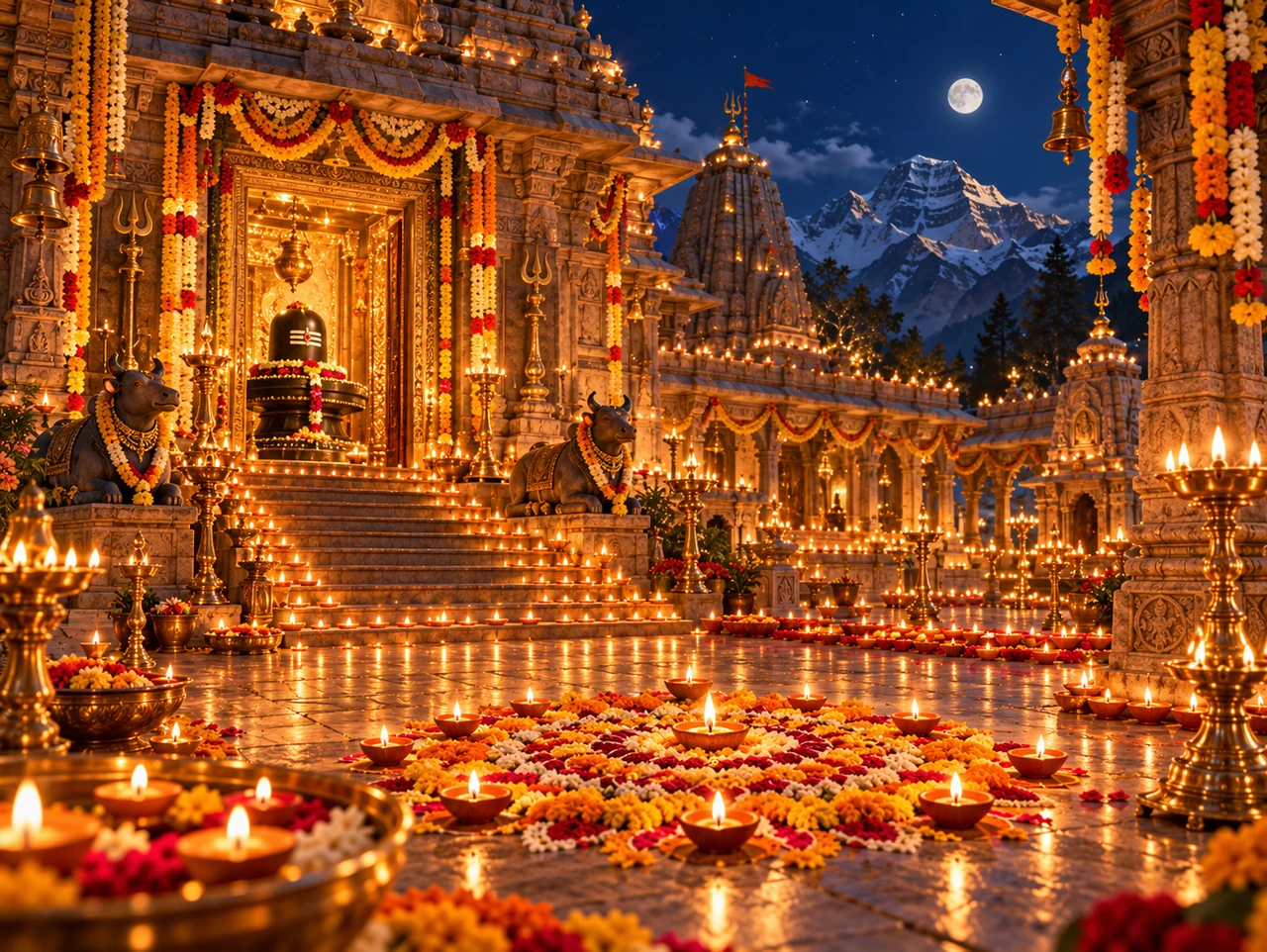
At dusk, a single clay lamp can change the feeling of an entire doorway. A row of lamps extends the welcome: to relatives returning home, to neighbours exchanging sweets, and—within many Hindu households—to the divine presence of Lakshmi. Yet Diwali is far more than one ceremony or one story. Its lights illuminate different memories across India and Nepal, and the festival has become a shared occasion in communities worldwide. 1, 2
At a glance: Diwali or Deepavali (दीवाली / दीपावली) is an annual, multiday festival complex centred in many North Indian Hindu calendars on the new-moon evening of Kartika. That same lunar interval can be named Ashvina in Amanta calendars. Lakshmi worship, Rama devotion, Krishna traditions, the Goddess Kali, regional new years, and family rites all figure in different communities. The precise Gregorian dates and local worship windows must come from a separately reviewed Panchang occurrence—not from this evergreen guide. 1, 3, 12
What do Diwali and Deepavali mean?
Sanskrit dīpa means a lamp, and āvalī means a row or series: Dīpāvalī evokes rows of lights. Diwali, Deepawali and Dipavali are widespread spellings and pronunciations. The name suggests a visible celebration, but the lights can also serve as a metaphor for understanding, hospitality and hope. They do not make every family's beliefs or ceremonies identical. 1, 2
Some celebrations fall on the same lunar dates without being interchangeable names for the same religious event. In Bengal, Kali Puja may be the central act of devotion on the new-moon night; in Sikh tradition, Bandi Chhor Divas commemorates Guru Hargobind's release; many Jains remember Mahavira's nirvana. Nepal's Tihar has its own sequence of reverence for animals, Lakshmi and siblings. We can recognise the overlapping season while respecting these distinct meanings. 4, 5, 6, 7
Where does Diwali come from?
No single ancient text gives a complete history of the modern, varied Diwali festival. Over time, devotional storytelling, the agricultural and trading calendar, household custom, temple worship and regional new-year traditions have come together. Stories may explain why a community celebrates without documenting the date when that custom began. Institutional accounts describe Diwali's plural narratives and its living intergenerational transmission. 1, 3
The contemporary practice is also living heritage: the UNESCO Intergovernmental Committee inscribed Deepavali in 2025 on the Representative List of the Intangible Cultural Heritage of Humanity, recognising the knowledge and festivities transmitted among communities. Inscription recognises cultural heritage; it neither proves one ancient founding event nor authorises a particular religious calendar computation. 1
Rama's return to Ayodhya
For many North Indian Hindus, festive lamps recall Rama returning to Ayodhya with Sita and Lakshmana after exile and the defeat of Ravana. The story of return belongs to the Ramayana tradition; the identification of Diwali with illuminated Ayodhya is a much-loved later festival association, not a claim that every version of the oldest epic explicitly prescribed today's Diwali rites. The memory draws attention to homecoming, steadfastness and the restoration of a just order. Contemporary public celebrations in Ayodhya give that tradition a vivid civic form. 3, 11
Lakshmi and the ocean of milk
In a well-known Puranic narrative, gods and asuras churn the ocean and Shri-Lakshmi emerges amid the restoration of prosperity and auspiciousness. The In a well-known Puranic narrative, gods and asuras churn the ocean and Sri-Lakshmi emerges amid the restoration of prosperity and auspiciousness. The Vishnu Purana, Book 1, chapter 9, gives a substantial account of the churning and Lakshmi's appearance. The passage supports the story, but by itself it does not establish that the episode happened on Diwali's date. That connection belongs to devotional interpretation and later festival practice. For households who welcome Lakshmi, prosperity means more than money: orderliness, hospitality, shared well-being and responsible use of resources are also common ethical readings. 10, 2
Krishna, Satyabhama and Narakasura
In several South Indian and Goan traditions, Naraka Chaturdashi honours the victory over Narakasura, often associated with Krishna and Satyabhama. The Bhagavata Purana, 10.59, narrates Krishna going with Satyabhama and killing Bhaumasura/Naraka. Traditions differ about the roles ascribed to the two; the inspected chapter must not be described as unequivocally saying that Satyabhama alone killed him. Early oil baths, lamps and Goan Narakasura effigies reflect regional expressions of this narrative. Naraka Chaturdashi is related to, but not simply the same observance as, the main evening Lakshmi Puja. 8, 9
Govardhan and the limits of pride
Krishna's raising of Govardhan protects the people and cattle of Vraja from a violent storm in the Bhagavata Purana, 10.25. It provides narrative context for Govardhan Puja / Annakut, often observed in the Diwali period. Meals offered in gratitude, attention to cattle and the landscape, and the lesson that protection matters more than prestige can make this an especially resonant community celebration. The scriptural episode is not, by itself, a complete calendar rule for this later observance. 13
Other meanings are not footnotes
The Diwali season is also linked in some communities with King Bali and Bali Pratipada, with accounting-year renewal, with family reconciliation, and with remembrance of teachers or ancestors. These associations differ in geography and theological emphasis. An accurate Diwali guide should not force them into Rama's story or present one regional sequence as universal. 1, 3
When is Diwali celebrated?
The principal Lakshmi Puja of many North Indian traditions is associated with Amavasya, the lunar new-moon Tithi: Kartika Amavasya in many Purnimanta calendars and Ashvina Amavasya in Amanta calendars. These are different naming conventions for the relevant lunar interval, not necessarily two different nights. A Tithi is determined by the angular relation of Sun and Moon, so it need not begin at midnight or last for a fixed civil day. 12
Evening matters. In commonly followed Lakshmi Puja traditions, the overlap of Amavasya with Pradosha, the period around/after sunset, is central to selecting the observance day. An Amavasya visible on a printed sunrise calendar is not by itself enough. Adjacent-evening overlaps, absent overlap, sunrise attribution, local sunset and differing authorities require examined selection rules. A regional Naraka Chaturdashi morning observance follows its own Chaturdashi logic, and Bhai Dooj or Govardhan Puja follow their own rules. 12
The festival often falls during October or November, but there is no permanent Gregorian date. ShivGoraksh's eventual Calendar occurrence module should display the verified date for a supported city, the named calendar convention and the reasons for the choice. Until then it should show Date/timing not yet verified for this city/year. No such occurrence is approved as part of this edition.
The Diwali sequence: related, not identical, occasions
Popular summaries speak of “five days of Diwali”. That is a useful introduction, not a rigid rule that all regions use one sequence or even count five identical days.
| Observance | Broad customary association | Important distinction |
|---|---|---|
| Dhanteras / Dhantrayodashi | Preparations, lamps, wellbeing, commerce and Dhanvantari traditions | A distinct Trayodashi observance with its own date rule |
| Naraka Chaturdashi / Chhoti Diwali | Krishna–Narakasura narratives, early bathing, lamps | Chaturdashi and morning customs vary by region |
| Diwali / Lakshmi Puja | Amavasya-evening worship, lamps, gatherings | Main night for many, but not the sole meaning of the season |
| Govardhan Puja / Annakut / Bali Pratipada / regional new year | Krishna's protection, offerings, new beginnings | These are different observances, not synonyms |
| Bhai Dooj / Bhaiya Dooj / Bhai Tika | Sibling bonds, blessings and hospitality | Related to the wider festival season, with regional variants |
The related ShivGoraksh packages Dhanteras (Dhantrayodashi): Meaning, Worship and Traditions (Dhanteras) and Bhai Dooj (Bhaiya Dooj): Story, Traditions, Rituals and Meaning (Bhai Dooj) should receive their own complete explanations. Purnima: The Monthly Full-Moon Observance (Purnima) and Amavasya: The Monthly New-Moon Tithi and Its Traditions (Amavasya) are general recurring lunar topics, not replacements for Diwali. 1, 2, 12
How do households and communities celebrate?
A household might begin by cleaning shared spaces and arranging flowers, oil lamps and rangoli—decorative floor designs, called kolam in some Tamil settings. Family members may gather for Lakshmi-Ganesha worship, sing or recite familiar devotional compositions, welcome guests, distribute sweets and offer gifts. Some shops and business communities hold accounting-year ceremonies. These are descriptions of recognisable public customs, not a universal ritual checklist. Family, region, Sampradaya and circumstance shape what is done. 1, 2
Diyas invite practical as well as symbolic care: they should be placed securely, away from loose fabrics, small children and pets. Many communities also discuss pollution, noise and animal welfare in relation to fireworks. Celebrating through lamps, music, community meals and thoughtful gifts offers other ways to preserve the occasion's warmth; there is no single obligatory fireworks practice. 1
Temples may hold public darshan, music and celebrations, while households use their own traditions for offerings and prayers. Detailed mantras, initiation-dependent rites, special timing and ritual judgments should come from approved tradition-specific guidance. This page explains practices; it does not issue prescriptions, approve tantric instructions or guarantee material/spiritual results.
Northern India: homes, Ayodhya and shared neighbourhoods
Rama's return and Lakshmi Puja are prominent in many northern accounts. Families light lamps, exchange sweets and visit one another. Ayodhya's public Deepotsav makes Rama's homecoming visible through large-scale lamps and cultural programmes, but that modern event should not be treated as evidence for the precise form of ancient observances. 3, 11
Gujarat and western India: business and new beginnings
For numerous Gujarati families and traders, Diwali is strongly connected to closing and opening a business year and to the regional Bestu Varas New Year. Other western Indian communities emphasise Padwa or Bali Pratipada. Names and day-selection conventions should be locally checked rather than collapsed into a single nationwide “fourth day”. 1, 3
Maharashtra, Karnataka, Tamil Nadu and Andhra-Telangana traditions
In parts of southern and western India, the Narakasura story and Naraka Chaturdashi morning—often with an oil bath and new clothes—receive special emphasis. Those customs can coexist with lamps and Lakshmi worship, but their principal festive moment need not be the same evening preferred elsewhere. Goa's locally documented Narakasura effigy tradition provides a particularly striking example. 3, 8
Bengal: Kali Puja on the dark night
In much of Bengal, Kali Puja is a major expression of devotion during the Diwali new-moon period. Public pandals and household worship honour Kali rather than simply reproducing a northern Lakshmi Puja sequence. The official West Bengal Puja portal identifies Kali Puja alongside other major state celebrations. Specific night rituals and tantric details are tradition-dependent and outside this article's procedural scope. 4
Nepal: Tihar / Swanti
Nepal's five-day Tihar includes Kaag Tihar (crows), Kukur Tihar (dogs), Gai Tihar and Lakshmi Puja (cows and Lakshmi), oxen observances, Mha Puja in Newar communities and Bhai Tika. Animal care, songs, home lighting and sibling bonds make the sequence recognisably Nepali. Swanti is especially associated with Newar cultural practice; it should not be reduced to a direct translation of every Indian Diwali day. 5
Jain and Sikh observances
For many Jains, Diwali commemorates Mahavira's nirvana, associated in Jain tradition with Pavapuri; lights symbolise the continued illumination of teaching. The community's own accounts document this meaning, which is not a variant of Lakshmi worship. For Sikhs, Bandi Chhor Divas recalls Guru Hargobind's release and the freeing of others; the Shiromani Gurdwara Parbandhak Committee links his return to Amritsar with Diwali celebrations. It has its own Sikh religious character and history. 6, 7
The diaspora
In diaspora cities, temples, gurdwaras, Jain organisations, schools and neighbourhood associations create public spaces for light, worship, art, food and cultural exchange. The Smithsonian's National Museum of Asian Art recognises the festival's international breadth. A civic celebration might bring several traditions together, while participants still understand them differently. 2
Lamps, rangoli, gifts and the meaning of prosperity
Lamps evoke attentiveness and the movement from confusion toward insight. Rangoli/kolam welcomes visitors and expresses artistry at a threshold. Cleaning may be understood as preparation and renewal, while gifts and shared food place generosity above display. Lakshmi can represent auspiciousness and flourishing, but ritual worship does not scientifically ensure wealth. Kali can represent protective divine power and transformation in her own devotional traditions. These interpretations are meaningful within communities and should not be advertised as measurable guarantees. 1, 2, 4
Food, prasad and the social table
Sweets such as laddus, barfi, peda and regional homemade preparations often accompany visits. Savoury snacks, including chakli, chivda and other faral foods in Maharashtra, demonstrate how family recipes help preserve memory. In some communities, an Annakut offering includes an abundant assortment of vegetarian dishes; elsewhere a modest home meal matters more than quantity. What is offered as prasad depends on the deity and family practice. No food or fasting custom is compulsory for all Hindu, Jain or Sikh observers. 1, 2
A spiritual reading without one compulsory theology
For a Vishnu or Rama devotee, Diwali may evoke trustworthy leadership and return; for a Lakshmi devotee, abundance joined to responsibility; for a Kali devotee, transformation and courage; for a Jain, Mahavira's freedom from karmic bondage; for a Sikh, the dignity of liberty and solidarity. These are not identical philosophies, but each helps explain why people care about the season. ShivGoraksh can link relevant pages without making the festival exclusively Shaiva or falsely assigning Nath ritual origins. 3, 6, 7
Scriptures, hymns and what sources actually establish
The Ramayana preserves Rama's exile and return in its epic narrative traditions; the festival identification needs separate evidence. The Vishnu Purana 1.9 supports Lakshmi's appearance in the churning story. The Bhagavata Purana 10.59 supports Krishna's battle with Naraka; 10.25 supports Govardhan's protection. This article paraphrases rather than reproducing protected translations or unverified Sanskrit verses. 3, 9, 10, 13
Common questions and misconceptions
Is Diwali only about Rama? No. Rama's return is prominent, but Lakshmi, Kali, Krishna, regional new years, Jain remembrance and Sikh Bandi Chhor Divas are distinct traditions. 3, 6, 7
Does everyone celebrate exactly five days? No. Five days is a familiar framework; dates, names and sequence vary with region and tradition. 1, 5
Does Diwali always fall on the same Gregorian date? No. Its lunar date must be translated through location- and convention-aware Panchang rules. 12
Is Diwali Amavasya the same thing as Naraka Chaturdashi? No. They are linked but distinct Tithis and observances. 8, 12
Why are different Hindu month names used? Purnimanta and Amanta naming can call the same relevant new-moon period Kartika or Ashvina. 12
Must Lakshmi Puja be done at a universal hour? No. Any valid timing depends on local sunset, the chosen tradition and approved rules. This article provides none. 12
Are Kali Puja and Lakshmi Puja identical? No. They can share a lunar night while addressing different deities and customs. 4
Is Bandi Chhor Divas just another Hindu name for Diwali? No. It is a Sikh remembrance associated with the season. 7
Why do Jains observe Diwali? Many mark the liberation of Mahavira and honour the light of his teaching. 6
Is Tihar exactly the same as the Indian five-day list? No. Its crows, dogs, cows, Mha Puja and Bhai Tika express Nepali traditions. 5
Must people buy gold or set off fireworks? No. These are not universal religious requirements; households celebrate in many other ways. 1
Can a scripture story establish Diwali's exact calendar date? A narrative and a date-selection rule answer different questions. Precise local dates require reviewed calendar evidence. 12
Related reading and source notes
Selected evidence: UNESCO's 2025 inscription decision 1; National Museum of Asian Art's festival overview 2; the Open University's comparison of narratives 3; Nepal Tourism Board on Tihar 5; the Sikh SGPC and Jain JAINA for their respective communities 6, 7; and inspected passage-level primary-text witnesses 9, 10, 13. Detailed scope, edition limitations, URL verification and rights notes appear in the source and edition notes.
For a selected city and year, refer only to a separately reviewed ShivGoraksh Calendar occurrence. No dates or auspicious timings in this draft are authorised for publication.