Text, Meaning & Explanation
ॐ अस्य श्रीचण्डीकवचस्य ब्रह्मा ऋषिः । अनुष्टुप् छन्दः । चामुण्डा देवता । अङ्गन्यासोक्तमातरो बीजम् । दिग्बन्धदेवतास्तत्त्वम् । श्रीजगदम्बाप्रीत्यर्थे सप्तशतीपाठाङ्गत्वेन जपे विनियोगः ॥ ॐ नमश्चण्डिकायै ॥
Roman Transliterationoṃ asya shreechandeekavachasya Brahma rishih | anushtup chhandah | Chamunda devataa | anganyaasoktamaataro beejam | digbandhadevataastattvam | shreejagadambaapreetyarthe saptashateepaathaangatvena jape viniyogah || oṃ namashchandikaayai ||oṃ asya śrīcaṇḍīkavacasya brahmā ṛṣiḥ | anuṣṭup chandaḥ | cāmuṇḍā devatā | aṅganyāsoktamātaro bījam | digbandhadevatāstattvam | śrījagadambāprītyarthe saptaśatīpāṭhāṅgatvena jape viniyogaḥ || oṃ namaścaṇḍikāyai ||
Meaning
The traditional opening specifies Brahma as seer, anuṣṭubh as metre and Chamunda as presiding deity, placing the kavaca in the Saptashatī recitation context and greeting Chandika.The traditional opening specifies Brahma as seer, anuṣṭubh as metre and Chamunda as presiding deity, placing the kavaca in the Saptashatī recitation context and greeting Chandika.The traditional opening specifies Brahmā as seer, anuṣṭubh as metre and Cāmuṇḍā as presiding deity, placing the kavaca in the Saptashatī recitation context and greeting Caṇḍikā.
Explanation
This is source text describing a liturgical framing, not ShivGoraksh instruction to perform nyāsa, bind directions or begin a specialized rite. Its exact reading must be checked against the selected historical edition.
ॐ यद्गुह्यं परमं लोके सर्वरक्षाकरं नृणाम् । यन्न कस्यचिदाख्यातं तन्मे ब्रूहि पितामह ॥
Roman Transliterationoṃ yadguhyam paramam loke sarvarakshaakaram nrinaam | yanna kasyachidaakhyaatam tanme broohi pitaamaha ||oṃ yadguhyaṃ paramaṃ loke sarvarakṣākaraṃ nṛṇām | yanna kasyacidākhyātaṃ tanme brūhi pitāmaha ||
Meaning
Mārkaṇḍeya asks Brahma to disclose the supreme secret believed to protect people, a teaching not ordinarily revealed.Mārkaṇḍeya asks Brahma to disclose the supreme secret believed to protect people, a teaching not ordinarily revealed.Mārkaṇḍeya asks Brahmā to disclose the supreme secret believed to protect people, a teaching not ordinarily revealed.
Explanation
The opening question gives the work a teaching-dialogue frame; it is not itself an instruction for performing a rite.
अस्ति गुह्यतमं विप्र सर्वभूतोपकारकम् । देव्यास्तु कवचं पुण्यं तच्छृणुष्व महामुने ॥
Roman Transliterationasti guhyatamam vipra sarvabhootopakaarakam | devyaastu kavacham punyam tachchhrinushva mahaamune ||asti guhyatamaṃ vipra sarvabhūtopakārakam | devyāstu kavacaṃ puṇyaṃ tacchṛṇuṣva mahāmune ||
Meaning
Brahma replies that the Goddess's sacred armour is a profound teaching meant for the welfare of beings.Brahma replies that the Goddess's sacred armour is a profound teaching meant for the welfare of beings.Brahmā replies that the Goddess's sacred armour is a profound teaching meant for the welfare of beings.
Explanation
The word kavaca literally means armour; here it is a religious image of protection, not a physical shield.
प्रथमं शैलपुत्री च द्वितीयं ब्रह्मचारिणी । तृतीयं चन्द्रघण्टेति कूष्माण्डेति चतुर्थकम् ॥
Roman Transliterationprathamam shailaputree cha dviteeyam brahmachaarinee | triteeyam chandraghanteti kooshmaandeti chaturthakam ||prathamaṃ śailaputrī ca dvitīyaṃ brahmacāriṇī | tṛtīyaṃ candraghaṇṭeti kūṣmāṇḍeti caturthakam ||
Meaning
The first four forms of Durga are Śailaputrī, Brahmacāriṇī, Chandraghanta and Kushmanda.The first four forms of Durga are Śailaputrī, Brahmacāriṇī, Chandraghanta and Kushmanda.The first four forms of Durgā are Śailaputrī, Brahmacāriṇī, Candraghaṇṭā and Kūṣmāṇḍā.
Explanation
Four of the nine Navadurgā names appear; do not import all nine associated festival narratives into this one verse.
पञ्चमं स्कन्दमातेति षष्ठं कात्यायनीति च । सप्तमं कालरात्रीति महागौरीति चाष्टमम् ॥
Roman Transliterationpanchamam skandamaateti shashtham kaatyaayaneeti cha | saptamam kaalaraatreeti mahaagaureeti chaashtamam ||pañcamaṃ skandamāteti ṣaṣṭhaṃ kātyāyanīti ca | saptamaṃ kālarātrīti mahāgaurīti cāṣṭamam ||
Meaning
The next four forms are Skandamata, Katyayani, Kalaratri and Mahagauri.The next four forms are Skandamata, Katyayani, Kalaratri and Mahagauri.The next four forms are Skandamātā, Kātyāyanī, Kālarātrī and Mahāgaurī.
Explanation
The ordinal words fifth through eighth form a continuous name-list across verses 3–5.
नवमं सिद्धिदात्री च नवदुर्गाः प्रकीर्तिताः । उक्तान्येतानि नामानि ब्रह्मणैव महात्मना ॥
Roman Transliterationnavamam siddhidaatree cha navadurgaah prakeertitaah | uktaanyetaani naamaani brahmanaiva mahaatmanaa ||navamaṃ siddhidātrī ca navadurgāḥ prakīrtitāḥ | uktānyetāni nāmāni brahmaṇaiva mahātmanā ||
Meaning
The ninth form is Siddhidatri; these nine Durgās are the celebrated names declared by Brahma.The ninth form is Siddhidatri; these nine Durgās are the celebrated names declared by Brahma.The ninth form is Siddhidātrī; these nine Durgās are the celebrated names declared by Brahmā.
Explanation
The term siddhi in Siddhidatri names the ninth form; it should not be expanded into guaranteed supernatural powers.The term siddhi in Siddhidatri names the ninth form; it should not be expanded into guaranteed supernatural powers.The term siddhi in Siddhidātrī names the ninth form; it should not be expanded into guaranteed supernatural powers.
अग्निना दह्यमानस्तु शत्रुमध्ये गतो रणे । विषमे दुर्गमे चैव भयार्ताः शरणं गताः ॥
Roman Transliterationagninaa dahyamaanastu shatrumadhye gato rane | vishame durgame chaiva bhayaartaah sharanam gataah ||agninā dahyamānastu śatrumadhye gato raṇe | viṣame durgame caiva bhayārtāḥ śaraṇaṃ gatāḥ ||
Meaning
Those in fire, battle, danger and difficult situations approach the Goddess seeking refuge.
Explanation
The battlefield and fire images express human vulnerability; the ancient narrator presents refuge as the response.
न तेषां जायते किंचिदशुभं रणसंकटे । नापदं तस्य पश्यामि शोकदुःखभयं न हि ॥
Roman Transliterationna teshaam jaayate kimchidashubham ranasamkate | naapadam tasya pashyaami shokaduhkhabhayam na hi ||na teṣāṃ jāyate kiṃcidaśubhaṃ raṇasaṃkaṭe | nāpadaṃ tasya paśyāmi śokaduḥkhabhayaṃ na hi ||
Meaning
The hymn promises that those who take refuge will not be overcome by calamity, grief or fear in conflict.
Explanation
This is a promise inside the hymn, not evidence that danger or injury cannot occur.
यैस्तु भक्त्या स्मृता नूनं तेषां वृद्धिः प्रजायते । ये त्वां स्मरन्ति देवेशि रक्षसे तान्न संशयः ॥
Roman Transliterationyaistu bhaktyaa smritaa noonam teshaam vriddhih prajaayate | ye tvaam smaranti deveshi rakshase taanna samshayah ||yaistu bhaktyā smṛtā nūnaṃ teṣāṃ vṛddhiḥ prajāyate | ye tvāṃ smaranti deveśi rakṣase tānna saṃśayaḥ ||
Meaning
Remembering the Goddess with devotion is praised as a source of flourishing; she is said to protect those who remember her.
Explanation
The language links devotion to flourishing; both material and ethical readings appear in living practice.
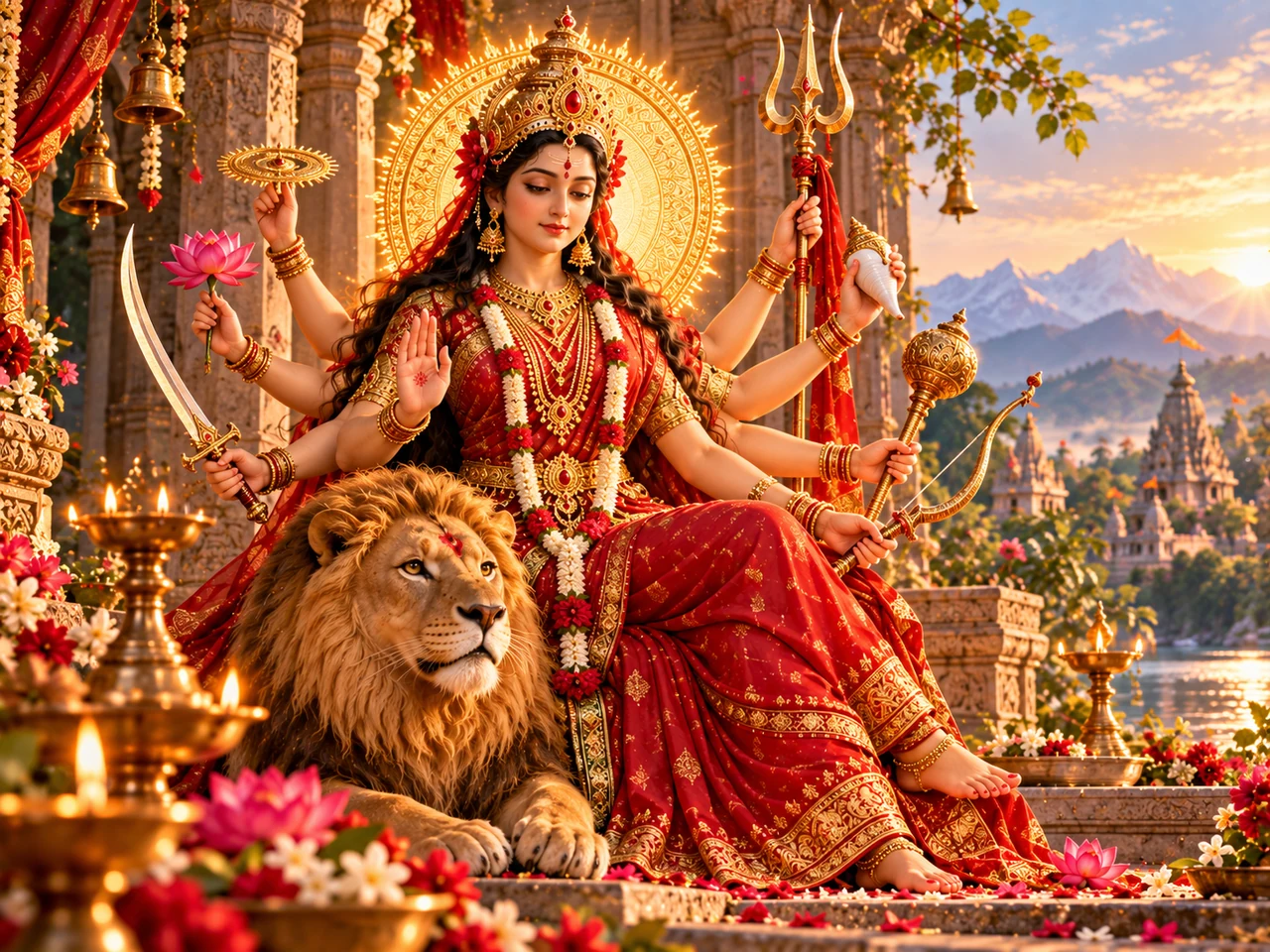
प्रेतसंस्था तु चामुण्डा वाराही महिषासना । ऐन्द्री गजसमारूढा वैष्णवी गरुडासना ॥
Roman Transliterationpretasamsthaa tu Chamunda vaaraahee mahishaasanaa | aindree gajasamaaroodhaa vaishnavee garudaasanaa ||pretasaṃsthā tu cāmuṇḍā vārāhī mahiṣāsanā | aindrī gajasamārūḍhā vaiṣṇavī garuḍāsanā ||
Meaning
Chamunda is pictured with a ghostly seat, Vārāhī on a buffalo, Aindrī on an elephant and Vaiṣṇavī on Garuḍa.Chamunda is pictured with a ghostly seat, Vārāhī on a buffalo, Aindrī on an elephant and Vaiṣṇavī on Garuḍa.Cāmuṇḍā is pictured with a ghostly seat, Vārāhī on a buffalo, Aindrī on an elephant and Vaiṣṇavī on Garuḍa.
Explanation
The animal and seat imagery differentiates distinct Mātṛkā forms, rather than creating a universal fixed iconographic list.
माहेश्वरी वृषारूढा कौमारी शिखिवाहना । लक्ष्मीः पद्मासना देवी पद्महस्ता हरिप्रिया ॥
Roman Transliterationmaaheshvaree vrishaaroodhaa kaumaaree shikhivaahanaa | lakshmeeh padmaasanaa devee padmahastaa haripriyaa ||māheśvarī vṛṣārūḍhā kaumārī śikhivāhanā | lakṣmīḥ padmāsanā devī padmahastā haripriyā ||
Meaning
Māheśvarī rides a bull, Kaumārī a peacock, while Lakshmi sits on a lotus with one in her hand.Māheśvarī rides a bull, Kaumārī a peacock, while Lakshmi sits on a lotus with one in her hand.Māheśvarī rides a bull, Kaumārī a peacock, while Lakṣmī sits on a lotus with one in her hand.
Explanation
The lotus of Lakshmi contrasts with the dynamic warrior imagery; divine power is pictured through multiple functions.The lotus of Lakshmi contrasts with the dynamic warrior imagery; divine power is pictured through multiple functions.The lotus of Lakṣmī contrasts with the dynamic warrior imagery; divine power is pictured through multiple functions.
श्वेतरूपधरा देवी ईश्वरी वृषवाहना । ब्राह्मी हंससमारूढा सर्वाभरणभूषिता ॥
Roman Transliterationshvetaroopadharaa devee eeshvaree vrishavaahanaa | braahmee hamsasamaaroodhaa sarvaabharanabhooshitaa ||śvetarūpadharā devī īśvarī vṛṣavāhanā | brāhmī haṃsasamārūḍhā sarvābharaṇabhūṣitā ||
Meaning
A white-clad Īśvarī is shown on a bull; Brāhmī rides a swan, adorned with ornaments.
Explanation
The Brāhmī/Īśvarī descriptions have tradition-specific iconographic interpretations; a single identification is not assumed here.
इत्येता मातरः सर्वाः सर्वयोगसमन्विताः । नानाभरणशोभाढ्या नानारत्नोपशोभिताः ॥
Roman Transliterationityetaa maatarah sarvaah sarvayogasamanvitaah | naanaabharanashobhaadhyaa naanaaratnopashobhitaah ||ityetā mātaraḥ sarvāḥ sarvayogasamanvitāḥ | nānābharaṇaśobhāḍhyā nānāratnopaśobhitāḥ ||
Meaning
All these divine Mothers are described as radiant, endowed with powers and splendidly adorned.
Explanation
The same Mothers are described as many yet gathered for a common purpose; ornaments signify splendour in poetic language.
दृश्यन्ते रथमारूढा देव्यः क्रोधसमाकुलाः । शङ्खं चक्रं गदां शक्तिं हलं च मुसलायुधम् ॥
Roman Transliterationdrishyante rathamaaroodhaa devyah krodhasamaakulaah | shankham chakram gadaam shaktim halam cha musalaayudham ||dṛśyante rathamārūḍhā devyaḥ krodhasamākulāḥ | śaṅkhaṃ cakraṃ gadāṃ śaktiṃ halaṃ ca musalāyudham ||
Meaning
The goddesses appear in battle chariots bearing conch, discus, mace, spear, plough and pestle.
Explanation
The list of weapons is part of Purāṇic battle symbolism; the passage is not an invitation to violence.
खेटकं तोमरं चैव परशुं पाशमेव च । कुन्तायुधं त्रिशूलं च शार्ङ्गमायुधमुत्तमम् ॥
Roman Transliterationkhetakam tomaram chaiva parashum paashameva cha | kuntaayudham trishoolam cha shaarngamaayudhamuttamam ||kheṭakaṃ tomaraṃ caiva paraśuṃ pāśameva ca | kuntāyudhaṃ triśūlaṃ ca śārṅgamāyudhamuttamam ||
Meaning
Shields, javelins, axes, nooses, lances, tridents and a mighty bow are also enumerated.
Explanation
Names of weapons can have several precise Sanskrit senses; the image should not be flattened into one modern tool for each name.
दैत्यानां देहनाशाय भक्तानामभयाय च । धारयन्त्यायुधानीत्थं देवानां च हिताय वै ॥
Roman Transliterationdaityaanaam dehanaashaaya bhaktaanaamabhayaaya cha | dhaarayantyaayudhaaneettham devaanaam cha hitaaya vai ||daityānāṃ dehanāśāya bhaktānāmabhayāya ca | dhārayantyāyudhānītthaṃ devānāṃ ca hitāya vai ||
Meaning
Their weapons are described as opposing destructive forces, relieving devotees' fear and serving divine welfare.
Explanation
Protection and the removal of destructive forces explain why the fierce iconography appears in a devotional hymn.
नमस्तेऽस्तु महारौद्रे महाघोरपराक्रमे । महाबले महोत्साहे महाभयविनाशिनि ॥
Roman Transliterationnamaste’stu mahaaraudre mahaaghoraparaakrame | mahaabale mahotsaahe mahaabhayavinaashini ||namaste’stu mahāraudre mahāghoraparākrame | mahābale mahotsāhe mahābhayavināśini ||
Meaning
Salutations are offered to the formidable, powerful, courageous Goddess who destroys great fear.
Explanation
Raudra denotes a formidable aspect; this is praise and petition, not a statement that the Goddess is merely anger.
त्राहि मां देवि दुष्प्रेक्ष्ये शत्रूणां भयवर्द्धिनि । प्राच्यां रक्षतु मामैन्द्री आग्नेय्यामग्निदेवता ॥
Roman Transliterationtraahi maam devi dushprekshye shatroonaam bhayavarddhini | praachyaam rakshatu maamaindree aagneyyaamagnidevataa ||trāhi māṃ devi duṣprekṣye śatrūṇāṃ bhayavarddhini | prācyāṃ rakṣatu māmaindrī āgneyyāmagnidevatā ||
Meaning
The speaker seeks protection; Aindrī is invoked in the east and an Agni-associated deity in the southeast.
Explanation
The list of directions begins here; āgneya is southeast, distinct from east.
दक्षिणेऽवतु वाराही नैरृत्यां खड्गधारिणी । प्रतीच्यां वारुणी रक्षेद्वायव्यां मृगवाहिनी ॥
Roman Transliterationdakshine’vatu vaaraahee nairrityaam khadgadhaarinee | prateechyaam vaarunee rakshedvaayavyaam mrigavaahinee ||dakṣiṇe’vatu vārāhī nairṛtyāṃ khaḍgadhāriṇī | pratīcyāṃ vāruṇī rakṣedvāyavyāṃ mṛgavāhinī ||
Meaning
Vārāhī is asked to protect the south, the sword-bearer southwest, Vāruṇī west and the deer-rider northwest.
Explanation
The directions are spatial metaphors for all-around care; the named goddesses may vary across ritual manuals.
उदीच्यां पातु कौमारी ऐशान्यां शूलधारिणी । ऊर्ध्वं ब्रह्माणि मे रक्षेदधस्ताद्वैष्णवी तथा ॥
Roman Transliterationudeechyaam paatu kaumaaree aishaanyaam shooladhaarinee | oordhvam brahmaani me rakshedadhastaadvaishnavee tathaa ||udīcyāṃ pātu kaumārī aiśānyāṃ śūladhāriṇī | ūrdhvaṃ brahmāṇi me rakṣedadhastādvaiṣṇavī tathā ||
Meaning
Kaumārī guards the north, the trident-bearer northeast, Brāhmī above and Vaiṣṇavī below.
Explanation
Together with verses 17–18, this includes eight directions and the vertical pair above/below.
एवं दश दिशो रक्षेच्चामुण्डा शववाहना । जया मे चाग्रतः पातु विजया पातु पृष्ठतः ॥
Roman Transliterationevam dasha disho rakshechchaamundaa shavavaahanaa | jayaa me chaagratah paatu vijayaa paatu prishthatah ||evaṃ daśa diśo rakṣeccāmuṇḍā śavavāhanā | jayā me cāgrataḥ pātu vijayā pātu pṛṣṭhataḥ ||
Meaning
Chamunda is invoked across all ten directions; Jayā in front and Vijayā behind.Chamunda is invoked across all ten directions; Jayā in front and Vijayā behind.Cāmuṇḍā is invoked across all ten directions; Jayā in front and Vijayā behind.
Explanation
The paired Jayā/Vijayā names mean victory; their positions here belong to this recension.
अजिता वामपार्श्वे तु दक्षिणे चापराजिता । शिखामुद्योतिनी रक्षेदुमा मूर्ध्नि व्यवस्थिता ॥
Roman Transliterationajitaa vaamapaarshve tu dakshine chaaparaajitaa | shikhaamudyotinee rakshedumaa moordhni vyavasthitaa ||ajitā vāmapārśve tu dakṣiṇe cāparājitā | śikhāmudyotinī rakṣedumā mūrdhni vyavasthitā ||
Meaning
Ajitā is placed at the left, Aparājitā at the right, Udyotinī at the hair-knot and Umā at the head.
Explanation
Spatial arrangement shifts from the compass to the devotee's immediate body.
मालाधरी ललाटे च भ्रुवौ रक्षेद्यशस्विनी । त्रिनेत्रा च भ्रुवोर्मध्ये यमघण्टा च नासिके ॥
Roman Transliterationmaalaadharee lalaate cha bhruvau rakshedyashasvinee | trinetraa cha bhruvormadhye yamaghantaa cha naasike ||mālādharī lalāṭe ca bhruvau rakṣedyaśasvinī | trinetrā ca bhruvormadhye yamaghaṇṭā ca nāsike ||
Meaning
Mālādharī guards the forehead, Yaśasvinī the eyebrows, Trinetrā their centre and Yamghaṇṭā the nose.
Explanation
The forehead, eyebrow and eye-area imagery introduces a head-to-toe mapping.
शङ्खिनी चक्षुषोर्मध्ये श्रोत्रयोर्द्वारवासिनी । कपोलौ कालिका रक्षेत्कर्णमूले तु शाङ्करी ॥
Roman Transliterationshankhinee chakshushormadhye shrotrayordvaaravaasinee | kapolau kaalikaa rakshetkarnamoole tu shaankaree ||śaṅkhinī cakṣuṣormadhye śrotrayordvāravāsinī | kapolau kālikā rakṣetkarṇamūle tu śāṅkarī ||
Meaning
Śaṅkhinī, Dvāravāsinī, Kālikā and Śāṅkarī are named as guardians around the eyes, ears and cheeks.
Explanation
Do not conflate Kaḷikā and Śāṅkarī; the hymn invokes distinct names at adjoining locations.
नासिकायां सुगन्धा च उत्तरोष्ठे च चर्चिका । अधरे चामृतकला जिह्वायां च सरस्वती ॥
Roman Transliterationnaasikaayaam sugandhaa cha uttaroshthe cha charchikaa | adhare chaamritakalaa jihvaayaam cha Saraswati ||nāsikāyāṃ sugandhā ca uttaroṣṭhe ca carcikā | adhare cāmṛtakalā jihvāyāṃ ca sarasvatī ||
Meaning
Sugandhā, Carcikā and Amṛtakalā guard the nose and lips; Saraswati protects the tongue.Sugandhā, Carcikā and Amṛtakalā guard the nose and lips; Saraswati protects the tongue.Sugandhā, Carcikā and Amṛtakalā guard the nose and lips; Sarasvatī protects the tongue.
Explanation
Saraswati guarding the tongue gives speech and knowledge a place within the protective image.Saraswati guarding the tongue gives speech and knowledge a place within the protective image.Sarasvatī guarding the tongue gives speech and knowledge a place within the protective image.
दन्तान् रक्षतु कौमारी कण्ठदेशे तु चण्डिका । घण्टिकां चित्रघण्टा च महामाया च तालुके ॥
Roman Transliterationdantaan rakshatu kaumaaree kanthadeshe tu Chandika | ghantikaam chitraghantaa cha mahaamaayaa cha taaluke ||dantān rakṣatu kaumārī kaṇṭhadeśe tu caṇḍikā | ghaṇṭikāṃ citraghaṇṭā ca mahāmāyā ca tāluke ||
Meaning
Kaumārī guards the teeth, Chandika the throat region, Citraghaṇṭā the uvula and Mahāmāyā the palate.Kaumārī guards the teeth, Chandika the throat region, Citraghaṇṭā the uvula and Mahāmāyā the palate.Kaumārī guards the teeth, Caṇḍikā the throat region, Citraghaṇṭā the uvula and Mahāmāyā the palate.
Explanation
The old anatomical word ghaṇṭikā points to the uvular region; it is not an instruction to ring a bell.
कामाक्षी चिबुकं रक्षेद्वाचं मे सर्वमङ्गला । ग्रीवायां भद्रकाली च पृष्ठवंशे धनुर्धरी ॥
Roman Transliterationkaamaakshee chibukam rakshedvaacham me sarvamangalaa | greevaayaam bhadrakaalee cha prishthavamshe dhanurdharee ||kāmākṣī cibukaṃ rakṣedvācaṃ me sarvamaṅgalā | grīvāyāṃ bhadrakālī ca pṛṣṭhavaṃśe dhanurdharī ||
Meaning
Kāmākṣī guards the chin, Sarvamaṅgalā speech, Bhadrakālī the neck and Dhanurdharī the spine.
Explanation
Speech, neck and spine continue the mapping; the different guardians do not imply separate anatomical therapies.
नीलग्रीवा बहिःकण्ठे नलिकां नलकूबरी । स्कन्धयोः खड्गिनी रक्षेद्बाहू मे वज्रधारिणी ॥
Roman Transliterationneelagreevaa bahihkanthe nalikaam nalakoobaree | skandhayoh khadginee rakshedbaahoo me vajradhaarinee ||nīlagrīvā bahiḥkaṇṭhe nalikāṃ nalakūbarī | skandhayoḥ khaḍginī rakṣedbāhū me vajradhāriṇī ||
Meaning
Nīlagrīvā and Nalakūbarī guard the outer throat and inner tube; Khaḍginī the shoulders and Vajradhāriṇī the arms.
Explanation
Rare name Nalakūbarī and the anatomical nalikā deserve orthographic checking in the historical witness.
हस्तयोर्दण्डिनी रक्षेदम्बिका चाङ्गुलीषु च । नखाञ्छूलेश्वरी रक्षेत्कुक्षौ रक्षेत्कुलेश्वरी ॥
Roman Transliterationhastayordandinee rakshedambikaa chaanguleeshu cha | nakhaanchhooleshvaree rakshetkukshau rakshetkuleshvaree ||hastayordaṇḍinī rakṣedambikā cāṅgulīṣu ca | nakhāñchūleśvarī rakṣetkukṣau rakṣetkuleśvarī ||
Meaning
Daṇḍinī protects the hands, Ambikā the fingers, Śūleśvarī the nails and Kuleśvarī the abdomen.
Explanation
Fingers and nails illustrate how detailed the imagined coverage becomes.
स्तनौ रक्षेन्महादेवी मनःशोकविनाशिनी । हृदये ललिता देवी उदरे शूलधारिणी ॥
Roman Transliterationstanau rakshenmahaadevee manahshokavinaashinee | hridaye lalitaa devee udare shooladhaarinee ||stanau rakṣenmahādevī manaḥśokavināśinī | hṛdaye lalitā devī udare śūladhāriṇī ||
Meaning
Mahādevī guards the breasts, Śokavināśinī the mind, Lalitā the heart and Śūladhāriṇī the belly.
Explanation
Mind and sorrow stand beside bodily organs: the kavaca concerns inner distress as well as outward danger.
नाभौ च कामिनी रक्षेद्गुह्यं गुह्येश्वरी तथा । पूतना कामिका मेढ्रं गुदे महिषवाहिनी ॥
Roman Transliterationnaabhau cha kaaminee rakshedguhyam guhyeshvaree tathaa | pootanaa kaamikaa medhram gude mahishavaahinee ||nābhau ca kāminī rakṣedguhyaṃ guhyeśvarī tathā | pūtanā kāmikā meḍhraṃ gude mahiṣavāhinī ||
Meaning
Kāminī guards the navel, Guhyeśvarī the private parts, while Pūtana-Kāmikā and Mahiṣavāhinī protect other intimate regions.
Explanation
Intimate body parts are named plainly and respectfully; the verse is not sexual or medical instruction.
कट्यां भगवती रक्षेज्जानुनी विन्ध्यवासिनी । जङ्घे महाबला रक्षेत्सर्वकामप्रदायिनी ॥
Roman Transliterationkatyaam bhagavatee rakshejjaanunee vindhyavaasinee | janghe mahaabalaa rakshetsarvakaamapradaayinee ||kaṭyāṃ bhagavatī rakṣejjānunī vindhyavāsinī | jaṅghe mahābalā rakṣetsarvakāmapradāyinī ||
Meaning
Bhagavatī protects the waist, Vindhyavāsinī the knees and Mahābalā the shins.
Explanation
Vindhyavāsinī is a place-associated divine name; do not infer the reader's regional lineage from it.
गुल्फयोर्नारसिंही च पादपृष्ठे तु तैजसी । पादाङ्गुलीषु श्री रक्षेत्पादाधस्तलवासिनी ॥
Roman Transliterationgulphayornaarasimhee cha paadaprishthe tu taijasee | paadaanguleeshu Shri rakshetpaadaadhastalavaasinee ||gulphayornārasiṃhī ca pādapṛṣṭhe tu taijasī | pādāṅgulīṣu śrī rakṣetpādādhastalavāsinī ||
Meaning
Nārasiṃhī guards the ankles, Taijasī the tops of the feet, Shri the toes and the soles beneath.Nārasiṃhī guards the ankles, Taijasī the tops of the feet, Shri the toes and the soles beneath.Nārasiṃhī guards the ankles, Taijasī the tops of the feet, Śrī the toes and the soles beneath.
Explanation
The verse reaches the feet and the ground beneath them, completing another bodily sequence.
नखान् दंष्ट्राकराली च केशांश्चैवोर्ध्वकेशिनी । रोमकूपेषु कौबेरी त्वचं वागीश्वरी तथा ॥
Roman Transliterationnakhaan damshtraakaraalee cha keshaamshchaivordhvakeshinee | romakoopeshu kauberee tvacham vaageeshvaree tathaa ||nakhān daṃṣṭrākarālī ca keśāṃścaivordhvakeśinī | romakūpeṣu kauberī tvacaṃ vāgīśvarī tathā ||
Meaning
Daṃṣṭrākarālī guards the nails, Ūrdhvakeśinī the hair, Kauberī the pores and Vāgīśvarī the skin.
Explanation
The imagery then returns to hair, skin and pores, extending protection to even small bodily features.
रक्तमज्जावसामांसान्यस्थिमेदांसि पार्वती । अन्त्राणि कालरात्रिश्च पित्तं च मुकुटेश्वरी ॥
Roman Transliterationraktamajjaavasaamaamsaanyasthimedaamsi Parvati | antraani kaalaraatrishcha pittam cha mukuteshvaree ||raktamajjāvasāmāṃsānyasthimedāṃsi pārvatī | antrāṇi kālarātriśca pittaṃ ca mukuṭeśvarī ||
Meaning
Parvati protects blood, marrow, fat, flesh, bones and tissues; Kalaratri the bowels and Mukuṭeśvarī the bile.Parvati protects blood, marrow, fat, flesh, bones and tissues; Kalaratri the bowels and Mukuṭeśvarī the bile.Pārvatī protects blood, marrow, fat, flesh, bones and tissues; Kālarātrī the bowels and Mukuṭeśvarī the bile.
Explanation
The internal-tissue list is expressed in premodern categories; it cannot establish physiological effects.
पद्मावती पद्मकोशे कफे चूडामणिस्तथा । ज्वालामुखी नखज्वालामभेद्या सर्वसन्धिषु ॥
Roman Transliterationpadmaavatee padmakoshe kaphe choodaamanistathaa | Jwalamukhi nakhajvaalaamabhedyaa sarvasandhishu ||padmāvatī padmakośe kaphe cūḍāmaṇistathā | jvālāmukhī nakhajvālāmabhedyā sarvasandhiṣu ||
Meaning
Padmāvatī guards the inner lotus, Cūḍāmaṇi phlegm, Jwalamukhi the glow at nails and Abhedyā all joints.Padmāvatī guards the inner lotus, Cūḍāmaṇi phlegm, Jwalamukhi the glow at nails and Abhedyā all joints.Padmāvatī guards the inner lotus, Cūḍāmaṇi phlegm, Jvālāmukhī the glow at nails and Abhedyā all joints.
Explanation
Padmakośa can be interpreted differently; preserve its Sanskrit term pending specialist commentary.
शुक्रं ब्रह्माणि मे रक्षेच्छायां छत्रेश्वरी तथा । अहंकारं मनो बुद्धिं रक्षेन्मे धर्मधारिणी ॥
Roman Transliterationshukram brahmaani me rakshechchhaayaam chhatreshvaree tathaa | ahamkaaram mano buddhim rakshenme dharmadhaarinee ||śukraṃ brahmāṇi me rakṣecchāyāṃ chatreśvarī tathā | ahaṃkāraṃ mano buddhiṃ rakṣenme dharmadhāriṇī ||
Meaning
Brāhmī guards reproductive essence, Chatreśvarī the shadow and Dharmadhāriṇī ego, mind and understanding.
Explanation
Manas and buddhi are distinct categories of thought; their inclusion makes the protective request psychological as well as bodily.
प्राणापानौ तथा व्यानमुदानं च समानकम् । वज्रहस्ता च मे रक्षेत्प्राणं कल्याणशोभना ॥
Roman Transliterationpraanaapaanau tathaa vyaanamudaanam cha samaanakam | vajrahastaa cha me rakshetpraanam kalyaanashobhanaa ||prāṇāpānau tathā vyānamudānaṃ ca samānakam | vajrahastā ca me rakṣetprāṇaṃ kalyāṇaśobhanā ||
Meaning
The vital winds—prana, apāna, vyāna, udāna and samāna—are invoked under the guarding presence of the Goddess.The vital winds—prana, apāna, vyāna, udāna and samāna—are invoked under the guarding presence of the Goddess.The vital winds—prāṇa, apāna, vyāna, udāna and samāna—are invoked under the guarding presence of the Goddess.
Explanation
Prana and the four other named winds reflect classical Indian models of life-functions, not modern respiratory measurements.Prana and the four other named winds reflect classical Indian models of life-functions, not modern respiratory measurements.Prāṇa and the four other named winds reflect classical Indian models of life-functions, not modern respiratory measurements.
रसे रूपे च गन्धे च शब्दे स्पर्शे च योगिनी । सत्त्वं रजस्तमश्चैव रक्षेन्नारायणी सदा ॥
Roman Transliterationrase roope cha gandhe cha shabde sparshe cha yoginee | sattvam rajastamashchaiva rakshennaaraayanee sadaa ||rase rūpe ca gandhe ca śabde sparśe ca yoginī | sattvaṃ rajastamaścaiva rakṣennārāyaṇī sadā ||
Meaning
Yoginī guards the experiences of taste, sight, smell, hearing and touch; Narayani protects the three guṇas.Yoginī guards the experiences of taste, sight, smell, hearing and touch; Narayani protects the three guṇas.Yoginī guards the experiences of taste, sight, smell, hearing and touch; Nārāyaṇī protects the three guṇas.
Explanation
The senses and three guṇas connect the poem to wider Sanskrit philosophical vocabulary.
आयू रक्षतु वाराही धर्मं रक्षतु वैष्णवी । यशः कीर्तिं च लक्ष्मीं च धनं विद्यां च चक्रिणी ॥
Roman Transliterationaayoo rakshatu vaaraahee dharmam rakshatu vaishnavee | yashah keertim cha lakshmeem cha dhanam vidyaam cha chakrinee ||āyū rakṣatu vārāhī dharmaṃ rakṣatu vaiṣṇavī | yaśaḥ kīrtiṃ ca lakṣmīṃ ca dhanaṃ vidyāṃ ca cakriṇī ||
Meaning
Vārāhī protects life, Vaiṣṇavī righteousness and Cakriṇī reputation, fortune, wealth and learning.
Explanation
The prayer now includes values and resources—dharma, knowledge, wealth and reputation—not only body parts.
गोत्रमिन्द्राणि मे रक्षेत्पशून्मे रक्ष चण्डिके । पुत्रान् रक्षेन्महालक्ष्मीर्भार्यां रक्षतु भैरवी ॥
Roman Transliterationgotramindraani me rakshetpashoonme raksha chandike | putraan rakshenmahaalakshmeerbhaaryaam rakshatu Bhairavi ||gotramindrāṇi me rakṣetpaśūnme rakṣa caṇḍike | putrān rakṣenmahālakṣmīrbhāryāṃ rakṣatu bhairavī ||
Meaning
Indrāṇī protects the lineage, Chandika the animals, Mahālakshmi the sons and Bhairavi the wife.Indrāṇī protects the lineage, Chandika the animals, Mahālakṣmī the sons and Bhairavi the wife.Indrāṇī protects the lineage, Caṇḍikā the animals, Mahālakṣmī the sons and Bhairavī the wife.
Explanation
Kinship roles reflect the poem's historical social world; they are not an exhaustive list of valid modern families.
पन्थानं सुपथा रक्षेन्मार्गं क्षेमकरी तथा । राजद्वारे महालक्ष्मीर्विजया सर्वतः स्थिता ॥
Roman Transliterationpanthaanam supathaa rakshenmaargam kshemakaree tathaa | raajadvaare mahaalakshmeervijayaa sarvatah sthitaa ||panthānaṃ supathā rakṣenmārgaṃ kṣemakarī tathā | rājadvāre mahālakṣmīrvijayā sarvataḥ sthitā ||
Meaning
Supathā and Kṣemakarī guard paths; Mahālakshmi and Vijayā are invoked at the royal gate and in every quarter.Supathā and Kṣemakarī guard paths; Mahālakṣmī and Vijayā are invoked at the royal gate and in every quarter.
Explanation
The royal gate is an older administrative symbol for public dealings and the uncertainty of travel.
रक्षाहीनं तु यत्स्थानं वर्जितं कवचेन तु । तत्सर्वं रक्ष मे देवि जयन्ती पापनाशिनी ॥
Roman Transliterationrakshaaheenam tu yatsthaanam varjitam kavachena tu | tatsarvam raksha me devi jayantee paapanaashinee ||rakṣāhīnaṃ tu yatsthānaṃ varjitaṃ kavacena tu | tatsarvaṃ rakṣa me devi jayantī pāpanāśinī ||
Meaning
Jayantī is asked to guard anything left unmentioned by the preceding protective invocations.
Explanation
The closing catch-all prayer recognizes that no named mapping can list every possible vulnerability.
पदमेकं न गच्छेत्तु यदीच्छेच्छुभमात्मनः । कवचेनावृतो नित्यं यत्र यत्रैव गच्छति ॥
Roman Transliterationpadamekam na gachchhettu yadeechchhechchhubhamaatmanah | kavachenaavrito nityam yatra yatraiva gachchhati ||padamekaṃ na gacchettu yadīcchecchubhamātmanaḥ | kavacenāvṛto nityaṃ yatra yatraiva gacchati ||
Meaning
The text counsels that one who desires well-being should not set out even a step without the Goddess's armour.
Explanation
The direct warning belongs to the kavaca's liturgical rhetoric; ShivGoraksh does not prescribe it as compulsory conduct.
तत्र तत्रार्थलाभश्च विजयः सार्वकामिकः । यं यं चिन्तयते कामं तं तं प्राप्नोति निश्चितम् । परमैश्वर्यमतुलं प्राप्स्यते भूतले पुमान् ॥
Roman Transliterationtatra tatraarthalaabhashcha vijayah saarvakaamikah | yam yam chintayate kaamam tam tam praapnoti nishchitam | paramaishvaryamatulam praapsyate bhootale pumaan ||tatra tatrārthalābhaśca vijayaḥ sārvakāmikaḥ | yaṃ yaṃ cintayate kāmaṃ taṃ taṃ prāpnoti niścitam | paramaiśvaryamatulaṃ prāpsyate bhūtale pumān ||
Meaning
The phalaśruti claims success, the fulfilment of wishes and exceptional prosperity for the protected devotee.
Explanation
The language of guaranteed wishes is a traditional phalaśruti claim; do not present it as objectively verified.
निर्भयो जायते मर्त्यः संग्रामेष्वपराजितः । त्रैलोक्ये तु भवेत्पूज्यः कवचेनावृतः पुमान् ॥
Roman Transliterationnirbhayo jaayate martyah samgraameshvaparaajitah | trailokye tu bhavetpoojyah kavachenaavritah pumaan ||nirbhayo jāyate martyaḥ saṃgrāmeṣvaparājitaḥ | trailokye tu bhavetpūjyaḥ kavacenāvṛtaḥ pumān ||
Meaning
A person protected by the armour is described as fearless, undefeated and respected throughout the three worlds.
Explanation
Victorious battle imagery continues the protection metaphor, not a literal prediction of personal safety.
इदं तु देव्याः कवचं देवानामपि दुर्लभम् । यः पठेत्प्रयतो नित्यं त्रिसन्ध्यं श्रद्धयान्वितः ॥
Roman Transliterationidam tu devyaah kavacham devaanaamapi durlabham | yah pathetprayato nityam trisandhyam shraddhayaanvitah ||idaṃ tu devyāḥ kavacaṃ devānāmapi durlabham | yaḥ paṭhetprayato nityaṃ trisandhyaṃ śraddhayānvitaḥ ||
Meaning
The hymn calls the Goddess's armour rare even among gods and praises its faithful regular recitation.
Explanation
Tri-sandhyā refers to traditional three daily junctures; explaining the term is not the same as issuing a japa schedule.
दैवी कला भवेत्तस्य त्रैलोक्येष्वपराजितः । जीवेद्वर्षशतं साग्रमपमृत्युविवर्जितः ॥
Roman Transliterationdaivee kalaa bhavettasya trailokyeshvaparaajitah | jeevedvarshashatam saagramapamrityuvivarjitah ||daivī kalā bhavettasya trailokyeṣvaparājitaḥ | jīvedvarṣaśataṃ sāgramapamṛtyuvivarjitaḥ ||
Meaning
It promises spiritual power, victory and a long life free of untimely death.
Explanation
Longevity language must not become a health claim, life expectancy estimate or replacement for medical care.
नश्यन्ति व्याधयः सर्वे लूताविस्फोटकादयः । स्थावरं जङ्गमं चैव कृत्रिमं चापि यद्विषम् ॥
Roman Transliterationnashyanti vyaadhayah sarve lootaavisphotakaadayah | sthaavaram jangamam chaiva kritrimam chaapi yadvisham ||naśyanti vyādhayaḥ sarve lūtāvisphoṭakādayaḥ | sthāvaraṃ jaṅgamaṃ caiva kṛtrimaṃ cāpi yadviṣam ||
Meaning
The hymn says diseases, harmful agents and poisons cease through the armour's power.
Explanation
The list of diseases and poisons expresses a devotional hope of safety, not evidence for curing infection or poisoning.
अभिचाराणि सर्वाणि मन्त्रयन्त्राणि भूतले । भूचराः खेचराश्चैव जलजाश्चौपदेशिकाः ॥
Roman Transliterationabhichaaraani sarvaani mantrayantraani bhootale | bhoocharaah khecharaashchaiva jalajaashchaupadeshikaah ||abhicārāṇi sarvāṇi mantrayantrāṇi bhūtale | bhūcarāḥ khecarāścaiva jalajāścaupadeśikāḥ ||
Meaning
Hostile rites and beings dwelling on earth, in the sky or water are listed among the dangers subdued.
Explanation
Abhicāra is a historically situated category of hostile ritual; no instructions to perform or counter it are provided.
सहजा कुलजा माला डाकिनी शाकिनी तथा । अन्तरिक्षचरा घोरा डाकिन्यश्च महाबलाः ॥
Roman Transliterationsahajaa kulajaa maalaa daakinee shaakinee tathaa | antarikshacharaa ghoraa daakinyashcha mahaabalaah ||sahajā kulajā mālā ḍākinī śākinī tathā | antarikṣacarā ghorā ḍākinyaśca mahābalāḥ ||
Meaning
Various feared beings, including ḍākinīs and śākinīs, are named within the hymn's supernatural worldview.
Explanation
Ḍākinī/Śākinī names can have different meanings across traditions; the verse's hostile portrayal is not universally applicable.
ग्रहभूतपिशाचाश्च यक्षगन्धर्वराक्षसाः । ब्रह्मराक्षसवेतालाः कूष्माण्डा भैरवादयः ॥
Roman Transliterationgrahabhootapishaachaashcha yakshagandharvaraakshasaah | brahmaraakshasavetaalaah kooshmaandaa bhairavaadayah ||grahabhūtapiśācāśca yakṣagandharvarākṣasāḥ | brahmarākṣasavetālāḥ kūṣmāṇḍā bhairavādayaḥ ||
Meaning
Spirits and other mythic beings—yakṣas, rākṣasas, vetālas and bhairavas among them—continue the list.
Explanation
The catalogue of unseen dangers records religious cosmology; it should not intensify everyday fear.
नश्यन्ति दर्शनात्तस्य कवचे हृदि संस्थिते । मानोन्नतिर्भवेद्राज्ञस्तेजोवृद्धिकरं परम् ॥
Roman Transliterationnashyanti darshanaattasya kavache hridi samsthite | maanonnatirbhavedraajnastejovriddhikaram param ||naśyanti darśanāttasya kavace hṛdi saṃsthite | mānonnatirbhavedrājñastejovṛddhikaraṃ param ||
Meaning
Their hostile power is said to vanish before one who holds the kavaca inwardly; honour and radiance are also promised.
Explanation
The inwardly held 'armour' may be understood devotionally as remembrance; worldly honour remains a textual promise.
यशसा वर्धते सोऽपि कीर्तिमण्डितभूतले । जपेत्सप्तशतीं चण्डीं कृत्वा तु कवचं पुरा ॥
Roman Transliterationyashasaa vardhate so’pi keertimanditabhootale | japetsaptashateem chandeem kritvaa tu kavacham puraa ||yaśasā vardhate so’pi kīrtimaṇḍitabhūtale | japetsaptaśatīṃ caṇḍīṃ kṛtvā tu kavacaṃ purā ||
Meaning
The hymn promises fame and instructs, within its own liturgical framework, that the Caṇḍī Saptashati follows the kavaca.The hymn promises fame and instructs, within its own liturgical framework, that the Caṇḍī Saptashati follows the kavaca.The hymn promises fame and instructs, within its own liturgical framework, that the Caṇḍī Saptaśatī follows the kavaca.
Explanation
The explicit mention of Saptashati establishes liturgical association but does not make the kavaca a fourteenth Devi Mahatmyam (Durga Saptashati) chapter.The explicit mention of Saptashati establishes liturgical association but does not make the kavaca a fourteenth Devi Mahatmyam (Durga Saptashati) chapter.The explicit mention of Saptaśatī establishes liturgical association but does not make the kavaca a fourteenth Devi Mahatmyam (Durga Saptashati) chapter.
यावद्भूमण्डलं धत्ते सशैलवनकाननम् । तावत्तिष्ठति मेदिन्यां सन्ततिः पुत्रपौत्रिकी ॥
Roman Transliterationyaavadbhoomandalam dhatte sashailavanakaananam | taavattishthati medinyaam santatih putrapautrikee ||yāvadbhūmaṇḍalaṃ dhatte saśailavanakānanam | tāvattiṣṭhati medinyāṃ santatiḥ putrapautrikī ||
Meaning
Its descendants are said to endure as long as the earth, mountains and forests remain.
Explanation
The extended-lineage promise is especially tied to a traditional family ideal and should not be turned into a fertility guarantee.
देहान्ते परमं स्थानं यत्सुरैरपि दुर्लभम् । प्राप्नोति पुरुषो नित्यं महामायाप्रसादतः ॥
Roman Transliterationdehaante paramam sthaanam yatsurairapi durlabham | praapnoti purusho nityam mahaamaayaaprasaadatah ||dehānte paramaṃ sthānaṃ yatsurairapi durlabham | prāpnoti puruṣo nityaṃ mahāmāyāprasādataḥ ||
Meaning
By Mahāmāyā's grace, the devotee is promised a supreme state beyond death, difficult even for gods to obtain.
Explanation
The afterlife claim belongs to Shakta theology; no empirical verification of a postmortem state is implied.The afterlife claim belongs to Shakta theology; no empirical verification of a postmortem state is implied.The afterlife claim belongs to Śākta theology; no empirical verification of a postmortem state is implied.
लभते परमं रूपं शिवेन सह मोदते ॥ ॐ ॥
Roman Transliterationlabhate paramam roopam shivena saha modate || oṃ ||labhate paramaṃ rūpaṃ śivena saha modate || oṃ ||
Meaning
The final half-verse says the devotee attains the highest state and rejoices in Shiva's company.The final half-verse says the devotee attains the highest state and rejoices in Shiva's company.The final half-verse says the devotee attains the highest state and rejoices in Śiva's company.
Explanation
The selected witness ends with a short half-verse and 'oṃ'; no missing second line may be invented to make its metre look regular.
इति देव्याः कवचं सम्पूर्णम् ।
Roman Transliterationiti devyaah kavacham sampoornam |iti devyāḥ kavacaṃ sampūrṇam |
Meaning
Here the armour of the Goddess is complete.
Explanation
A colophon marks the end of this selected reading; it is not an additional numbered verse.
Context & Usage
Introduction and textual identity
The Devī Kavacham imagines a person surrounded by the Goddess's care in every direction, across the body and in ordinary relationships. Rather than picturing protection as a single miraculous object, the poem brings together the nine Durgās, the Mothers (Mātṛkās), divine names, the senses, life functions and the hopes and anxieties of everyday life. Its ending, called the phalaśruti, promises benefits in the traditional language of praise. 1 2
Textual identity. This page provides the complete selected 56-verse digital recension, not an arbitrary excerpt and not the longer 61-verse presentation circulating in some traditions. Its opening viniyoga and closing formula are included separately, yielding 58 reading units. The source says Mārkaṇḍeya asks and Brahma replies: the speakers are figures within the poem, not a historically established author credit. The work is customarily recited as a and closing formula are included separately, yielding 58 reading units. The source says Mārkaṇḍeya asks and Brahmā replies: the speakers are figures within the poem, not a historically established author credit. The work is customarily recited as a pūrvāṅga (preliminary companion) to the Caṇḍī/Durgā Saptashati, but it is (preliminary companion) to the Caṇḍī/Durgā Saptaśatī, but it is not one of the thirteen narrative chapters of the Devi Mahatmyam (Durga Saptashati). 1 4 6
Edition and caution. The base text is the 56-verse Sanskrit Wikisource display, with a small number of explicitly logged provisional spelling and reading repairs cross-checked against a second digital reading. The historical 1917 Paṇśīkar/Nirṇaya Sāgara edition is a prospective print witness, not yet collated for this work. These draft files are therefore useful for internal editorial review, not an approved canonical publication or a guaranteed correct recitation manual. 1 2 3
How to read. Original text comes first, exactly as a continuous reading sequence. The explanations follow with permanent segment IDs. In the English page the Sanskrit remains in readable Roman IAST—not English replacement lines. The original's devotional claims of invulnerability, healing, lengthened life, victory, offspring and afterlife attainments are presented as religious claims, not measurable guarantees or clinical advice. No operative nyāsa, diksha, protective rite or repetition schedule is taught. , not measurable guarantees or clinical advice. No operative nyāsa, dīkṣā, protective rite or repetition schedule is taught. 1
Preface / viniyoga
Meaning: The traditional opening specifies Brahma as seer, anuṣṭubh as metre and Chamunda as presiding deity, placing the kavaca in the Saptashatī recitation context and greeting Chandika. The traditional opening specifies Brahmā as seer, anuṣṭubh as metre and Cāmuṇḍā as presiding deity, placing the kavaca in the Saptashatī recitation context and greeting Caṇḍikā. Explanation: This is source text describing a liturgical framing, not ShivGoraksh instruction to perform nyāsa, bind directions or begin a specialized rite. Its exact reading must be checked against the selected historical edition.
Reading the protective imagery
Nine Durgās (3–5): The poem opens its list with familiar Navadurgā names. The nine are presented as a meaningful devotional grouping; their order and identity must be related carefully to a particular tradition rather than to invented festival dates. Mothers and weapons (9–16): The different vehicles and weapons express divine powers working together against harm. The passage can be read symbolically, but symbolic interpretation is ShivGoraksh's commentary, not an alternative translation inserted into the Sanskrit. Directions (17–21) and body (22–38): The prayer traces care from east to west, above to below, then from the forehead and senses to internal tissues and vitality. Its remarkable anatomical detail is a devotional map, not physiological knowledge. Family and conduct (39–42): Dharma, learning, travel and household relations appear because the poem speaks to the lived concerns of its own cultural setting. Phalaśruti (43–56): Assertions of invulnerability, cure, prosperity, progeny and liberation are faithfully identified as the hymn's claims, never as promised outcomes.
Questions readers often ask
Is this a fourteenth chapter of the Devi Mahatmyam (Durga Saptashati)? No. It is associated with the Chandi/Saptaśatī pūrvāṅga tradition and commonly read before the main thirteen chapters. Calling it Chapter 14 would confuse an ancillary liturgical hymn with the parent narrative. 6
Why do some books count 56 verses and others 61? The poem circulates in differently arranged recensions; online displays with both counts have been checked. ShivGoraksh uses one identified 56-verse text and does not silently append or re-number passages to obtain 61. 1 4
Does kavacha mean a literal protective object? Literally, kavaca is armour. Here its many invocations form a verbal/devotional shield. Its protection claims reflect faith and tradition, not reliable prevention of accidents or illness.
Is the viniyoga a ritual guide? No. It is transcribed as part of the historical recitation framing. The mention of nyāsa or directional binding does not authorize detailed instructional content; qualified practice review is required.
Can I treat the text as medically protective? No. The verses' promises concerning sickness and poison belong to the devotional phalaśruti. For injury, infection or poisoning, use appropriate professional and emergency care.




Additional passage commentary
Verse 1
Meaning: Mārkaṇḍeya asks Brahma to disclose the supreme secret believed to protect people, a teaching not ordinarily revealed. Mārkaṇḍeya asks Brahmā to disclose the supreme secret believed to protect people, a teaching not ordinarily revealed. Explanation: The opening question gives the work a teaching-dialogue frame; it is not itself an instruction for performing a rite.
Verse 2
Meaning: Brahma replies that the Goddess's sacred armour is a profound teaching meant for the welfare of beings. Brahmā replies that the Goddess's sacred armour is a profound teaching meant for the welfare of beings. Explanation: The word kavaca literally means armour; here it is a religious image of protection, not a physical shield.
Verse 3
Meaning: The first four forms of Durga are Śailaputrī, Brahmacāriṇī, Chandraghanta and Kushmanda. The first four forms of Durgā are Śailaputrī, Brahmacāriṇī, Candraghaṇṭā and Kūṣmāṇḍā. Explanation: Four of the nine Navadurgā names appear; do not import all nine associated festival narratives into this one verse.
Verse 4
Meaning: The next four forms are Skandamata, Katyayani, Kalaratri and Mahagauri. The next four forms are Skandamātā, Kātyāyanī, Kālarātrī and Mahāgaurī. Explanation: The ordinal words fifth through eighth form a continuous name-list across verses 3–5.
Verse 5
Meaning: The ninth form is Siddhidatri; these nine Durgās are the celebrated names declared by Brahma. The ninth form is Siddhidātrī; these nine Durgās are the celebrated names declared by Brahmā. Explanation: The term siddhi in Siddhidatri names the ninth form; it should not be expanded into guaranteed supernatural powers. The term siddhi in Siddhidātrī names the ninth form; it should not be expanded into guaranteed supernatural powers.
Verse 6
Meaning: Those in fire, battle, danger and difficult situations approach the Goddess seeking refuge. Explanation: The battlefield and fire images express human vulnerability; the ancient narrator presents refuge as the response.
Verse 7
Meaning: The hymn promises that those who take refuge will not be overcome by calamity, grief or fear in conflict. Explanation: This is a promise inside the hymn, not evidence that danger or injury cannot occur.
Verse 8
Meaning: Remembering the Goddess with devotion is praised as a source of flourishing; she is said to protect those who remember her. Explanation: The language links devotion to flourishing; both material and ethical readings appear in living practice.
Verse 9
Meaning: Chamunda is pictured with a ghostly seat, Vārāhī on a buffalo, Aindrī on an elephant and Vaiṣṇavī on Garuḍa. Cāmuṇḍā is pictured with a ghostly seat, Vārāhī on a buffalo, Aindrī on an elephant and Vaiṣṇavī on Garuḍa. Explanation: The animal and seat imagery differentiates distinct Mātṛkā forms, rather than creating a universal fixed iconographic list.
Verse 10
Meaning: Māheśvarī rides a bull, Kaumārī a peacock, while Lakshmi sits on a lotus with one in her hand. Māheśvarī rides a bull, Kaumārī a peacock, while Lakṣmī sits on a lotus with one in her hand. Explanation: The lotus of Lakshmi contrasts with the dynamic warrior imagery; divine power is pictured through multiple functions. The lotus of Lakṣmī contrasts with the dynamic warrior imagery; divine power is pictured through multiple functions.
Verse 11
Meaning: A white-clad Īśvarī is shown on a bull; Brāhmī rides a swan, adorned with ornaments. Explanation: The Brāhmī/Īśvarī descriptions have tradition-specific iconographic interpretations; a single identification is not assumed here.
Verse 12
Meaning: All these divine Mothers are described as radiant, endowed with powers and splendidly adorned. Explanation: The same Mothers are described as many yet gathered for a common purpose; ornaments signify splendour in poetic language.
Verse 13
Meaning: The goddesses appear in battle chariots bearing conch, discus, mace, spear, plough and pestle. Explanation: The list of weapons is part of Purāṇic battle symbolism; the passage is not an invitation to violence.
Verse 14
Meaning: Shields, javelins, axes, nooses, lances, tridents and a mighty bow are also enumerated. Explanation: Names of weapons can have several precise Sanskrit senses; the image should not be flattened into one modern tool for each name.
Verse 15
Meaning: Their weapons are described as opposing destructive forces, relieving devotees' fear and serving divine welfare. Explanation: Protection and the removal of destructive forces explain why the fierce iconography appears in a devotional hymn.
Verse 16
Meaning: Salutations are offered to the formidable, powerful, courageous Goddess who destroys great fear. Explanation: Raudra denotes a formidable aspect; this is praise and petition, not a statement that the Goddess is merely anger.
Verse 17
Meaning: The speaker seeks protection; Aindrī is invoked in the east and an Agni-associated deity in the southeast. Explanation: The list of directions begins here; āgneya is southeast, distinct from east.
Verse 18
Meaning: Vārāhī is asked to protect the south, the sword-bearer southwest, Vāruṇī west and the deer-rider northwest. Explanation: The directions are spatial metaphors for all-around care; the named goddesses may vary across ritual manuals.
Verse 19
Meaning: Kaumārī guards the north, the trident-bearer northeast, Brāhmī above and Vaiṣṇavī below. Explanation: Together with verses 17–18, this includes eight directions and the vertical pair above/below.
Verse 20
Meaning: Chamunda is invoked across all ten directions; Jayā in front and Vijayā behind. Cāmuṇḍā is invoked across all ten directions; Jayā in front and Vijayā behind. Explanation: The paired Jayā/Vijayā names mean victory; their positions here belong to this recension.
Verse 21
Meaning: Ajitā is placed at the left, Aparājitā at the right, Udyotinī at the hair-knot and Umā at the head. Explanation: Spatial arrangement shifts from the compass to the devotee's immediate body.
Verse 22
Meaning: Mālādharī guards the forehead, Yaśasvinī the eyebrows, Trinetrā their centre and Yamghaṇṭā the nose. Explanation: The forehead, eyebrow and eye-area imagery introduces a head-to-toe mapping.
Verse 23
Meaning: Śaṅkhinī, Dvāravāsinī, Kālikā and Śāṅkarī are named as guardians around the eyes, ears and cheeks. Explanation: Do not conflate Kaḷikā and Śāṅkarī; the hymn invokes distinct names at adjoining locations.
Verse 24
Meaning: Sugandhā, Carcikā and Amṛtakalā guard the nose and lips; Saraswati protects the tongue. Sugandhā, Carcikā and Amṛtakalā guard the nose and lips; Sarasvatī protects the tongue. Explanation: Saraswati guarding the tongue gives speech and knowledge a place within the protective image. Sarasvatī guarding the tongue gives speech and knowledge a place within the protective image.
Verse 25
Meaning: Kaumārī guards the teeth, Chandika the throat region, Citraghaṇṭā the uvula and Mahāmāyā the palate. Kaumārī guards the teeth, Caṇḍikā the throat region, Citraghaṇṭā the uvula and Mahāmāyā the palate. Explanation: The old anatomical word ghaṇṭikā points to the uvular region; it is not an instruction to ring a bell.
Verse 26
Meaning: Kāmākṣī guards the chin, Sarvamaṅgalā speech, Bhadrakālī the neck and Dhanurdharī the spine. Explanation: Speech, neck and spine continue the mapping; the different guardians do not imply separate anatomical therapies.
Verse 27
Meaning: Nīlagrīvā and Nalakūbarī guard the outer throat and inner tube; Khaḍginī the shoulders and Vajradhāriṇī the arms. Explanation: Rare name Nalakūbarī and the anatomical nalikā deserve orthographic checking in the historical witness.
Verse 28
Meaning: Daṇḍinī protects the hands, Ambikā the fingers, Śūleśvarī the nails and Kuleśvarī the abdomen. Explanation: Fingers and nails illustrate how detailed the imagined coverage becomes.
Verse 29
Meaning: Mahādevī guards the breasts, Śokavināśinī the mind, Lalitā the heart and Śūladhāriṇī the belly. Explanation: Mind and sorrow stand beside bodily organs: the kavaca concerns inner distress as well as outward danger.
Verse 30
Meaning: Kāminī guards the navel, Guhyeśvarī the private parts, while Pūtana-Kāmikā and Mahiṣavāhinī protect other intimate regions. Explanation: Intimate body parts are named plainly and respectfully; the verse is not sexual or medical instruction.
Verse 31
Meaning: Bhagavatī protects the waist, Vindhyavāsinī the knees and Mahābalā the shins. Explanation: Vindhyavāsinī is a place-associated divine name; do not infer the reader's regional lineage from it.
Verse 32
Meaning: Nārasiṃhī guards the ankles, Taijasī the tops of the feet, Shri the toes and the soles beneath. Nārasiṃhī guards the ankles, Taijasī the tops of the feet, Śrī the toes and the soles beneath. Explanation: The verse reaches the feet and the ground beneath them, completing another bodily sequence.
Verse 33
Meaning: Daṃṣṭrākarālī guards the nails, Ūrdhvakeśinī the hair, Kauberī the pores and Vāgīśvarī the skin. Explanation: The imagery then returns to hair, skin and pores, extending protection to even small bodily features.
Verse 34
Meaning: Parvati protects blood, marrow, fat, flesh, bones and tissues; Kalaratri the bowels and Mukuṭeśvarī the bile. Pārvatī protects blood, marrow, fat, flesh, bones and tissues; Kālarātrī the bowels and Mukuṭeśvarī the bile. Explanation: The internal-tissue list is expressed in premodern categories; it cannot establish physiological effects.
Verse 35
Meaning: Padmāvatī guards the inner lotus, Cūḍāmaṇi phlegm, Jwalamukhi the glow at nails and Abhedyā all joints. Padmāvatī guards the inner lotus, Cūḍāmaṇi phlegm, Jvālāmukhī the glow at nails and Abhedyā all joints. Explanation: Padmakośa can be interpreted differently; preserve its Sanskrit term pending specialist commentary.
Verse 36
Meaning: Brāhmī guards reproductive essence, Chatreśvarī the shadow and Dharmadhāriṇī ego, mind and understanding. Explanation: Manas and buddhi are distinct categories of thought; their inclusion makes the protective request psychological as well as bodily.
Verse 37
Meaning: The vital winds—prana, apāna, vyāna, udāna and samāna—are invoked under the guarding presence of the Goddess. The vital winds—prāṇa, apāna, vyāna, udāna and samāna—are invoked under the guarding presence of the Goddess. Explanation: Prana and the four other named winds reflect classical Indian models of life-functions, not modern respiratory measurements. Prāṇa and the four other named winds reflect classical Indian models of life-functions, not modern respiratory measurements.
Verse 38
Meaning: Yoginī guards the experiences of taste, sight, smell, hearing and touch; Narayani protects the three guṇas. Yoginī guards the experiences of taste, sight, smell, hearing and touch; Nārāyaṇī protects the three guṇas. Explanation: The senses and three guṇas connect the poem to wider Sanskrit philosophical vocabulary.
Verse 39
Meaning: Vārāhī protects life, Vaiṣṇavī righteousness and Cakriṇī reputation, fortune, wealth and learning. Explanation: The prayer now includes values and resources—dharma, knowledge, wealth and reputation—not only body parts.
Verse 40
Meaning: Indrāṇī protects the lineage, Chandika the animals, Mahālakṣmī the sons and Bhairavi the wife. Indrāṇī protects the lineage, Caṇḍikā the animals, Mahālakṣmī the sons and Bhairavī the wife. Explanation: Kinship roles reflect the poem's historical social world; they are not an exhaustive list of valid modern families.
Verse 41
Meaning: Supathā and Kṣemakarī guard paths; Mahālakṣmī and Vijayā are invoked at the royal gate and in every quarter. Explanation: The royal gate is an older administrative symbol for public dealings and the uncertainty of travel.
Verse 42
Meaning: Jayantī is asked to guard anything left unmentioned by the preceding protective invocations. Explanation: The closing catch-all prayer recognizes that no named mapping can list every possible vulnerability.
Verse 43
Meaning: The text counsels that one who desires well-being should not set out even a step without the Goddess's armour. Explanation: The direct warning belongs to the kavaca's liturgical rhetoric; ShivGoraksh does not prescribe it as compulsory conduct.
Verse 44
Meaning: The phalaśruti claims success, the fulfilment of wishes and exceptional prosperity for the protected devotee. Explanation: The language of guaranteed wishes is a traditional phalaśruti claim; do not present it as objectively verified.
Verse 45
Meaning: A person protected by the armour is described as fearless, undefeated and respected throughout the three worlds. Explanation: Victorious battle imagery continues the protection metaphor, not a literal prediction of personal safety.
Verse 46
Meaning: The hymn calls the Goddess's armour rare even among gods and praises its faithful regular recitation. Explanation: Tri-sandhyā refers to traditional three daily junctures; explaining the term is not the same as issuing a japa schedule.
Verse 47
Meaning: It promises spiritual power, victory and a long life free of untimely death. Explanation: Longevity language must not become a health claim, life expectancy estimate or replacement for medical care.
Verse 48
Meaning: The hymn says diseases, harmful agents and poisons cease through the armour's power. Explanation: The list of diseases and poisons expresses a devotional hope of safety, not evidence for curing infection or poisoning.
Verse 49
Meaning: Hostile rites and beings dwelling on earth, in the sky or water are listed among the dangers subdued. Explanation: Abhicāra is a historically situated category of hostile ritual; no instructions to perform or counter it are provided.
Verse 50
Meaning: Various feared beings, including ḍākinīs and śākinīs, are named within the hymn's supernatural worldview. Explanation: Ḍākinī/Śākinī names can have different meanings across traditions; the verse's hostile portrayal is not universally applicable.
Verse 51
Meaning: Spirits and other mythic beings—yakṣas, rākṣasas, vetālas and bhairavas among them—continue the list. Explanation: The catalogue of unseen dangers records religious cosmology; it should not intensify everyday fear.
Verse 52
Meaning: Their hostile power is said to vanish before one who holds the kavaca inwardly; honour and radiance are also promised. Explanation: The inwardly held 'armour' may be understood devotionally as remembrance; worldly honour remains a textual promise.
Verse 53
Meaning: The hymn promises fame and instructs, within its own liturgical framework, that the Caṇḍī Saptashati follows the kavaca. The hymn promises fame and instructs, within its own liturgical framework, that the Caṇḍī Saptaśatī follows the kavaca. Explanation: The explicit mention of Saptashati establishes liturgical association but does not make the kavaca a fourteenth Devi Mahatmyam (Durga Saptashati) chapter. The explicit mention of Saptaśatī establishes liturgical association but does not make the kavaca a fourteenth Devi Mahatmyam (Durga Saptashati) chapter.
Verse 54
Meaning: Its descendants are said to endure as long as the earth, mountains and forests remain. Explanation: The extended-lineage promise is especially tied to a traditional family ideal and should not be turned into a fertility guarantee.
Verse 55
Meaning: By Mahāmāyā's grace, the devotee is promised a supreme state beyond death, difficult even for gods to obtain. Explanation: The afterlife claim belongs to Shakta theology; no empirical verification of a postmortem state is implied. The afterlife claim belongs to Śākta theology; no empirical verification of a postmortem state is implied.
Verse 56
Meaning: The final half-verse says the devotee attains the highest state and rejoices in Shiva's company. The final half-verse says the devotee attains the highest state and rejoices in Śiva's company. Explanation: The selected witness ends with a short half-verse and 'oṃ'; no missing second line may be invented to make its metre look regular.
Colophon
Meaning: Here the armour of the Goddess is complete. Explanation: A colophon marks the end of this selected reading; it is not an additional numbered verse.