



Understanding Lord, soul and bondage—from Sanskrit Āgamas to Tamil hymns, temples and the question of liberation.
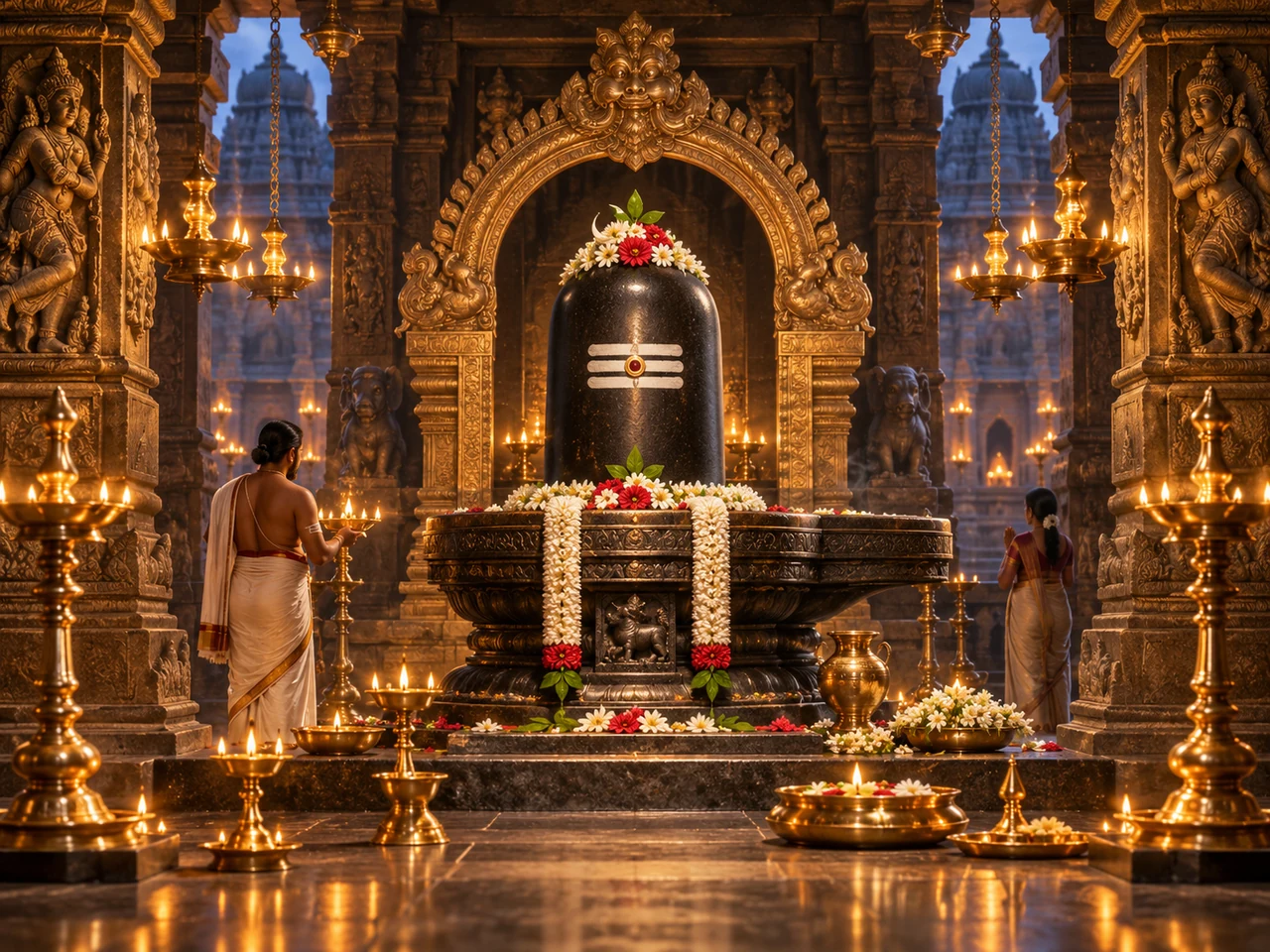
Imagine standing in a Shiva temple while a hymn is sung. The lamp, the stone image, the singer, the priest and the person who has come with a private worry all belong to a living religious world. Imagine standing in a Śiva temple while a hymn is sung. The lamp, the stone image, the singer, the priest and the person who has come with a private worry all belong to a living religious world. Shaiva SiddhantaŚaiva Siddhānta asks how such worship relates to a larger question: if a soul is conscious, why does it feel powerless or confused, and how might its relationship with Shiva become free? Its answer involves philosophy asks how such worship relates to a larger question: if a soul is conscious, why does it feel powerless or confused, and how might its relationship with Śiva become free? Its answer involves philosophy and practice, not one without the other. 1 4
The name means roughly “the established teaching or conclusion of Śaivism.” It refers to a historically diverse family of Sanskrit-language Āgamic traditions and later influential Tamil theological and devotional formations. It is especially visible today in Tamil-speaking Shaiva communities, but it did It refers to a historically diverse family of Sanskrit-language Āgamic traditions and later influential Tamil theological and devotional formations. It is especially visible today in Tamil-speaking Śaiva communities, but it did not originate simply as a single, timeless Tamil doctrine. Nor is every claim made in the name of Shaiva Siddhanta identical across centuries. originate simply as a single, timeless Tamil doctrine. Nor is every claim made in the name of Śaiva Siddhānta identical across centuries. 1 2
This is a public educational introduction, not a manual for initiation or priestly rites. The distinctions between tradition's own truth claims, evidence about history and an editor's explanation will remain visible throughout.
1. Key takeaways
- Pati–paśu–pāśa names the Lord (Shiva), bound individual souls and the bonds that limit them. These are central categories, not a claim that people are literally livestock. names the Lord (Śiva), bound individual souls and the bonds that limit them. These are central categories, not a claim that people are literally livestock. 1 2
- Major classical Sanskrit Siddhāntin theologians generally treated Shiva, souls and the factors of bondage as real, with a lasting distinction between the Lord and souls; later Tamil theologians expressed intimacy and union in more than one way. theologians generally treated Śiva, souls and the factors of bondage as real, with a lasting distinction between the Lord and souls; later Tamil theologians expressed intimacy and union in more than one way. 1 3
- The three familiar bonds are āṇava, karma and māyā. Their functions are not interchangeable. 2 8
- Shiva's grace (anugraha/aruḷ)Śiva's grace (anugraha/aruḷ) matters alongside knowledge, moral effort, worship and, in initiated traditions, authorized ritual. 4 8
- There is a Sanskrit Āgamic stream, the Tamil Tirumuṟai tradition of sacred hymns, and a later Tamil philosophical synthesis. These overlap, but they are not one homogeneous text collection. 1 5
- The tradition cannot be reduced to either “blind ritual” or “purely abstract philosophy”: temple worship embodies theological relationships. 4
2. The three questions: who is Lord, who is bound, what binds?
The memorable teaching formula is pati–paśu–pāśa (पति–पशु–पाश; Tamil pati–pacu–pācam). Pati is the Lord, Shiva: free, sovereign and never subject to the limitation affecting embodied beings. is the Lord, Śiva: free, sovereign and never subject to the limitation affecting embodied beings. Paśu, literally “bound creature” in this technical usage, refers to distinct conscious selves. Pāśa, a tether or bond, refers to the conditions through which those selves remain limited. 1 2 4
A classroom analogy helps: a student may have the capacity to understand a difficult book but cannot yet read it without guidance. The teacher is not the student, and the obstacles to learning are not the student's deepest identity. In the philosophical account, Shiva is more than a teacherŚiva is more than a teacher, and bondage is far more fundamental than a lack of information; the analogy merely separates three relationships that beginners otherwise confuse.
Do not read the triad as three gods or as a recipe for “becoming Śiva” through physical transformation. The classic theological concern is how real but limited selves can receive the capacity to know and act without equating an unliberated soul with the eternally free Lord. 2 4
3. An early Sanskrit tradition across regions
Historical scholarship places the emergence of recognizably Siddhāntin Āgamic scriptures in early medieval northern India, with evidence discussed from around the sixth century CE. Thereafter Siddhanta theologians, monastic networks, officiants and temples were active across large parts of the subcontinent. Some specialists also served as teachers to rulers. A story that Shiva revealed the Āgamas belongs to a . Thereafter Siddhānta theologians, monastic networks, officiants and temples were active across large parts of the subcontinent. Some specialists also served as teachers to rulers. A story that Śiva revealed the Āgamas belongs to a tradition's account of authority; dating surviving manuscripts and authors is a historian's task. 1
One important archive of sophisticated Sanskrit argument is linked to Kashmir. The tenth-century commentator Bhaṭṭa Rāmakaṇṭha explained the Kiraṇatantra in a Siddhāntin framework; Dominic Goodall's published critical edition of the Kiraṇavṛtti provides firm bibliographic evidence. A historically attested Kashmiri Shaiva SiddhantaKashmiri Śaiva Siddhānta is therefore not a contradiction. It must simply be distinguished from the nondual Kashmir Shaiva currents introduced in Kashmir Shaivism: An Accessible Introduction. 3 6
The Parākhyatantra offers another precious window into early Sanskrit Siddhanta thought. Its surviving manuscript evidence is incomplete: the edition discussed by Goodall preserves material on doctrine and yoga, while the ritual chapters are not transmitted in the surviving witness used for the publication. A missing chapter is a reason for caution—not a license to reconstruct a convenient ritual instruction. offers another precious window into early Sanskrit Siddhānta thought. Its surviving manuscript evidence is incomplete: the edition discussed by Goodall preserves material on doctrine and yoga, while the ritual chapters are not transmitted in the surviving witness used for the publication. A missing chapter is a reason for caution—not a license to reconstruct a convenient ritual instruction. 7
4. Tamil devotion and the development of a new synthesis
Tamil-speaking regions witnessed influential Shiva-centered Tamil-speaking regions witnessed influential Śiva-centered bhakti traditions. The Nāyaṉmār saints, remembered through hymns, legends and later compilations, gave devotional poetry a prominent place in sacred life. Especially important are Tēvāram compositions associated with Campantar (Sambandar), Appar (Tirunāvukkaracar) and Cuntarar (Sundarar). Tamil Shaiva texts were eventually gathered as the . Tamil Śaiva texts were eventually gathered as the twelve Tirumuṟai, although individual works and their histories differ. 1 5
The Tiruvācakam associated with Māṇikkavācakar, and the Tirumantiram traditionally associated with Tirumūlar, are also influential. They should not be flattened into the same author, date, theological genre or system. Their received devotional authority is clear, but exact early chronology and particular interpretations warrant specialized textual work. 5 8
From roughly the twelfth through fourteenth centuries, learned teachers developed a substantial Tamil philosophical literature, often referred to as the Meykaṇṭa Śāstras or Meykaṇṭa Cāttiraṅkaḷ. The thirteenth-century teacher Meykaṇṭār is associated with the Tamil Civajñāṉapōtam (Śivajñānabodham). Aruḷnandi Civācāriyār and Umāpati Civācāriyār figure in the later scholastic landscape. This was a creative reinterpretation and synthesis, not simply a Tamil translation of all earlier Sanskrit doctrine. 1 5 9
5. The texts: not one interchangeable canon
Three literary settings commonly meet in South Indian Siddhanta discussions:Three literary settings commonly meet in South Indian Siddhānta discussions:
| Setting | What readers encounter | How to read it carefully |
|---|---|---|
| Shaiva Āgamas / TantrasŚaiva Āgamas / Tantras | Sanskrit theology, liturgy, temple organization and authorized ritual, commonly grouped in a traditional set of 28. 1 | A traditional number is not proof that all texts survive whole, match one edition or agree on every detail. |
| Tirumuṟai | Tamil Shaiva hymns and religious literature arranged in Tamil Śaiva hymns and religious literature arranged in twelve books. 1 5 | Poetry and hagiography are not straightforward chronicles or ritual law codes. |
| Meykaṇṭa Śāstras | Tamil scholastic writing, often described as fourteen treatises in received lists. 1 9 | Their development represents a distinct intellectual history, not one author writing one book. |
The Sanskrit Kiraṇatantra and Parākhyatantra can therefore be used to investigate earlier doctrine, while Civajñāṉapōtam helps reveal a later Tamil articulation. The present guide does not quote an uncollated Sanskrit verse, assert a chapter location or reproduce a proprietary translation. 3 7
6. What exactly binds the soul? The three malas
Many Tamil Siddhanta explanations organize bondage through three Many Tamil Siddhānta explanations organize bondage through three malas, often translated “impurities,” though they are not merely moral dirt. Āṇava mala concerns a deep condition of contracted awareness or finitude; it should not be reduced to modern English “ego” in the psychological sense. Karma refers to the binding consequences of action and experience. Māyā functions as a real principle connected with the materials or conditions of embodiment and the experienced world, not simply the claim that everything is fake. 2 8
These elements have different explanatory jobs. Think of the difference between limited capacity to see, the history of choices that shape one's situation, and the circumstances through which one acts. This analogy is provisional; the metaphysical scheme is about souls and the cosmos, not an empirically measured theory of psychology.
Discussions vary over how mala is classified, how shaktiśakti operates and how bonds become ineffective. In particular, the Tirumantiram has interpretive complexity and should not be forced into a tidy three-item summary without qualification. 8
7. Is the world real? A crucial philosophical difference
The Siddhanta's classical dualist or pluralist accounts insist that the Lord, individual selves and the domains associated with bondage are not simply identical appearances of a single unqualified self. The world is part of a The Siddhānta's classical dualist or pluralist accounts insist that the Lord, individual selves and the domains associated with bondage are not simply identical appearances of a single unqualified self. The world is part of a real order in which experience, ritual duty and liberation become intelligible. That matters: temple action is not dismissed as a mistake enacted in a non-existent world. 1 2 4
Yet labels such as “dualism” need handling with care. Saying that two things are distinct does not mean they never relate, or that later Tamil teachers used identical arguments to Sanskrit commentators. Descriptions of closeness, dependence, participation and union can coexist with the insistence that Shiva is never the originally bound soul. A single slogan like “Siddhānta is absolute dualism” loses this historical range. need handling with care. Saying that two things are distinct does not mean they never relate, or that later Tamil teachers used identical arguments to Sanskrit commentators. Descriptions of closeness, dependence, participation and union can coexist with the insistence that Śiva is never the originally bound soul. A single slogan like “Siddhānta is absolute dualism” loses this historical range. 1 8
This also changes how we compare it with Advaita Vedānta or PratyabhijnaPratyabhijñā: similarities in talk of freedom, knowledge and consciousness do not erase differences about whether the soul is eternally distinct from ultimate reality.
8. Shiva, Shakti and the Lord's five acts8. Śiva, Śakti and the Lord's five acts
In Siddhanta, In Siddhānta, ShivaŚiva is more than a decorative symbol of a chosen community. He is supreme Lord, free from the bonds to which embodied selves are subject. ShaktiŚakti can name his inseparable power or agency; this language should not be carelessly equated with every Shakta or Trika doctrine about the goddess. Some theological formulations emphasize how Shiva enables souls' experience and liberation. can name his inseparable power or agency; this language should not be carelessly equated with every Śākta or Trika doctrine about the goddess. Some theological formulations emphasize how Śiva enables souls' experience and liberation. 2 4
Many Shaiva accounts describe five divine activities: Many Śaiva accounts describe five divine activities: creation or emanation (sṛṣṭi), maintenance (sthiti), withdrawal (saṃhāra), concealment (tirodhāna) and grace (anugraha). The fifth is important: the narrative is not only about cosmic processes but about a bound being's possible freedom. This is religious cosmology, not a physical-science account of the universe. 2 4
9. Grace and liberation: not simply a self-help method
MokshaMokṣa means release from bondage. In many Siddhanta presentations the soul cannot simply pronounce itself free; means release from bondage. In many Siddhānta presentations the soul cannot simply pronounce itself free; Shiva's graceŚiva's grace is essential. Instruction, knowledge, worship and ethical transformation have significance in that relation. Classical liturgical accounts also assign religious importance to dikshadīkṣā, authorized initiation. This is a description of the tradition's teachings, not an assertion that one website can grant initiation or that a particular outcome is guaranteed. 1 4
Consider a lamp behind a screen. Removing the screen does not invent the lamp; it changes what can be received. The analogy helps explain why teachers discuss the removal or overcoming of obstacles. But Shiva is not literally a lamp, the soul is not a machine and liberation is not a clinically testable outcome. Different authors disagree on the precise state and powers of the liberated soul. We avoid saying simply, “the individual is annihilated,” or “everyone merges into one substance.” . But Śiva is not literally a lamp, the soul is not a machine and liberation is not a clinically testable outcome. Different authors disagree on the precise state and powers of the liberated soul. We avoid saying simply, “the individual is annihilated,” or “everyone merges into one substance.” 2 8
10. Temple worship, service and song
Shaiva Siddhanta is a particularly illuminating example of philosophy lived Śaiva Siddhānta is a particularly illuminating example of philosophy lived through a temple. Richard H. Davis's study of medieval Shaiva ritual shows how liturgy expresses ideas about the world, personal limits, divine presence and freedom. The ritual is not merely an external ornament added to a completed metaphysics. . Richard H. Davis's study of medieval Śaiva ritual shows how liturgy expresses ideas about the world, personal limits, divine presence and freedom. The ritual is not merely an external ornament added to a completed metaphysics. 4
In contemporary Tamil settings, gurukkaḷ/Śivācārya temple priests, ōtuvār hymn singers, teachers, monasteries and household devotees can preserve different but overlapping aspects of Shaiva life. Not every worshiper identifies with exactly the same technical school. Some rituals are performed by authorized priests for a community; others are forms of household devotion and participation. The social history of authority and access deserves critical care rather than an idealized portrait. , teachers, monasteries and household devotees can preserve different but overlapping aspects of Śaiva life. Not every worshiper identifies with exactly the same technical school. Some rituals are performed by authorized priests for a community; others are forms of household devotion and participation. The social history of authority and access deserves critical care rather than an idealized portrait. 1 5
Public-facing examples include hearing a hymn, offering reverence, learning a sacred story or reflecting on its ethical meaning. Initiatory procedures, consecration formulae and restricted mantras are deliberately absent from this guide. A festival such as Mahāśivarātri belongs to a wider Shaiva devotional world and should not be claimed as unique to Siddhanta. No event date or ritual timing is supplied here. belongs to a wider Śaiva devotional world and should not be claimed as unique to Siddhānta. No event date or ritual timing is supplied here.
11. An ordinary-life example: dependence without passivity
Someone may ask, “If divine grace is essential, why should I make any effort?” The triad suggests one reason: consciousness matters, experience matters, and bondage is not an imaginary inconvenience. A tradition may hold that grace is decisive and still value learning, responsibility, service and worship. In this view the relation with Shiva does not erase ordinary care for others. still value learning, responsibility, service and worship. In this view the relation with Śiva does not erase ordinary care for others. 2 4
This does not establish any supernatural claim by external experiment. It illustrates the inner logic of the teaching. Nor does it mean social difficulties should be explained away as deserved karma; that would be an irresponsible application of a complex religious category.
12. Comparison: Siddhanta, Kashmir nondual Shaivism and Advaita12. Comparison: Siddhānta, Kashmir nondual Śaivism and Advaita
| Guiding question | Classical Siddhanta (broadly)Classical Siddhānta (broadly) | Pratyabhijna / nondual Kashmir Shaivism (broadly)Pratyabhijñā / nondual Kashmir Śaivism (broadly) | Advaita Vedānta (broadly) |
|---|---|---|---|
| Is Shiva or ultimate reality distinct from the bound soul?Is Śiva or ultimate reality distinct from the bound soul? | Lord and bound souls are real and distinct in major Sanskrit accounts. 1 | Liberation involves recognizing nonduality of self-aware Shiva-consciousness. Liberation involves recognizing nonduality of self-aware Śiva-consciousness. 10 | Ultimately ātman–Brahman nonduality is emphasized; terminology and arguments differ. 10 |
| What is the world? | A real context for experience, duty, worship and release. 4 | Understood as manifestation of consciousness in many central accounts. 10 | Treated through the distinction between empirical and ultimate reality; not interchangeable with Siddhanta.Treated through the distinction between empirical and ultimate reality; not interchangeable with Siddhānta. |
| What changes in liberation? | Bondage is overcome through Shiva's grace; the soul–Lord relationship matters. Bondage is overcome through Śiva's grace; the soul–Lord relationship matters. 1 | Recognition of one's deepest identity with the ultimate is central. 10 | Ignorance concerning one's true identity is removed. |
These columns are introductory contrasts, not precise statements of every text or school. Siddhanta scholars and Tamil theologians also disagree among themselves. , not precise statements of every text or school. Siddhānta scholars and Tamil theologians also disagree among themselves. Kashmir Shaivism: An Accessible Introduction treats the Kashmiri nondual traditions at greater length.
13. History is not the same as lineage memory
Traditional accounts may describe Āgamas as revealed by ShivaĀgamas as revealed by Śiva, teachers as carrying a divine chain of instruction, or saints as performing wonders. Such stories have religious meaning for communities. Historians ask different questions: what can a dated manuscript, inscription, commentary or securely established attribution tell us? The two perspectives should be labelled rather than mocked or confused. 1 3 7
It is also inaccurate to make Siddhanta exclusively Tamil from its birth or exclusively Sanskrit in its later life. Oxford's historical synthesis highlights the movement from a geographically extensive earlier system toward prominent Tamil interpretations, with later politics sometimes shaping claims about an ancient, purely regional origin. Recognizing that history strengthens—not weakens—the importance of Tamil Shaiva intellectual achievement. It is also inaccurate to make Siddhānta exclusively Tamil from its birth or exclusively Sanskrit in its later life. Oxford's historical synthesis highlights the movement from a geographically extensive earlier system toward prominent Tamil interpretations, with later politics sometimes shaping claims about an ancient, purely regional origin. Recognizing that history strengthens—not weakens—the importance of Tamil Śaiva intellectual achievement. 1
14. Five common misconceptions
- “Pati, paśu and pāśa are three gods.” No: these are categories of Lord, souls and bondage.
- “Māyā means the temple and world are unreal.” Not as a blanket reading of Siddhanta; its realism is important. Not as a blanket reading of Siddhānta; its realism is important. 2
- “All Kashmir Shaivism is nondual.” Kashmir also had prominent Siddhāntin commentators. 3
- “Tamil devotion is merely a translation of Sanskrit ritual manuals.” Tamil hymnody and later scholastic synthesis have their own histories. 1 5
- “Reading an article is equivalent to initiation or guarantees liberation.” Neither follows from these sources; initiatory authority and spiritual truth claims are distinct from general learning. 4
15. Short glossary
- Shaiva Siddhanta (शैव सिद्धान्त):Śaiva Siddhānta (शैव सिद्धान्त): historically diverse Shiva-centered doctrinal and ritual traditions. historically diverse Śiva-centered doctrinal and ritual traditions.
- Pati (पति): the Lord, Shiva, eternally free. the Lord, Śiva, eternally free.
- Paśu (पशु): a finite or bound conscious self, not a disparaging name for a person.
- Pāśa (पाश): bond or fetter limiting the soul.
- Mala (मल): a technical category of limitation or impurity.
- Āṇava (आणव): deep finitude or limitation; not simply everyday pride.
- Karma (कर्म): binding consequences associated with action.
- Māyā (माया): a principle linked to the real conditions of manifestation and embodiment in many Siddhanta accounts. a principle linked to the real conditions of manifestation and embodiment in many Siddhānta accounts.
- Anugraha (अनुग्रह) / aruḷ (அருள்): Shiva's grace. Śiva's grace.
- Moksha (मोक्ष):Mokṣa (मोक्ष): release from bondage.
- Āgama (आगम): transmitted religious scripture or authoritative ritual-text tradition.
- Tirumuṟai (திருமுறை): Tamil Shaiva sacred literary compilation in twelve books. Tamil Śaiva sacred literary compilation in twelve books.
Is Shaiva Siddhanta the same as Shaivism?
No. ShaivismŚaivism is the larger family of traditions centered on Shiva; is the larger family of traditions centered on Śiva; Shaiva SiddhantaŚaiva Siddhānta names a particular, historically changing stream within it. Related Shaiva schools may disagree about souls and the nature of ultimate reality. names a particular, historically changing stream within it. Related Śaiva schools may disagree about souls and the nature of ultimate reality. 1
Is Shaiva Siddhanta only a Tamil religion?
It is particularly important in Tamil Nadu, Shri Lanka and their diasporas today. But early Siddhanta texts and thinkers also belonged to broad Sanskrit networks across regions, including Kashmir. It is particularly important in Tamil Nadu, Sri Lanka and their diasporas today. But early Siddhānta texts and thinkers also belonged to broad Sanskrit networks across regions, including Kashmir. 1 3
What do pati, pashu and pasha mean?
Pati is Shiva as Lord, is Śiva as Lord, paśu is the bound individual soul and pāśa names the bonds that limit that soul. They are conceptual relations, not three separate deities. 2
What is the difference between anava, karma and maya?
Āṇava points to basic finitude, karma to binding effects of actions and māyā to an objective principle involved in embodied experience. Their interpretations vary among authors. 2 8
Do Siddhantins believe the world is an illusion?
A sweeping “nothing is real” answer would be misleading. Classical Siddhanta's account of real souls, bondage and ritual worlds resists that simplification. A sweeping “nothing is real” answer would be misleading. Classical Siddhānta's account of real souls, bondage and ritual worlds resists that simplification. 1 4
What books are most important to read first?
Begin with a responsible historical overview, then explore the Tamil Tirumuṟai and an introductory study of the Meykaṇṭa works. For early Sanskrit theology, use a scholarly edition or translation of the Kiraṇatantra or Parākhyatantra rather than unattributed quotations online. 1 3 7
Does Shaiva Siddhanta teach that a soul literally becomes Shiva?
Its accounts of liberation often preserve an important distinction between Shiva's original freedom and the soul's release from bondage. Images of likeness, closeness or union require interpretation within a particular text or lineage, not a universal literal reading. Its accounts of liberation often preserve an important distinction between Śiva's original freedom and the soul's release from bondage. Images of likeness, closeness or union require interpretation within a particular text or lineage, not a universal literal reading. 1 8
Can someone study these teachings without initiation?
Yes, their public history, philosophy, poetry and general religious context can be studied. That is different from undertaking authorized esoteric practices or claiming membership or efficacy on the basis of a guide. 4
17. Further reading and source orientation
For a concise historical overview, start with Ginni Ishimatsu, “Shaiva Siddhanta,” Oxford Bibliographies (2012); its accessible introduction offers useful historical distinctions, while the rest of the reference entry may require access. 1 For a systematic introductory teaching account, consult T. Seshasayee, “Śaiva Siddhānta,” INFLIBNET, remembering that its overview foregrounds the Tamil stream. 2
For early Sanskrit evidence, identify Dominic Goodall's critical editions of Bhaṭṭa Rāmakaṇṭha's Kiraṇavṛtti (1998) and the Parākhyatantra (2004) through the Institut Français de Pondichéry's publication records. These are genuine editions, not texts collated line-by-line for this article. 3 7 For the relationship between liturgy and theology, see Richard H. Davis, Ritual in an Oscillating Universe (1991); only available descriptions and excerpts were checked for this draft. 4
To approach Tamil Shaiva devotion and philosophical development, To approach Tamil Śaiva devotion and philosophical development, Karen Pechilis Prentiss, The Embodiment of Bhakti (2000) is an important scholarly point of entry. *A journal study of the Tirumantiram is useful for seeing why Tamil philosophical language does not always reduce to a single rigid formula. 5 8 Consult the separate the source and edition notes for access boundaries, evidence kinds and pending textual checks.
18. Connected learning on ShivGoraksh
- Introduction to Shaivism: History, Beliefs and Traditions — Introduction to Shaivism: begin with the wider landscape.
- Major Schools of Shaivism — Major Schools of Shaivism: compare lineages without collapsing them.
- Kashmir Shaivism: An Accessible Introduction — Kashmir Shaivism: study Pratyabhijna's nondual argument alongside Siddhanta's distinct approach.: study Pratyabhijñā's nondual argument alongside Siddhānta's distinct approach.
- Moksha, Meditation and Self-Realization in Shaiva and Nath Traditions — Moksha, Meditation and Self-Realization: continue into differing accounts of liberation; reserved for future editorial work.
Related educational profiles are Shiva (Shiva) (Śiva) and Shakti (Shakti) (Śakti). Relevant wider observance reading includes Mahashivratri: The Great Night of Shiva (Mahāśivarātri) and Pradosha Vrat: Meaning, Trayodashi & Shiva Worship (Pradosha Vrat) (Pradoṣa Vrat).
19. A final thought
The most rewarding way to study Shaiva Siddhanta is to hold together its three questions: The most rewarding way to study Śaiva Siddhānta is to hold together its three questions: Who is Shiva? What is a soul? What gives bondage its power—and what could freedom mean?Who is Śiva? What is a soul? What gives bondage its power—and what could freedom mean? Sanskrit philosophical argument, Tamil song and temple devotion answer in connected but not identical voices. Let each voice be heard on its own terms; that is a more faithful beginning than a slogan about “dualism,” “ritual” or “merging.”