



About these reading aids

Easy Roman is a Devanagari-based Sanskrit reading aid. IAST preserves scholarly distinctions. Where no Roman text was supplied, IAST is derived automatically from the Devanagari; this is not a certified pronunciation guide. Vernacular songs retain their supplied word forms and spoken endings. Easy Roman simplifies unambiguous diacritics; their scholarly view retains the supplied Roman form rather than inventing Sanskrit pronunciation. Selected bija spellings are kept where unambiguous.

Stotra

Dakshinamurti Stotram (Dakshinamurtyashtakam)

Ten verses honouring Shiva as the guru of liberating understanding, grounded in a documented 1910 print.

Reading settings

Settings are saved in this page’s URL and carried to adjacent chapters. Bookmark the URL to keep them. Devanagari keeps its dedicated reading font.

Reset settings

Text, Meaning & Explanation

1

॥ श्रीः ॥

Roman Transliteration

|| shreeh |||| śrīḥ ||

Meaning

The printer’s auspicious opening “Śrīḥ.”

Explanation

Opening auspicious formula in the volume, not counted among the hymn’s ten verses.

1

विश्वं दर्पणदृश्यमाननगरीतुल्यं निजान्तर्गतं पश्यन्नात्मनि मायया बहिरिवोद्भूतं यथा निद्रया । यः साक्षात्कुरुते प्रबोधसमये स्वात्मानमेवाद्वयं तस्मै श्रीगुरुमूर्तये नम इदं श्रीदक्षिणामूर्तये ॥ १॥

Roman Transliteration

vishvam darpanadrishyamaananagareetulyam nijaantargatam pashyannaatmani maayayaa bahirivodbhootam yathaa nidrayaa | yah saakshaatkurute prabodhasamaye svaatmaanamevaadvayam tasmai shreegurumoortaye nama idam shreedakshinaamoortaye || 1||viśvaṃ darpaṇadṛśyamānanagarītulyaṃ nijāntargataṃ paśyannātmani māyayā bahirivodbhūtaṃ yathā nidrayā | yaḥ sākṣātkurute prabodhasamaye svātmānamevādvayaṃ tasmai śrīgurumūrtaye nama idaṃ śrīdakṣiṇāmūrtaye || 1||

Meaning

The perceived universe, like a reflected city, appears outside although its appearance is understood here as grounded in consciousness; awakening discloses the undivided Self. I bow to that guru-form, Dakṣiṇāmūrti.

Explanation

The mirror is not a denial that ordinary life matters. It is an invitation to inspect how a vivid world is known and how experience can look divided. The dream comparison describes appearance and recognition, not a claim that suffering is trivial. The recurring salutation identifies the illuminating teacher with Shiva’s Dakṣiṇāmūrti form.The mirror is not a denial that ordinary life matters. It is an invitation to inspect how a vivid world is known and how experience can look divided. The dream comparison describes appearance and recognition, not a claim that suffering is trivial. The recurring salutation identifies the illuminating teacher with Shiva’s Dakṣiṇāmūrti form.The mirror is not a denial that ordinary life matters. It is an invitation to inspect how a vivid world is known and how experience can look divided. The dream comparison describes appearance and recognition, not a claim that suffering is trivial. The recurring salutation identifies the illuminating teacher with Śiva’s Dakṣiṇāmūrti form.

2

बीजस्यान्तरिवाङ्कुरो जगदिदं प्राङ्निर्विकल्पं पुनर्मायाकल्पितदेशकालकलनावैचित्र्यचित्रीकृतम् । मायावीव विजृम्भयत्यपि महायोगीव यः स्वेच्छया तस्मै श्रीगुरुमूर्तये नम इदं श्रीदक्षिणामूर्तये ॥ २॥

Roman Transliteration

beejasyaantarivaankuro jagadidam praannirvikalpam punarmaayaakalpitadeshakaalakalanaavaichitryachitreekritam | maayaaveeva vijrimbhayatyapi mahaayogeeva yah svechchhayaa tasmai shreegurumoortaye nama idam shreedakshinaamoortaye || 2||bījasyāntarivāṅkuro jagadidaṃ prāṅnirvikalpaṃ punarmāyākalpitadeśakālakalanāvaicitryacitrīkṛtam | māyāvīva vijṛmbhayatyapi mahāyogīva yaḥ svecchayā tasmai śrīgurumūrtaye nama idaṃ śrīdakṣiṇāmūrtaye || 2||

Meaning

Before differentiation, the world is compared to a sprout held within a seed; distinctions of place and time make its display manifold. Dakṣiṇāmūrti is saluted as the apparent manifestor, like a magician or a great yogin.

Explanation

Seed and sprout evoke potential becoming visible; the similes of magician and yogin describe the text’s account of māyā. The metaphysical claim belongs to the hymn’s Advaita idiom, not a laboratory theory of cosmogenesis. The 1910 print joins punar to the next word across a typographic line break.

3

यस्यैव स्फुरणं सदात्मकमसत्कल्पार्थगं भासते साक्षात्तत्त्वमसीति वेदवचसा यो बोधयत्याश्रितान् । यत्साक्षात्करणाद्भवेन्न पुनरावृत्तिर्भवाम्भोनिधौ तस्मै श्रीगुरुमूर्तये नम इदं श्रीदक्षिणामूर्तये ॥ ३॥

Roman Transliteration

yasyaiva sphuranam sadaatmakamasatkalpaarthagam bhaasate saakshaattattvamaseeti vedavachasaa yo bodhayatyaashritaan | yatsaakshaatkaranaadbhavenna punaraavrittirbhavaambhonidhau tasmai shreegurumoortaye nama idam shreedakshinaamoortaye || 3||yasyaiva sphuraṇaṃ sadātmakamasatkalpārthagaṃ bhāsate sākṣāttattvamasīti vedavacasā yo bodhayatyāśritān | yatsākṣātkaraṇādbhavenna punarāvṛttirbhavāmbhonidhau tasmai śrīgurumūrtaye nama idaṃ śrīdakṣiṇāmūrtaye || 3||

Meaning

By the shining of the reality described as being, what seems like an insubstantial object becomes manifest; through the Upaniṣadic instruction “You are That,” the teacher directs seekers to recognition, said to end return to the ocean of becoming.

Explanation

The crucial third-line teaching is grounded in the great saying tat tvam asi; the focus is on recognition rather than an exclusive miracle. The 1910 print reads asatkalpārthagaṃ, while several other witnesses print asatkalpārthakaṃ. This draft keeps the 1910 reading and treats the precise construal as an open specialist point.

4

नानाच्छिद्रघटोदरस्थितमहादीपप्रभाभास्वरं ज्ञानं यस्य तु चक्षुरादिकरणद्वारा बहिः स्पन्दते । जानामीति तमेव भान्तमनुभात्येतत्समस्तं जगत् तस्मै श्रीगुरुमूर्तये नम इदं श्रीदक्षिणामूर्तये ॥ ४॥

Roman Transliteration

naanaachchhidraghatodarasthitamahaadeepaprabhaabhaasvaram jnaanam yasya tu chakshuraadikaranadvaaraa bahih spandate | jaanaameeti tameva bhaantamanubhaatyetatsamastam jagat tasmai shreegurumoortaye nama idam shreedakshinaamoortaye || 4||nānācchidraghaṭodarasthitamahādīpaprabhābhāsvaraṃ jñānaṃ yasya tu cakṣurādikaraṇadvārā bahiḥ spandate | jānāmīti tameva bhāntamanubhātyetatsamastaṃ jagat tasmai śrīgurumūrtaye nama idaṃ śrīdakṣiṇāmūrtaye || 4||

Meaning

Knowledge shines through the sense faculties like the light of a great lamp visible through many holes in a pot. Because that awareness shines, the whole experienced world is known; I bow to Dakṣiṇāmūrti.

Explanation

The verse distinguishes the luminous principle of knowing from the instruments through which information is encountered. A pot with apertures is an illustrative image, not a scientific claim that vision emits physical light. The 1910 printing splits the end of jagat across a line ending; the normalized reader restores jagat before the separate salutation.

5

देहं प्राणमपीन्द्रियाण्यपि चलां बुद्धिं च शून्यं विदुः स्त्रीबालान्धजडोपमास्त्वहमिति भ्रान्ता भृशं वादिनः । मायाशक्तिविलासकल्पितमहाव्यामोहसंहारिणे तस्मै श्रीगुरुमूर्तये नम इदं श्रीदक्षिणामूर्तये ॥ ५॥

Roman Transliteration

deham praanamapeendriyaanyapi chalaam buddhim cha shoonyam viduh streebaalaandhajadopamaastvahamiti bhraantaa bhrisham vaadinah | maayaashaktivilaasakalpitamahaavyaamohasamhaarine tasmai shreegurumoortaye nama idam shreedakshinaamoortaye || 5||dehaṃ prāṇamapīndriyāṇyapi calāṃ buddhiṃ ca śūnyaṃ viduḥ strībālāndhajaḍopamāstvahamiti bhrāntā bhṛśaṃ vādinaḥ | māyāśaktivilāsakalpitamahāvyāmohasaṃhāriṇe tasmai śrīgurumūrtaye nama idaṃ śrīdakṣiṇāmūrtaye || 5||

Meaning

Some disputants mistakenly identify the “I” exclusively with body, breath, senses, shifting intellect or sheer void. The hymn honours the teacher who removes the deep confusion attributed to māyā.

Explanation

The polemical verse addresses rival reductions of the self. Its historical wording compares the disputants to women, children, blind people and the unlearned; that disparaging imagery should be explicitly contextualized, never endorsed as a view of people’s capacities or dignity. The meaningful philosophical issue is whether awareness can simply be equated with one changing feature.

6

राहुग्रस्तदिवाकरेन्दुसदृशो मायासमाच्छादनात् सन्मात्रः करणोपसंहरणतो योऽभूत्सुषुप्तः पुमान् । प्रागस्वाप्समिति प्रबोधसमये यः प्रत्यभिज्ञायते तस्मै श्रीगुरुमूर्तये नम इदं श्रीदक्षिणामूर्तये ॥ ६॥

Roman Transliteration

raahugrastadivaakarendusadrisho maayaasamaachchhaadanaat sanmaatrah karanopasamharanato yo’bhootsushuptah pumaan | praagasvaapsamiti prabodhasamaye yah pratyabhijnaayate tasmai shreegurumoortaye nama idam shreedakshinaamoortaye || 6||rāhugrastadivākarendusadṛśo māyāsamācchādanāt sanmātraḥ karaṇopasaṃharaṇato yo’bhūtsuṣuptaḥ pumān | prāgasvāpsamiti prabodhasamaye yaḥ pratyabhijñāyate tasmai śrīgurumūrtaye nama idaṃ śrīdakṣiṇāmūrtaye || 6||

Meaning

Like the sun or moon obscured during an eclipse, the underlying presence remains while its manifest operation is veiled; after deep sleep one recognizes, “I slept before.” Dakṣiṇāmūrti is praised as the ground of that continuity.

Explanation

Deep sleep provides the poem with a reasoning exercise: although the senses and everyday cognition subside, memory on waking points to continuity. Traditions differ on what this actually establishes; this is an Advaita argument, not proof that everyone experiences deep sleep in an identical manner.

7

बाल्यादिष्वपि जाग्रदादिषु तथा सर्वास्ववस्थास्वपि व्यावृत्तास्वनुवर्तमानमहमित्यन्तः स्फुरन्तं सदा । स्वात्मानं प्रकटीकरोति भजतां यो मुद्रया भद्रया तस्मै श्रीगुरुमूर्तये नम इदं श्रीदक्षिणामूर्तये ॥ ७॥

Roman Transliteration

baalyaadishvapi jaagradaadishu tathaa sarvaasvavasthaasvapi vyaavrittaasvanuvartamaanamahamityantah sphurantam sadaa | svaatmaanam prakateekaroti bhajataam yo mudrayaa bhadrayaa tasmai shreegurumoortaye nama idam shreedakshinaamoortaye || 7||bālyādiṣvapi jāgradādiṣu tathā sarvāsvavasthāsvapi vyāvṛttāsvanuvartamānamahamityantaḥ sphurantaṃ sadā | svātmānaṃ prakaṭīkaroti bhajatāṃ yo mudrayā bhadrayā tasmai śrīgurumūrtaye nama idaṃ śrīdakṣiṇāmūrtaye || 7||

Meaning

Across childhood and later ages, waking and other changing conditions, a sense of “I” continues to appear. The teacher reveals the Self to devotees, symbolized by the auspicious gesture of knowledge.

Explanation

The verse contrasts changing biographical and experiential states with the intuition of personal continuity. Dakṣiṇāmūrti’s teaching gesture, often called cinmudrā, is a symbolic teaching motif rather than a prescribed ritual technique. The question is what is continuous when our capacities, roles and circumstances shift.

8

विश्वं पश्यति कार्यकारणतया स्वस्वामिसंबन्धतः शिष्याचार्यतया तथैव पितृपुत्राद्यात्मना भेदतः । स्वप्ने जाग्रति वा य एष पुरुषो मायापरिभ्रामितः तस्मै श्रीगुरुमूर्तये नम इदं श्रीदक्षिणामूर्तये ॥ ८॥

Roman Transliteration

vishvam pashyati kaaryakaaranatayaa svasvaamisambandhatah shishyaachaaryatayaa tathaiva pitriputraadyaatmanaa bhedatah | svapne jaagrati vaa ya esha purusho maayaaparibhraamitah tasmai shreegurumoortaye nama idam shreedakshinaamoortaye || 8||viśvaṃ paśyati kāryakāraṇatayā svasvāmisaṃbandhataḥ śiṣyācāryatayā tathaiva pitṛputrādyātmanā bhedataḥ | svapne jāgrati vā ya eṣa puruṣo māyāparibhrāmitaḥ tasmai śrīgurumūrtaye nama idaṃ śrīdakṣiṇāmūrtaye || 8||

Meaning

The world is perceived through relations such as cause and effect, ownership, teacher and student, and parent and child. The person entangled in māyā takes these distinctions as ultimate in dream or waking; homage is offered to the teaching presence.

Explanation

The verse does not tell readers to abandon real-world responsibilities or the dignity of teacher–student and family relationships. Rather, it asks how relational identities shape perception. The base text prints a sandhi form at the line-end joining “confused” to the following refrain; the reader separates it for clarity.

भूरम्भांस्यनलोऽनिलोऽम्बरमहर्नाथो हिमांशुः पुमान् इत्याभाति चराचरात्मकमिदं यस्यैव मूर्त्यष्टकम् । नान्यत्किञ्चन विद्यते विमृशतां यस्मात्परस्माद्विभोः तस्मै श्रीगुरुमूर्तये नम इदं श्रीदक्षिणामूर्तये ॥ ९॥

Roman Transliteration

bhoorambhaamsyanalo’nilo’mbaramaharnaatho himaamshuh pumaan ityaabhaati charaacharaatmakamidam yasyaiva moortyashtakam | naanyatkinchana vidyate vimrishataam yasmaatparasmaadvibhoh tasmai shreegurumoortaye nama idam shreedakshinaamoortaye || 9||bhūrambhāṃsyanalo’nilo’mbaramaharnātho himāṃśuḥ pumān ityābhāti carācarātmakamidaṃ yasyaiva mūrtyaṣṭakam | nānyatkiñcana vidyate vimṛśatāṃ yasmātparasmādvibhoḥ tasmai śrīgurumūrtaye nama idaṃ śrīdakṣiṇāmūrtaye || 9||

Meaning

Earth, waters, fire, wind, space, sun, moon and the experiencing person are named as the Lord’s eightfold appearance. For reflection, the hymn says that nothing is separate from the all-pervading reality; I bow to Dakṣiṇāmūrti.

Explanation

Here “eightfold form” explains why an aṣṭakam may include ten printed verses: the name does not mean this selected edition must contain only eight numbered verses. The eightfold imagery can be read theologically without identifying physical elements or celestial bodies with a single modern scientific substance.

10

सर्वात्मत्वमिति स्फुटीकृतमिदं यस्मादमुष्मिंस्तवे तेनास्य श्रवणात्तदर्थमननाद्ध्यानाच्च संकीर्तनात् । सर्वात्मत्वमहाविभूतिसहितं स्यादीश्वरत्वं स्वतः सिध्येत्तत्पुनरष्टधा परिणतं चैश्वर्यमव्याहतम् ॥ १०॥

Roman Transliteration

sarvaatmatvamiti sphuteekritamidam yasmaadamushmimstave tenaasya shravanaattadarthamananaaddhyaanaachcha samkeertanaat | sarvaatmatvamahaavibhootisahitam syaadeeshvaratvam svatah sidhyettatpunarashtadhaa parinatam chaishvaryamavyaahatam || 10||sarvātmatvamiti sphuṭīkṛtamidaṃ yasmādamuṣmiṃstave tenāsya śravaṇāttadarthamananāddhyānācca saṃkīrtanāt | sarvātmatvamahāvibhūtisahitaṃ syādīśvaratvaṃ svataḥ sidhyettatpunaraṣṭadhā pariṇataṃ caiśvaryamavyāhatam || 10||

Meaning

The hymn concludes that hearing, reflecting on its meaning, contemplating and reciting can clarify the realization of the Self in all; it describes a resulting fullness or divine sovereignty in the language of eightfold power.

Explanation

Unlike verses 1–9, the tenth is an explicit benefit or concluding verse and does not carry the recurring “tasmai” salutation. Claims of aiśvarya belong to the hymn’s devotional and metaphysical horizon; they should not be marketed as measurable promises of wealth, healing or supernatural abilities. The printed reading sidhyet is retained; some other editions regularize it as siddhyet.

इति श्रीमत्परमहंसपरिव्राजकाचार्यस्य श्रीगोविन्दभगवत्पूज्यपादशिष्यस्य श्रीमच्छङ्करभगवतः कृतौ श्रीदक्षिणामूर्त्यष्टकं सम्पूर्णम् ॥

Roman Transliteration

iti shreematparamahamsaparivraajakaachaaryasya shreegovindabhagavatpoojyapaadashishyasya shreemachchhankarabhagavatah kritau shreedakshinaamoortyashtakam sampoornam ||iti śrīmatparamahaṃsaparivrājakācāryasya śrīgovindabhagavatpūjyapādaśiṣyasya śrīmacchaṅkarabhagavataḥ kṛtau śrīdakṣiṇāmūrtyaṣṭakaṃ sampūrṇam ||

Meaning

The printed closing credits the work to Shankara, identified in the traditional lineage as a disciple of Govinda Bhagavatpāda.The printed closing credits the work to Shankara, identified in the traditional lineage as a disciple of Govinda Bhagavatpāda.The printed closing credits the work to Śaṅkara, identified in the traditional lineage as a disciple of Govinda Bhagavatpāda.

Explanation

A printed traditional attribution; not independently conclusive historical proof of authorship.

Context & Usage

Text witness: 1910 Śaṅkarācāryaviracitāni Stotrāṇi, Part I, pp. 102–104; edited display with disclosed normalizations. Ten numbered verses. Sanskrit in Roman IAST, not English translation. This is a draft. 1

What does the Dakṣiṇāmūrti Stotram teach? The hymn honours Shiva as Dakṣiṇāmūrti, the inwardly illuminating teacher. It is recognizably devotional, but its vocabulary—What does the Dakṣiṇāmūrti Stotram teach? The hymn honours Śiva as Dakṣiṇāmūrti, the inwardly illuminating teacher. It is recognizably devotional, but its vocabulary—ātman, māyā, tat tvam asi, pratyabhijnapratyabhijñā and sarvātmatva—belongs to philosophical inquiry. A reader need not first accept its conclusions to understand its questions: What underlies the ordinary claim “I know”? How does experience change between dream, waking and deep sleep? What persists amid changing roles? The refrain of verses 1–9 connects those questions to gratitude to a teacher, without replacing independent thought. 1, 4

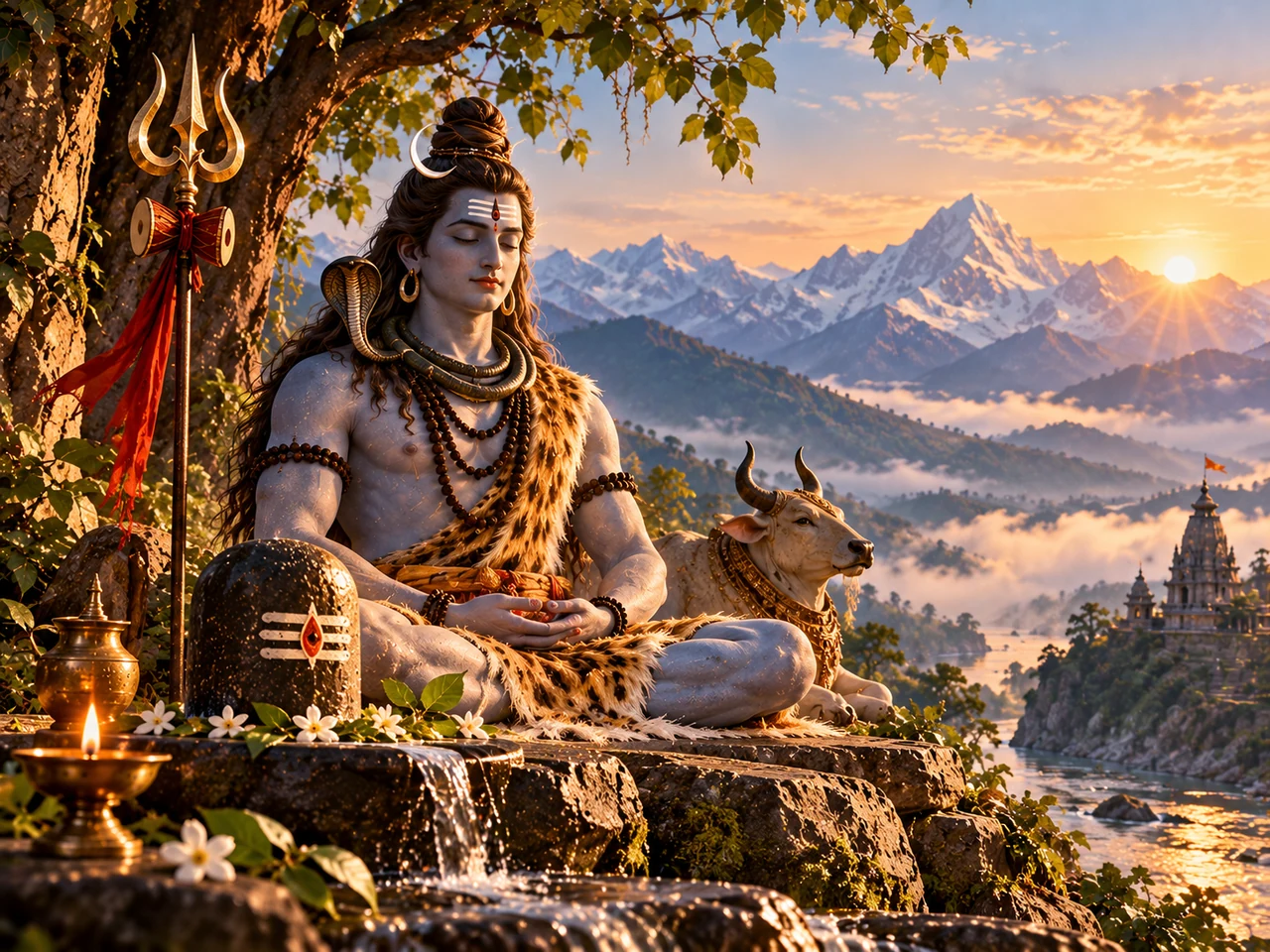
In the traditional iconographic imagination Dakṣiṇāmūrti is a youthful, south-facing Shiva as guru, often seated beneath a banyan tree. That imagery is associated with the broader worship and meditation tradition. The selected 1910 ten-verse hymn is In the traditional iconographic imagination Dakṣiṇāmūrti is a youthful, south-facing Śiva as guru, often seated beneath a banyan tree. That imagery is associated with the broader worship and meditation tradition. The selected 1910 ten-verse hymn is not itself an illustrated ritual manual and does not prescribe mudrā performance or initiation. Its tenth verse is a concluding benefit statement, not a guarantee of miraculous powers. 5

History, edition and authorship

The chosen base is the 1910 printed Śaṅkarācāryaviracitāni Stotrāṇi, Part I, where this poem is headed Śrīdakṣiṇāmūrtyaṣṭakam. Its printed pages 102–104 show ten numbered verses and a colophon. The colophon credits Shankara, naming the association with Govinda Bhagavatpāda. This establishes a . Its printed pages 102–104 show ten numbered verses and a colophon. The colophon credits Śaṅkara, naming the association with Govinda Bhagavatpāda. This establishes a traditional attribution in the print, not independent proof that the historical Ādi Shankara composed the particular recension. , not independent proof that the historical Ādi Śaṅkara composed the particular recension. 1, 6

Although the printed title contains “aṣṭakam” (“eight”), the 1910 printed unit contains ten numbered verses; verse 9 describes the Lord’s eightfold forms and verse 10 sums up the practice of listening and reflection. The 1912 Bṛhat Stotra Ratnākara adds five meditative verses numbered 11–15 to its ten-verse core; the 1933 first-volume recension has another prefatory stanza and different numbering. Those belong to other identifiable printed structures and are not silently appended to this one. 3, 7

The Mānasollāsa is traditionally connected to Sureśvara and comments extensively on the hymn's nondual teaching. Its electronic text is useful as a comparison but does not on its own establish a manuscript stemma, date or authorial autograph. 4

Major readings and editorial decisions

  • Verse 3: the 1910 selected reading asatkalpārthagaṃ (असत्कल्पार्थगं) contrasts with asatkalpārthakaṃ (असत्कल्पार्थकं) in the 1912 and other versions. It is not smoothed away; the exact grammar deserves independent review.
  • Verses 2, 4 and 8: typographic line endings and sandhi have been normalized in this reading layer; the witness and editorial actions remain documented.
  • Verse 8: a digital Mānasollāsa variant omits ya before eṣa. The printed 1910 text includes it.
  • Verse 10: the older print has sidhyet, while many modern readers prefer siddhyet. this edition holds the printed form and records the alternative.
  • Added meditation verses: often recited with this hymn, but not part of the selected ten-verse 1910 base passage. These are edition-specific choices, not claims that any one form is the universal original. More detailed machine-readable readings are in the source list and the edition notes.

Key terms without jargon

Ātman means the Self investigated by the text, not simply a changing social identity. Māyā is the account of how distinction appears, rather than a licence to dismiss people’s lives. Tat tvam asi (“you are that”) is an Upaniṣadic teaching invoked in verse 3. Sarvātmatva describes recognition of selfhood in all in this specific nondual discourse. “Eightfold form” in verse 9 names earth, waters, fire, wind, space, sun, moon and the person. Such terms admit nuanced readings across schools; this explanation names the hymn’s own perspective.

Reading respectfully

Verse 5 uses inherited polemical comparisons involving women, children, blind persons and the unlearned. We reproduce the selected historical text accurately but do not endorse its disparaging analogy. Readers can examine its criticism of philosophical reductionism without making a judgement about anyone’s dignity, intelligence or spiritual fitness.

Questions readers ask

Is Dakṣiṇāmūrti another deity? In this hymn the name marks Shiva in his guru/teacher form. In this hymn the name marks Śiva in his guru/teacher form. Why ten verses if the title says aṣṭakam? Because that is what this particular 1910 printed recension actually contains; names do not always prescribe the size of later printed compilations. Are the five dhyana verses missing?Are the five dhyāna verses missing? They are found in other compilations, notably the 1912 witness, but not in the selected 1910 ten-verse section. Does repeating the poem guarantee siddhis? No guarantee can be drawn from this editorial explanation. Verse 10 uses a devotional idiom of knowledge and fullness, not a validated outcome measure. Is the author definitely Ādi Shankara?Is the author definitely Ādi Śaṅkara? The print credits Shankara and the tradition associates the poem with him, but historical authorship has not been independently proved here. The print credits Śaṅkara and the tradition associates the poem with him, but historical authorship has not been independently proved here.

Sources, Credits & Licensing

Founder-authorized educational edition. Independent textual and specialist review remains incomplete; this reading does not confer initiation or ritual authorization.

Inherited traditional wording; selected witness cited below. Romanization, meanings and explanations prepared for ShivGoraksh. No modern source translation, page layout or recording reproduced.

Original Roman reading

The Roman reading recorded with this edition, retaining its spelling and word forms before the Easy Roman display conversion.

  1. 1

    || śrīḥ ||

  2. 1

    viśvaṃ darpaṇadṛśyamānanagarītulyaṃ nijāntargataṃ paśyannātmani māyayā bahirivodbhūtaṃ yathā nidrayā | yaḥ sākṣātkurute prabodhasamaye svātmānamevādvayaṃ tasmai śrīgurumūrtaye nama idaṃ śrīdakṣiṇāmūrtaye || 1||

  3. 2

    bījasyāntarivāṅkuro jagadidaṃ prāṅnirvikalpaṃ punarmāyākalpitadeśakālakalanāvaicitryacitrīkṛtam | māyāvīva vijṛmbhayatyapi mahāyogīva yaḥ svecchayā tasmai śrīgurumūrtaye nama idaṃ śrīdakṣiṇāmūrtaye || 2||

  4. 3

    yasyaiva sphuraṇaṃ sadātmakamasatkalpārthagaṃ bhāsate sākṣāttattvamasīti vedavacasā yo bodhayatyāśritān | yatsākṣātkaraṇādbhavenna punarāvṛttirbhavāmbhonidhau tasmai śrīgurumūrtaye nama idaṃ śrīdakṣiṇāmūrtaye || 3||

  5. 4

    nānācchidraghaṭodarasthitamahādīpaprabhābhāsvaraṃ jñānaṃ yasya tu cakṣurādikaraṇadvārā bahiḥ spandate | jānāmīti tameva bhāntamanubhātyetatsamastaṃ jagat tasmai śrīgurumūrtaye nama idaṃ śrīdakṣiṇāmūrtaye || 4||

  6. 5

    dehaṃ prāṇamapīndriyāṇyapi calāṃ buddhiṃ ca śūnyaṃ viduḥ strībālāndhajaḍopamāstvahamiti bhrāntā bhṛśaṃ vādinaḥ | māyāśaktivilāsakalpitamahāvyāmohasaṃhāriṇe tasmai śrīgurumūrtaye nama idaṃ śrīdakṣiṇāmūrtaye || 5||

  7. 6

    rāhugrastadivākarendusadṛśo māyāsamācchādanāt sanmātraḥ karaṇopasaṃharaṇato yo’bhūtsuṣuptaḥ pumān | prāgasvāpsamiti prabodhasamaye yaḥ pratyabhijñāyate tasmai śrīgurumūrtaye nama idaṃ śrīdakṣiṇāmūrtaye || 6||

  8. 7

    bālyādiṣvapi jāgradādiṣu tathā sarvāsvavasthāsvapi vyāvṛttāsvanuvartamānamahamityantaḥ sphurantaṃ sadā | svātmānaṃ prakaṭīkaroti bhajatāṃ yo mudrayā bhadrayā tasmai śrīgurumūrtaye nama idaṃ śrīdakṣiṇāmūrtaye || 7||

  9. 8

    viśvaṃ paśyati kāryakāraṇatayā svasvāmisaṃbandhataḥ śiṣyācāryatayā tathaiva pitṛputrādyātmanā bhedataḥ | svapne jāgrati vā ya eṣa puruṣo māyāparibhrāmitaḥ tasmai śrīgurumūrtaye nama idaṃ śrīdakṣiṇāmūrtaye || 8||

  10. 9

    bhūrambhāṃsyanalo’nilo’mbaramaharnātho himāṃśuḥ pumān ityābhāti carācarātmakamidaṃ yasyaiva mūrtyaṣṭakam | nānyatkiñcana vidyate vimṛśatāṃ yasmātparasmādvibhoḥ tasmai śrīgurumūrtaye nama idaṃ śrīdakṣiṇāmūrtaye || 9||

  11. 10

    sarvātmatvamiti sphuṭīkṛtamidaṃ yasmādamuṣmiṃstave tenāsya śravaṇāttadarthamananāddhyānācca saṃkīrtanāt | sarvātmatvamahāvibhūtisahitaṃ syādīśvaratvaṃ svataḥ sidhyettatpunaraṣṭadhā pariṇataṃ caiśvaryamavyāhatam || 10||

  12. 12

    iti śrīmatparamahaṃsaparivrājakācāryasya śrīgovindabhagavatpūjyapādaśiṣyasya śrīmacchaṅkarabhagavataḥ kṛtau śrīdakṣiṇāmūrtyaṣṭakaṃ sampūrṇam ||

Sources and verification status

  • 1 1910 Śaṅkarācāryaviracitāni Stotrāṇi, pp. 102–104, PDF frames 114–116, publicly accessible scanned historical witness.
  • 2 Sanskrit Wikisource transcription tied to that volume.
  • 3 1912 Bṛhat Stotra Ratnākara, item 94, printed pp. 216–218; comparative (including later added verses).
  • 4 Mānasollāsa, Sanskrit Wikisource, opening ten hymn verses and traditional commentary.
  • 5 SanskritDocuments dakshina.html; comparative, not copied translation.
  • 6 Commons rights/bibliography for the 1910 scan.
  • 7 1933 collection, contrasting opening and numbering.
Additional passage commentary

The explanations below are newly written for ShivGoraksh. Each unit aligns with the identical identifier in the edition notes. The full Sanskrit words above are romanized—not rendered as English verse.

Printed opening

Meaning: The printer’s auspicious opening “Śrīḥ.”

Explanation: Opening auspicious formula in the volume, not counted among the hymn’s ten verses.

Verse 1 · shloka-001

Meaning: The perceived universe, like a reflected city, appears outside although its appearance is understood here as grounded in consciousness; awakening discloses the undivided Self. I bow to that guru-form, Dakṣiṇāmūrti. Explanation: The mirror is not a denial that ordinary life matters. It is an invitation to inspect how a vivid world is known and how experience can look divided. The dream comparison describes appearance and recognition, not a claim that suffering is trivial. The recurring salutation identifies the illuminating teacher with Shiva’s Dakṣiṇāmūrti form. The mirror is not a denial that ordinary life matters. It is an invitation to inspect how a vivid world is known and how experience can look divided. The dream comparison describes appearance and recognition, not a claim that suffering is trivial. The recurring salutation identifies the illuminating teacher with Śiva’s Dakṣiṇāmūrti form.

Verse 2 · shloka-002

Meaning: Before differentiation, the world is compared to a sprout held within a seed; distinctions of place and time make its display manifold. Dakṣiṇāmūrti is saluted as the apparent manifestor, like a magician or a great yogin. Explanation: Seed and sprout evoke potential becoming visible; the similes of magician and yogin describe the text’s account of māyā. The metaphysical claim belongs to the hymn’s Advaita idiom, not a laboratory theory of cosmogenesis. The 1910 print joins punar to the next word across a typographic line break.

Verse 3 · shloka-003

Meaning: By the shining of the reality described as being, what seems like an insubstantial object becomes manifest; through the Upaniṣadic instruction “You are That,” the teacher directs seekers to recognition, said to end return to the ocean of becoming. Explanation: The crucial third-line teaching is grounded in the great saying tat tvam asi; the focus is on recognition rather than an exclusive miracle. The 1910 print reads asatkalpārthagaṃ, while several other witnesses print asatkalpārthakaṃ. This draft keeps the 1910 reading and treats the precise construal as an open specialist point.

Verse 4 · shloka-004

Meaning: Knowledge shines through the sense faculties like the light of a great lamp visible through many holes in a pot. Because that awareness shines, the whole experienced world is known; I bow to Dakṣiṇāmūrti. Explanation: The verse distinguishes the luminous principle of knowing from the instruments through which information is encountered. A pot with apertures is an illustrative image, not a scientific claim that vision emits physical light. The 1910 printing splits the end of jagat across a line ending; the normalized reader restores jagat before the separate salutation.

Verse 5 · shloka-005

Meaning: Some disputants mistakenly identify the “I” exclusively with body, breath, senses, shifting intellect or sheer void. The hymn honours the teacher who removes the deep confusion attributed to māyā. Explanation: The polemical verse addresses rival reductions of the self. Its historical wording compares the disputants to women, children, blind people and the unlearned; that disparaging imagery should be explicitly contextualized, never endorsed as a view of people’s capacities or dignity. The meaningful philosophical issue is whether awareness can simply be equated with one changing feature.

Verse 6 · shloka-006

Meaning: Like the sun or moon obscured during an eclipse, the underlying presence remains while its manifest operation is veiled; after deep sleep one recognizes, “I slept before.” Dakṣiṇāmūrti is praised as the ground of that continuity. Explanation: Deep sleep provides the poem with a reasoning exercise: although the senses and everyday cognition subside, memory on waking points to continuity. Traditions differ on what this actually establishes; this is an Advaita argument, not proof that everyone experiences deep sleep in an identical manner.

Verse 7 · shloka-007

Meaning: Across childhood and later ages, waking and other changing conditions, a sense of “I” continues to appear. The teacher reveals the Self to devotees, symbolized by the auspicious gesture of knowledge. Explanation: The verse contrasts changing biographical and experiential states with the intuition of personal continuity. Dakṣiṇāmūrti’s teaching gesture, often called cinmudrā, is a symbolic teaching motif rather than a prescribed ritual technique. The question is what is continuous when our capacities, roles and circumstances shift.

Verse 8 · shloka-008

Meaning: The world is perceived through relations such as cause and effect, ownership, teacher and student, and parent and child. The person entangled in māyā takes these distinctions as ultimate in dream or waking; homage is offered to the teaching presence. Explanation: The verse does not tell readers to abandon real-world responsibilities or the dignity of teacher–student and family relationships. Rather, it asks how relational identities shape perception. The base text prints a sandhi form at the line-end joining “confused” to the following refrain; the reader separates it for clarity.

Verse 9 · shloka-009

Meaning: Earth, waters, fire, wind, space, sun, moon and the experiencing person are named as the Lord’s eightfold appearance. For reflection, the hymn says that nothing is separate from the all-pervading reality; I bow to Dakṣiṇāmūrti. Explanation: Here “eightfold form” explains why an aṣṭakam may include ten printed verses: the name does not mean this selected edition must contain only eight numbered verses. The eightfold imagery can be read theologically without identifying physical elements or celestial bodies with a single modern scientific substance.

Verse 10 · shloka-010

Meaning: The hymn concludes that hearing, reflecting on its meaning, contemplating and reciting can clarify the realization of the Self in all; it describes a resulting fullness or divine sovereignty in the language of eightfold power. Explanation: Unlike verses 1–9, the tenth is an explicit benefit or concluding verse and does not carry the recurring “tasmai” salutation. Claims of aiśvarya belong to the hymn’s devotional and metaphysical horizon; they should not be marketed as measurable promises of wealth, healing or supernatural abilities. The printed reading sidhyet is retained; some other editions regularize it as siddhyet.

Colophon

Meaning: The printed closing credits the work to Shankara, identified in the traditional lineage as a disciple of Govinda Bhagavatpāda. The printed closing credits the work to Śaṅkara, identified in the traditional lineage as a disciple of Govinda Bhagavatpāda. Explanation: A printed traditional attribution; not independently conclusive historical proof of authorship.

  1. Śaṅkarācāryaviracitāni Stotrāṇi, Part I (collected stotras), 1910 printed volume · Open source
  2. Dakṣiṇāmūrtyaṣṭakam Sanskrit Wikisource proofread edition (1910 witness) · Open source
  3. Bṛhat Stotra Ratnākara (1912), item 94 Dakṣiṇāmūrtistotram · Open source
  4. Mānasollāsa (traditionally credited to Sureśvara), Dakṣiṇāmūrti hymn and commentary · Open source
  5. Dakshinamurti Stotra at SanskritDocuments, dakshina.html · Open source
  6. Wikimedia Commons scanned-file rights and bibliographic metadata for 1910 Stotras Part I · Open source
  7. Sanskrit Wikisource 1933 Brihatstotraratnakara first volume (alternative 11+-verse recension) · Open source