



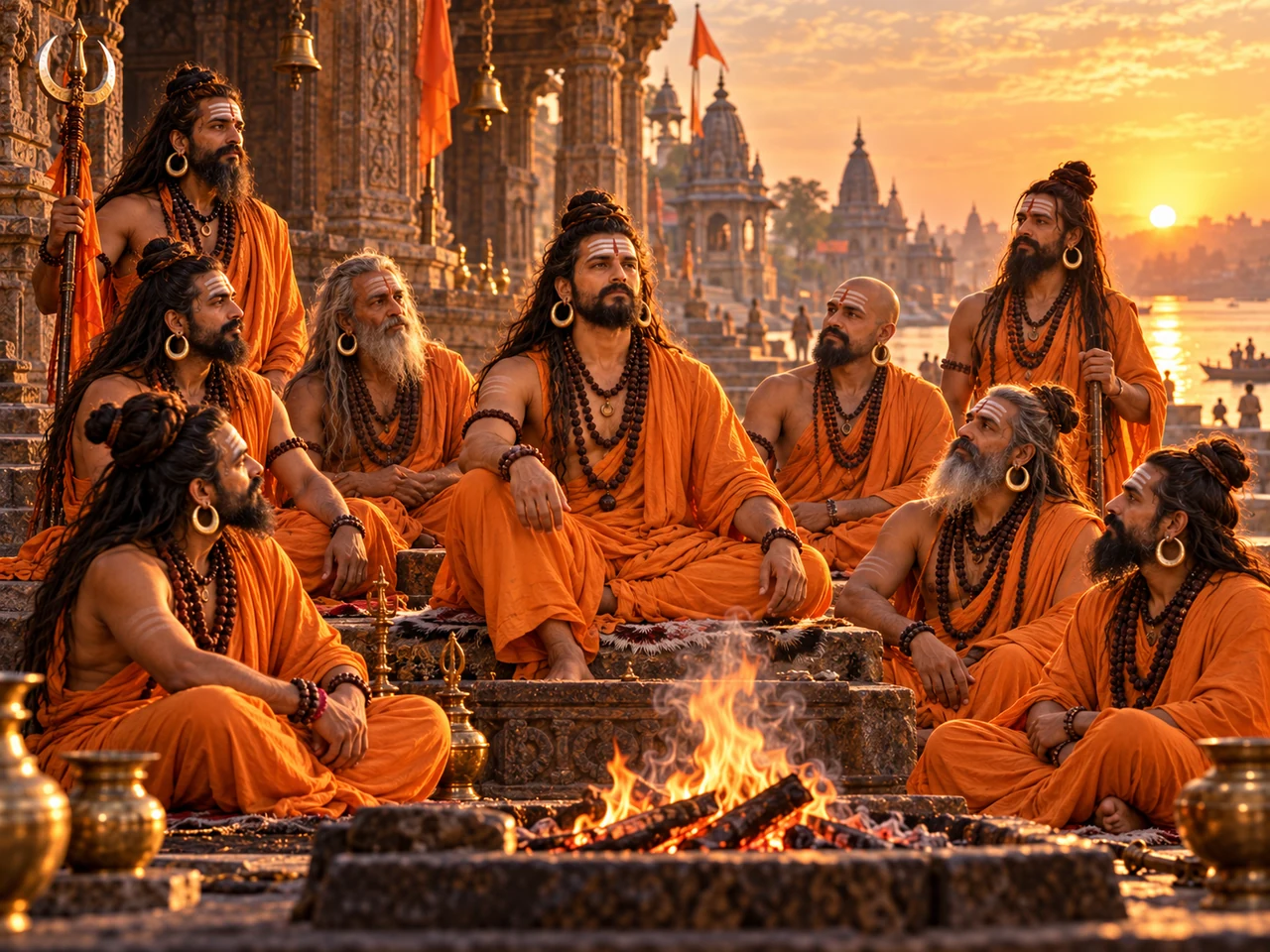
Why do some lists of the nine Naths contain Gorakhnath while others do not? A guide to the teachers, stories, regional communities and historical questions behind a cherished spiritual inheritance.
Imagine asking two devotees in different regions to name the Navnath—the nine revered Nath masters. Both might begin with Matsyendranath, speak with deep respect of Gorakhnath and recall yogis known for wisdom, renunciation and devotion. But the nine names may not match. One list includes Gorakhnath; another treats him as the master from whom the nine emerge, and names Gopichand instead. Neither difference can be resolved by pretending that all communities inherited a single, unchanging roll of nine names. 1 2 3
This diversity is the subject of the guide, not an embarrassment to be hidden. Navnath (नवनाथ, navanātha) is a collective devotional and lineage designation within wider Nath-related traditions. The histories of texts, monasteries, pilgrimage places, vernacular songs and family stories help explain why these masters matter. We will learn a well-attested set of nine names, compare a documented alternative, then ask what the traditions teach—and what surviving evidence permits a historian to say.
Key takeaways
- There is no historically demonstrable, universally canonical Navnath roster. Names, order and theological explanations vary across texts, lineages and regions. 1 2
- A widely circulated Maharashtrian-style list includes Matsyendranath, Gorakhnath, Jalandharnath, Kanifnath, Gahininath, Bhartriharinath, Revananath, Charpatinath and Naganath. This is an example, not a rule imposed on every tradition. 3
- A published Marathi reference records another list without Gorakhnath, including Gopichandnath, and explains traditions in which Gorakhnath stands above or gives rise to the nine. 2
- The nine Yogendras/Narayana sages named in Bhagavata Purana 11.2.20–21 are an identifiable textual group. Their equation with nine Nath masters is a later devotional interpretation, not what those verses explicitly state. 6 7
- Nath biographies combine sacred story, attributed works and verifiable historical traces. A miracle tale can convey a community's values without establishing an event as historical fact. 1 4
- Nath influence extends through pilgrimage, oral storytelling, Marathi bhakti, Rajasthan's singer communities and the wider, sometimes overlapping, Buddhist–Hindu worlds of Nepal. 5 8 10
What do “Nath,” “Navnath” and “Siddha” mean?
NathNātha (नाथ) can mean lord, protector or master. In a specifically religious setting, it can be a title for a teacher or for a member of a Nath-affiliated lineage. The same word occurring in a name, however, does not automatically prove membership in one institution. Nava (नव) means nine; Navnath therefore refers to a sacred grouping of nine Nath figures. Sampradaya (सम्प्रदाय) means a transmission or religious tradition, and parampara (परंपरा) an inherited sequence of teaching. 1 11
A siddha (सिद्ध) is a person understood to have achieved mastery or spiritual accomplishment. Lists of 84 Siddhas appear in overlapping Nath, Buddhist and other regional worlds. Because some names recur in different traditions, “nine Naths” and “84 Siddhas” should not be treated as two precisely dated membership registers. A guru–shishya relationship denotes teacher and disciple, but a devotional genealogy can also communicate spiritual inheritance rather than uninterrupted, documented face-to-face instruction. 1 11
A useful analogy: a family may tell its history through a set of founding ancestors; a library historian looks for dated documents, while a descendant also asks what those ancestors represent. The two questions are different, and both deserve accurate labels.
A familiar list of nine—and its limits
One circulating Marathi/devotional presentation, reproduced in an institutional devotional magazine, includes the following names. Spellings and titles differ in Hindi, Marathi and English; the numbering here is only a reading aid. 3
| Common name | Frequent name variants | Introductory association in traditions |
|---|---|---|
| Matsyendranath | Machhindranath, Macchindranath, Mīnanātha | A senior guru associated with Shiva's instruction and Kaula-related traditions |
| Gorakhnath | Gorakshanath, Gorakh, GorakshGorakshanath, Gorakh, Gorakṣa | Revered yogi and organizing figure in many Nath memories |
| Jalandharnath | Jalandharipa, Jalandernath | Teacher linked in several narratives with Kanifnath |
| Kanifnath | Kanipa, Kanipha, Kanhoba | Devotional center at Madhi in Maharashtra |
| Gahininath | Gahaninath, Gaininath | Important in Maharashtra's guru-lineage memory |
| Bhartriharinath | Bhartrinath, Bharthari, Raja Bhartrihari | The king who becomes a renouncer in popular tales |
| Revananath | Revannath, Revan Siddha | Revered figure in Deccan/Nath-affiliated lineages |
| Charpatinath | Charpatnath, Carpaṭī, Charpat | A remembered adept in several Nath and Siddha lists |
| Naganath | Nageshnath, Nāganātha | Regional Nath devotional and hagiographic figure |
This table is not a universally approved Navnath canon. The evidence behind the group is stronger for its presence in a particular devotional source than for a single original date, complete set of biographical facts or unbroken nine-person institutional lineage. Similar-sounding names—especially Jalandhara, Kanhapa/Kanifnath and several Siddhas—should not be automatically identified with every Buddhist or Shaiva figure bearing them. 1 3 11
A documented alternative in a Marathi reference work
The Maharashtra State Marathi Vishwakosh explicitly notes a tradition that counts Matsyendranath, Gahininath, Jalandharnath, Kanifnath, Charpatinath, Naganath, Revananath, Bhartrinath and Gopichandnath as the nine. Here Gorakhnath is absent. The entry says that some communities explain the omission by revering Gorakhnath as the source of the nine or as one who manifests through them. It also names other variations involving Adinath, Gorakshanath, Jadabharata and Chauranginath. 2
The comparison makes two important points. First, variation can alter membership, not merely spelling or order. Second, a name's absence need not imply disrespect: its placement outside the nine may signal exceptional religious status. The encyclopedic description records a tradition; it is not proof of supernatural origin or an endorsement of one roster over another.
Earlier texts offer other groupings
Historical research finds groups of four, seven, eight, nine and other numbers of teachers in earlier related religious contexts. James Mallinson identifies a 1279 inscription in Karnataka containing Nath names and discusses the *late-fifteenth-century Telugu Navanathacaritra, whose roster includes figures not found in the familiar Marathi list, such as Shiva and Nagarjuna. Adrián Muñoz likewise treats the lists as historically changing forms of group identity. Exact transmission histories and every proposed early textual attribution still require manuscript-level scrutiny. 1 11
This means the question “Which nine are correct?” needs a second question: Correct for which text, period, region or lineage? A ShivGoraksh page can preserve variant lists with their source labels rather than erase their differences.
Matsyendranath: hearing, transmission and many identities
Nath storytelling places Matsyendranath near the beginning of a human guru lineage. A renowned legend portrays him hearing teachings associated with Shiva while inside a fish; the image suggests knowledge discovered in an unlikely, concealed place. We should read it as sacred narrative, not as an eyewitness biography. Scholars also associate the name with older Kaula and tantric textual worlds, though particular authorial attributions and dates remain contested. 1 3
The name travels widely. In Nepal, Rato Machhindranath / Bunga Dyaḥ / Karunamaya is venerated in a shared Newar cultural setting, including Buddhist associations with Avalokiteshvara and Hindu identifications with Machhindranath. These overlapping identities should not be flattened into the assertion that every Nath yogi performs the same worship or that a complex Newar deity is simply identical to a historically established individual. 8
Gorakhnath: teacher, exemplar and sometimes beyond the nine
Gorakhnath is central to Nath devotional identity and texts attributed to the order. Accounts associate him with disciplined living, yogic insight and a guru–disciple relationship to Matsyendranath. Yet historical scholars distinguish the dates of surviving writings from the uncertain lifetime of the figure to whom they are ascribed. Some lineages include him among the nine; others place him as their source. Neither makes the other an error. 1 2 11
For the reader, this is an instructive case of lineage authority: the teacher can be counted as a member in one setting and revered as the reason the group exists in another. The guide to Matsyendranath and Gorakhnath (Matsyendranath and Gorakhnath: Guru–Disciple Traditions) explores that relationship more fully.
Jalandharnath and Kanifnath: linked names, distinct identities
Jalandharnath appears as a respected teacher in many Nath and Siddha traditions; Kanifnath is often portrayed in related hagiography as his disciple. Yet shared names across medieval Shaiva and Buddhist lists make confident identifications difficult without contextual evidence. It is safer to say that these are traditional associations, not a fully mapped chain of dated persons. 1 11
At Madhi in Maharashtra's Ahilyanagar district, the district administration identifies a samadhi shrine of Kanifnath and describes a pilgrimage gathering around the Holi-to-Gudi-Padwa period. Here the tradition is not only a text: it is a place, a community's calendar and a continuing devotional relationship. The public listing provides no license to invent specific rituals or guarantees of spiritual results. 5
Gahininath: a bridge remembered in Marathi bhakti
Gahininath is significant in the Maharashtrian memory connecting Nath teachers to Nivruttinath, the elder brother and guru of Dnyaneshwar/Jnaneshwar. The Marathi Vishwakosh's entry on Nivruttinath records Gahininath as his teacher, while noting uncertainty in chronological details. Such links help explain how Nath genealogies were retold alongside the devotional world later associated with the Varkari movement. They do not make every Varkari practice a Nath ritual. 9 2
Bhartriharinath: the king who walks away
In widely sung narratives, King Bhartrihari/Bharthari gives up royal life and enters the path of the yogi. The power of the story is not in supplying a verified regnal chronology. It invites reflection on wealth, attachment and the price of renunciation. Ann Grodzins Gold's study of Rajasthan's Nath storytelling records how singers and household communities preserve tales of Bharthari and Gopichand, showing that these stories are also cultural performances shaped by their audiences. 10
Revananath, Charpatinath and Naganath: remembered across lists
Revananath, Charpatinath and Naganath complete the common nine in the example above, but their appearances, associations and spelling variants are not equally secure in independently dated sources. Revananath is especially prominent in some Deccan devotional genealogies. Charpatinath appears across Nath/Siddha naming traditions. Naganath occurs in Marathi-oriented Navnath lists, but identity with other names such as Nagesh should be evaluated case by case. A short educational portrait should not become a fictional chronology or a catalogue of unverified miracles. 1 3 11
Why do Navnath lists change?
Several explanations fit the historical record, though no single model explains every local tradition.
Lineages remember different ancestors. Monasteries, teachers and followers emphasize the figure associated with their own place or stream of instruction. A named roster can be a form of communal memory, not merely a historical census. 11
Literature travels across languages. Sanskrit, Marathi, Hindi, Rajasthani and Telugu sources were composed and recopied in different settings. Names change in pronunciation, and figures from neighboring sacred worlds can enter a later compilation. Some lists are explicitly devotional praises rather than neutral biographical documents. 1 11
Shaiva, Vaishnava and other worlds overlap. A Nath master may be interpreted as associated with Shiva in one lineage, and a set of nine Naths may be linked to nine Narayanas in a Marathi devotional account. This demonstrates creative theological reconciliation, not proof that different named groups began as the same nine historical people. 1 7
Nine is also a significant collective form. A group of nine may express wholeness, exemplary teachers or a religious cosmos. Symbolic readings should be attributed as interpretations—not converted into a claim that all traditions gave the number one identical meaning.
The Navnath Bhaktisar and the nine Narayanas
The Marathi Navnath Bhaktisar (Navanāthabhaktisāra) has profoundly shaped devotional remembrance of the Naths. A Marathi text presentation credits its composition to Malu Kavi (Dhundisut Malu) and gives an early-nineteenth-century completion date, while scholars place the tradition of identifying the nine Naths with nine Narayanas within relatively late regional theological developments. The edition and manuscript history needs independent specialist checking; the date of a particular written compilation is not the birth date of all stories it contains. 7 1
Here a frequently confused distinction matters. Bhagavata Purana 11.2.20–21 names nine sages: Kavi, Havi (Havir), Antariksha, Prabuddha, Pippalayana, Avirhotra, Drumila, Chamasa and Karabhajana. They appear in the narrative of Rishabha's sons and their teachings. Those verses do not name Matsyendranath, Gorakhnath or the Navnath group. A later devotional text that correlates the two sets of nine is making an interpretive connection. The connection can be meaningful within that tradition while remaining a separate historical and textual claim. 6 7
The distinction guards against a common editorial mistake: citing a verified ancient verse and silently adding later names it does not contain. ShivGoraksh should keep those layers visibly separate.
History and chronology: what can be dated?
No single birth-date chart for all nine has been established. Historical evidence is uneven: some figures are known from early text attributions, some from later vernacular narratives, some from inscriptions or institutional records, and others primarily from devotional stories. A clear teaching timeline is therefore a history of evidence, not a purported schedule of nine lifetimes. 1 11
| Evidence layer | What it helps establish | What it cannot automatically prove |
|---|---|---|
| Medieval inscriptions and named literary references | Particular names circulated in specified settings | A complete, universal nine-guru lineage |
| Late-medieval Telugu Navanathacaritra | A historical nine-Nath roster differing from later ones | The first appearance of every figure it names |
| Marathi Navnath Bhaktisar and related retellings | A powerful regional devotional arrangement of teachers and stories | Eyewitness accounts of miracles or authorial identity of every older tale |
| Modern shrines, festivals and oral performances | Continuing community devotion and place-based memory | Unbroken institutional continuity from an undated antiquity |
Muñoz argues that differing enumerations are part of how communities form religious identities; Mallinson's historical survey complicates a simple picture of one early, centrally organized order. The precise interpretation of particular manuscripts and inscriptions remains specialist work. 1 11
Teaching through hagiography: how should we read miracles?
A hagiography is a reverential narrative about a holy person. In Navnath stories, a king leaves luxury, a teacher tests a student, a yogi hears a divine teaching, or an ascetic displays extraordinary power. Such episodes can carry messages about detachment, trust, compassion, attention or the limits of pride. Describing their devotional function does not claim the supernatural event was independently witnessed or scientifically demonstrated. 3 10
A helpful reading method has three questions. What does the story say? Summarize its plot without adding details. Who tells it, and in which source? Distinguish a named Marathi book, a Rajasthani song and a modern shrine retelling. What does it mean to devotees? Explain the ethical or devotional interpretation while allowing communities to express reverence in their own terms. The reader need not choose between ridicule and unquestioning historical assertion.
Places, communities and living memory
Maharashtra remains important to Navnath literature and pilgrimage. The Kanifnath shrine at Madhi is a specific example; Gahininath–Nivruttinath connections also show the influence of Nath lineage stories in Marathi bhakti. A trip to a shrine should not be treated as proof that every regional nine-name list is identical. 5 9
Rajasthan and northern India preserve oral stories of Bharthari and Gopichand in which performances may be transmitted by householder Nath communities, not only formal renunciants. Gold's fieldwork highlights storytellers, listeners and the changing social meaning of the narratives. 10
Nepal's Kathmandu Valley has a distinctive Machhindranath religious landscape. Nepal Tourism Board describes the Rato Machhindranath chariot tradition, while the local name Bunga Dyaḥ and Avalokiteshvara associations show why a simple Hindu-only description would be inadequate. Identification between figures is tradition-specific and must not erase Newar Buddhist understandings. 8
The wider Nath world includes varied ascetic and householder communities. Some honour Shiva as Adinath (the primordial teacher); others connect Nath figures with Dattatreya or regional saints. These are overlapping networks of religious memory, not a single standardized global institution. 1 11
Devotion, ethics and practice—in context
Navnath devotion can involve respectful remembrance of teachers, public storytelling, devotional songs, pilgrimage and discussions of personal discipline. These practices can convey humility, responsibility, service and the importance of guidance; no one performance or vow is universally binding on all Nath communities. 3 10
Nath-associated literature also discusses yoga, body, breath and altered states, but describing such traditions does not authorize reproducing initiation-dependent teachings, secret mantras, intensive breath retention or claims of supernatural attainments. Those topics are tradition-specific / initiation-dependent where appropriate. For historical context rather than a training routine, continue to Hatha Yoga: History, Texts and Nath Contributions. 11
Common misconceptions—and better questions
“Every Navnath list is identical.” No. At least two documented traditions differ even on whether Gorakhnath is counted. Ask which source is being used. 2 3
“The nine sages of the Bhagavata are explicitly called the nine Naths.” Not in the verified verses 11.2.20–21. Later identification is a separate devotional reading. 6 7
“A sacred story proves a dated biography.” No. A story and an inscription answer different questions; both can have value when clearly described.
“The 84 Siddhas are the same group as the nine Naths.” The categories overlap in some sources, but are not numerically or historically identical. 11
“Every Nath is a renunciant.” Some have been ascetics and others householders, including performing communities. 10 12
“Nath yoga began as a single fixed school created on one date.” Historical scholarship documents more complex intersections of lineages and yoga texts. 1 11
Beginner glossary
| Term | Accessible meaning |
|---|---|
| Navnath (नवनाथ) | Collective title for nine revered Nath figures; membership varies |
| Nath / Nath (नाथ)Nātha / Nath (नाथ) | Lord/master; also a teacher or religious affiliation in context |
| Ādinātha (आदिनाथ) | Primordial lord or teacher, often Shiva in Nath devotion |
| Guru (गुरु) | Spiritual teacher or guide |
| Paramparā (परंपरा) | Transmission or inherited sequence of teachers |
| Sampradāya (संप्रदाय) | Religious tradition or line of teaching |
| Siddha (सिद्ध) | Spiritually accomplished adept in a particular religious setting |
| Hagiography (संतचरित / भक्तिपरक चरित) | Reverential narrative, not automatically critical history |
| Navanārāyaṇa (नवनारायण) | Nine Narayana sages invoked in a later Navnath identification |
| Bhaktisāra (भक्तिसार) | Devotional teaching/narrative title, notably Navnath Bhaktisar |
| Vārkarī (वारकरी) | Maharashtrian devotional movement with its own Vaishnava focus |
| Darśanī (दर्शनी) | A self-designation used by some initiated Nath yogis |
Connection to ShivGoraksh
This is a tradition guide, not nine invented biographical profiles. Introduction to the Nath Sampradaya: Yogis, Lineages and Living Traditions introduces the wider Nath Sampradaya; Matsyendranath and Gorakhnath: Guru–Disciple Traditions examines the Matsyendra–Gorakh relationship; Hatha Yoga: History, Texts and Nath Contributions addresses Hatha Yoga history. Moksha, Meditation and Self-Realization in Shaiva and Nath Traditions offers a later comparison of liberation teachings.
Guru Purnima: Meaning, Vyasa, Traditions and the Guru–Disciple Bond (Guru Purnima) provides a separate example of teacher devotion; Makar Sankranti: The Sun, the Harvest and India's Many Traditions (Makar Sankranti) provides the Gorakhpur Khichdi Mela context. They are related readings, not a claim that every Navnath lineage performs the same festival ritual.
1. What are the names of the nine Naths?
One frequently published list names Matsyendranath, Gorakhnath, Jalandharnath, Kanifnath, Gahininath, Bhartriharinath, Revananath, Charpatinath and Naganath. Other lists differ. Always identify the tradition or source rather than calling this the only correct list. 3 2
2. Why is Gorakhnath missing from some Navnath lists?
The Marathi Vishwakosh records traditions in which Gorakhnath is regarded as the source or overarching manifestation of the nine, rather than merely one member. That is a theological explanation within particular traditions, not an independently verified supernatural claim. 2
3. Are Navnath and Navanarayana the same nine people?
Bhagavata Purana names nine Yogendras, and a later Marathi Navnath devotional tradition identifies nine Nath masters with them. The original verified passage does not itself name the Naths. The identification is a religious interpretation, not a straightforward historical equation. 6 7
4. Was Matsyendranath definitely Gorakhnath's historical teacher?
Many Nath narratives describe this teacher–disciple bond, and it profoundly shapes the tradition. Firm dates and exact biographical relationships remain debated because the available evidence is uneven. 1 11
5. Is Kanifnath still worshipped at a real site?
Yes. Ahilyanagar district administration documents the Kanifnath samadhi site at Madhi and its annual pilgrimage context. This establishes an active devotional location, not the historical truth of each associated miracle story. 5
6. What is the difference between nine Naths and eighty-four Siddhas?
The first is a variable sacred group of nine; the second is a wider and also variable grouping of accomplished figures appearing in overlapping traditions. Individuals can occur in more than one list, but the categories are not interchangeable. 11
7. Are the Navnath traditions only Shaiva?
Shaiva identity is important in many Nath settings, but Maharashtra's Dattatreya/Narayana associations and Nepal's Buddhist–Hindu Machhindranath traditions complicate any exclusively uniform description. Local interpretations must be named. 1 7 8
8. How should beginners read Navnath miracles?
First recognize them as devotional and hagiographic narratives; identify the source and ask what ethical or religious point the story communicates. Do not present extraordinary events as independently verified scientific evidence, and do not imitate esoteric practices from retellings.